
Low Cost Business Setup in Dubai, UAE by AB Capital Services

Business Setup From India

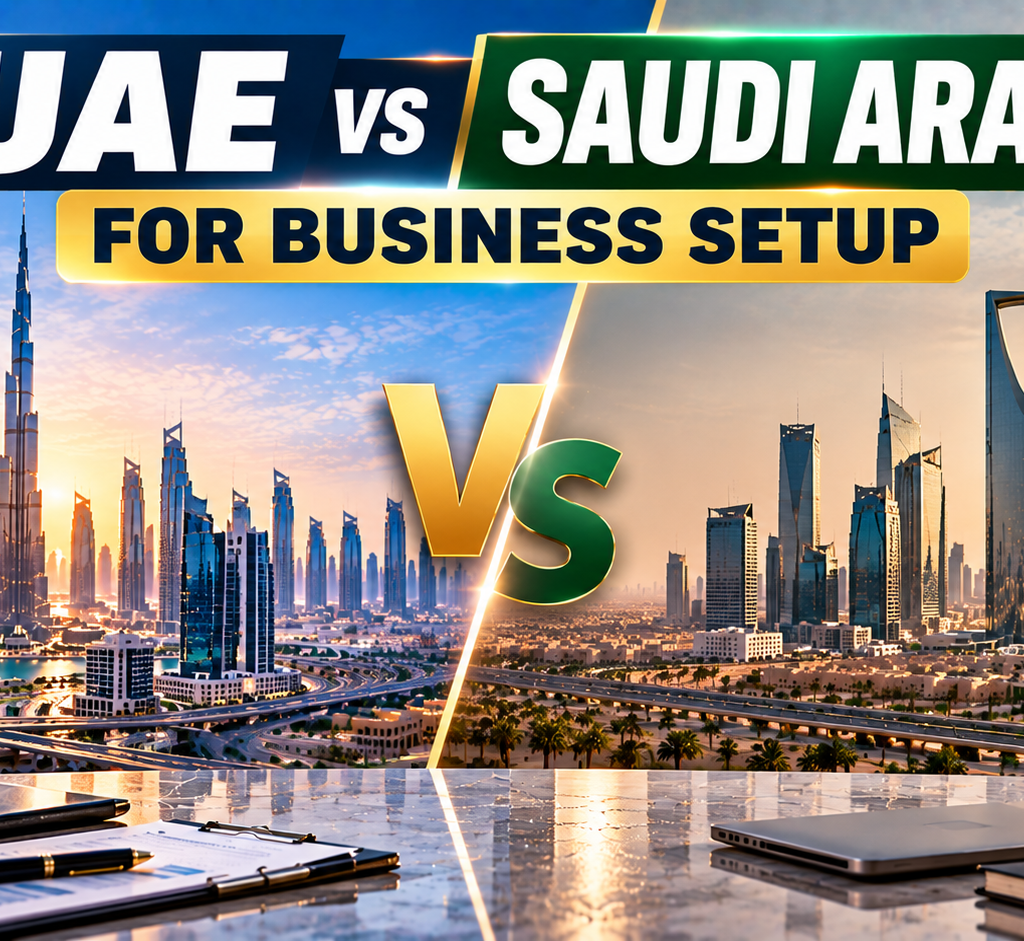
UAE vs Saudi Arabia for Business Setup

UAE vs Saudi Arabia for Business Setup: Which Market Should You Choose?

UAE vs Saudi Arabia for Business Setup in 2026: Which Market Should You Choose? Quick AnswerNeither the UAE nor Saudi Arabia is universally better for every business. The right choice depends on the company’s customers, sector, regional strategy, staffing plans and long-term objectives. The UAE is particularly strong as an international business and regional operating hub, with Dubai offering extensive connectivity, Free Zones and a mature multinational ecosystem. Saudi Arabia offers a much larger domestic market, major Vision 2030 investment opportunities and a dedicated Regional Headquarters programme. Tax, licensing and regulatory requirements also differ substantially, so the decision should be made from the business model rather than a simple “lower tax” comparison. Summarize with ChatGPT Table of Contents Why This Comparison Matters in 2026 Market Size and Customer Access UAE vs Saudi Arabia Tax Comparison Regional Headquarters Strategy Free Zones and Business Ecosystems Technology and Digital Businesses Logistics and Trade Cost and Operating Complexity When the UAE May Be Better When Saudi Arabia May Be Better Can You Use Both? Decision Framework Setup Checklist Two-Stage GCC Expansion Model AB Capital Support Also Read FAQs Why This Comparison Matters in 2026 The Gulf business landscape is no longer a choice between one established hub and one emerging market. Both the UAE and Saudi Arabia are investing heavily in diversification, technology, infrastructure and international investment. For an international founder, the practical question is: where should the company establish its first operating base, and does it need a second entity later? Some companies may benefit from a UAE regional HQ while establishing a Saudi subsidiary to serve the Kingdom directly. Others may find Saudi Arabia should be the primary market from the beginning. Key takeaway: The best jurisdiction is the one that fits your revenue, customers, licensing needs, people, logistics and three-year expansion plan—not simply the country with the lower headline tax rate. Market Size and Customer Access Saudi Arabia offers a very large domestic market and significant government and private-sector spending under Vision 2030. This can be especially attractive for construction, infrastructure, technology, tourism, entertainment, healthcare, professional services and industrial businesses. The UAE has a smaller resident population but a highly international economy and a strong concentration of regional headquarters, investors, tourists and multinational companies. Dubai can be particularly effective when the business sells across multiple countries rather than relying only on the UAE domestic market. Factor UAE Saudi Arabia Core advantage International and regional operating hub Large domestic market and Vision 2030 opportunities Customer focus Multi-country GCC, MENA and international customers Strong fit for Saudi-focused customers and projects Regional strategy Useful for multi-country coordination Useful when Saudi Arabia is the strategic centre Business ecosystem Broad Free Zone and mainland ecosystem Mainland ecosystem plus economic zones and investment programmes UAE vs Saudi Arabia Tax Comparison The UAE’s standard Corporate Tax framework generally applies 0% to taxable income up to AED 375,000 and 9% above that threshold, subject to the legislation. Qualifying Free Zone Persons may receive 0% on qualifying income if the relevant conditions are met. View the UAE FTA tax rates. Saudi Arabia’s ZATCA states that the Income Tax Law applies to resident capital companies with respect to shares owned by non-Saudi partners and to non-residents conducting business through a permanent establishment or deriving income from Saudi sources. The general income tax rate relevant to non-Saudi ownership is commonly 20%, subject to applicable rules and sector-specific provisions. View ZATCA’s Income Tax guidance. Do not make the decision on tax alone. A higher-tax market can still produce a better commercial return if the addressable market, customer contracts and revenue opportunities are significantly larger. Regional Headquarters Strategy Saudi Arabia has a formal Regional Headquarters (RHQ) Programme aimed at attracting multinational regional operations to the Kingdom. Invest Saudi describes the programme as a strategic hub for global enterprises and highlights tailored support and incentives. Explore Invest Saudi. Dubai also has a strong regional-HQ ecosystem, with global businesses establishing and expanding regional offices. The choice depends on whether the company needs to be physically close to Saudi customers and government programmes or wants a more geographically connected base for several markets. For a company whose commercial strategy is Saudi-first, a Saudi operating presence may be more important than choosing a UAE base purely for regional convenience. Free Zones and Business Ecosystems The UAE has a broad network of Free Zones covering technology, finance, commodities, logistics, healthcare, e-commerce and other sectors. The official UAE Government portal states that the country offers Free Zones for sectors including retail, agritech, health, FinTech, logistics, media and ICT. UAE Government business portal. Saudi Arabia has its own economic zones and investment programmes, alongside mainland licensing through the relevant authorities. Businesses should compare the actual activity rather than assuming that one country’s “Free Zone” concept works exactly like the other’s. Choose the Jurisdiction Around the Activity A software company, trading company, logistics operator, financial services business and industrial company can have very different licensing requirements. The question should therefore be “Which jurisdiction fits my activity and customers?” rather than simply “Which country has cheaper company formation?” Technology and Digital Businesses For software, SaaS, AI and digital services, the UAE has a mature international technology ecosystem and strong connectivity. Dubai’s technology districts and AI initiatives can support companies targeting regional and global customers. Saudi Arabia is also investing heavily in digital transformation and has a large domestic enterprise and government market. A technology business selling directly to Saudi institutions may find local presence commercially valuable even if its regional HQ is elsewhere. For UAE-focused technology setup guidance, see How to Start an AI Company in the UAE and How to Start a SaaS Business in Dubai. Logistics and Trade The UAE is exceptionally strong for international trade, aviation, ports and re-export operations. Dubai’s airports, ports and logistics ecosystem make it a natural hub for companies moving goods across regions. Saudi Arabia’s geographic scale and domestic market can make local distribution important when customers are spread across the Kingdom. A logistics business

UAE vs Saudi Arabia for Business Setup: Which Market Should You Choose? Read More »
Dubai as a Regional Headquarters- Why Global Companies Are Choosing the UAE

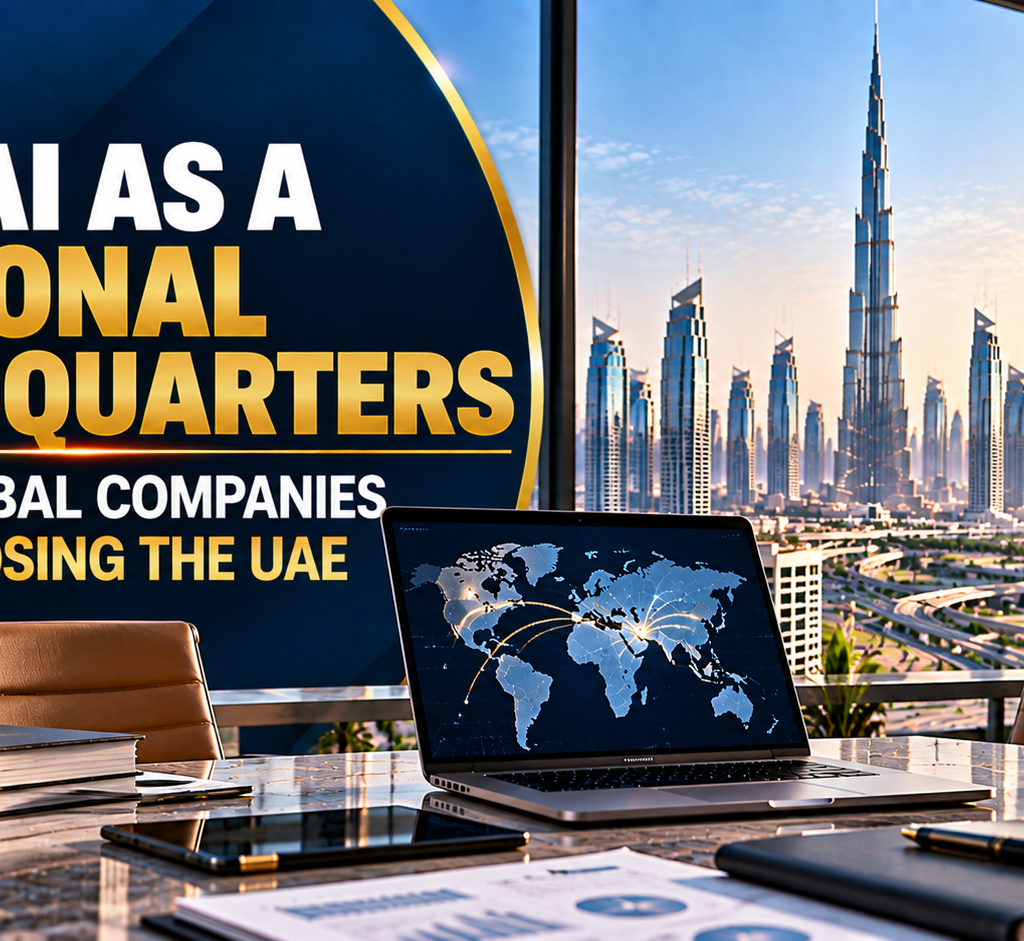
Dubai as a Regional Headquarters: Why Global Companies Are Choosing the UAE

Dubai as a Regional Headquarters: Why Global Companies Are Choosing the UAE Quick Answer: Dubai can work as a regional headquarters for companies managing Middle East, Africa and South Asia activities because it combines international connectivity, business infrastructure, financial services, technology ecosystems and access to a large expatriate and professional talent pool. Recent developments also show continuing interest from global businesses: Canva announced a regional headquarters in Dubai in 2026, while Ripple expanded its Middle East and Africa regional headquarters in DIFC. A regional HQ is more than a company registration; it should house genuine management, commercial, finance or support functions appropriate to the group’s strategy. Summarize with ChatGPT Table of Contents What a Regional Headquarters Actually Does Why Dubai Appeals to International Groups Evidence of Global Company Interest in 2026 DIFC for Financial and Professional Operations Mainland and Other Free Zones Talent and Executive Recruitment Banking, Finance and Intercompany Arrangements Tax and Transfer Pricing How to Set Up a Regional HQ in Dubai Common Mistakes AB Capital Support Regional HQ vs Representative Office Also Read FAQs What a Regional Headquarters Actually Does A regional headquarters normally coordinates functions across several markets rather than simply selling in one country. It may manage sales, finance, human resources, marketing, legal, technology, procurement, strategy or executive leadership. The right model depends on the group. A company entering the Middle East for the first time may begin with sales and business development. A mature regional operation may add finance, HR, compliance and regional management. The UAE entity should be structured around those functions. Functions a Regional HQ May Manage Regional sales and business development Finance and financial management Human resources and recruitment Marketing and regional strategy Legal and compliance coordination Technology and procurement Executive and regional management Why Dubai Appeals to International Groups Dubai offers global air connectivity, an international business population, financial institutions, professional services and a large ecosystem of Free Zones and mainland companies. This allows regional teams to operate close to customers and partners while remaining connected to global headquarters. The value of Dubai should therefore be measured by operational efficiency, not simply tax. A regional HQ can reduce travel friction, improve response times and bring decision-makers closer to regional customers. Connectivity and Regional Access For businesses managing multiple countries, the ability to travel efficiently and coordinate teams can be an important operational consideration. Dubai’s international connectivity can support regional management and customer-facing functions. Evidence of Global Company Interest in 2026 In February 2026, Dubai Chamber of Digital Economy announced an agreement supporting Canva’s regional headquarters in Dubai. Ripple also announced an expanded Middle East and Africa regional headquarters in DIFC in April 2026, creating capacity to grow its regional team. These examples do not mean every company needs a Dubai HQ. They show that global technology and financial businesses continue to view Dubai as a meaningful regional operating location. DIFC for Financial and Professional Operations When DIFC May Be Relevant Companies with financial, investment, wealth or specialised professional activities may consider DIFC where the business model fits its regulatory framework. DIFC reported strong global client growth in Q1 2026 and continued to attract international firms. Regulated Activities Require Additional Assessment Regulated financial activity should never be treated like a standard commercial licence. Firms must assess whether regulatory authorisation is required and what capital, governance, staffing and compliance obligations apply. Mainland and Other Free Zones A regional headquarters can also be established through a mainland or other Free Zone structure depending on the activities. Technology companies may consider technology-oriented zones, while trading and logistics groups may prefer zones aligned with physical operations. The HQ location should support employees as well as legal requirements. Office quality, commuting, meeting facilities, international travel and access to clients can materially affect the value of the location. Choosing a Suitable Jurisdiction The right jurisdiction should be evaluated against the company’s activities, regulatory requirements, staffing model, office needs, customers and regional operating strategy rather than selected solely on headline setup cost. Talent and Executive Recruitment A regional headquarters needs more than a registered office. Companies should plan for regional leadership, sales, finance, HR, operations and technical roles according to the scope of the HQ. Dubai’s international workforce can help companies recruit people with experience across multiple markets. However, talent costs can be significant. Build salary, benefits, visas, office and recruitment costs into the regional business plan. Banking, Finance and Intercompany Arrangements Intercompany Funding and Services Regional HQs often receive funding from a parent company and provide services to subsidiaries. Intercompany management fees, cost allocations, loans and service agreements should be documented carefully. What Banks May Need to Understand Banks may also want to understand the group structure, ultimate beneficial owners, source of funds, expected transaction flows and regional customers. A clear group chart and commercial rationale can make the banking process more efficient. Tax and Transfer Pricing UAE Corporate Tax Considerations A regional HQ must consider UAE Corporate Tax and the tax rules of countries where subsidiaries operate. UAE tax residence, permanent establishment, intercompany services and transfer pricing can have cross-border consequences. The UAE Corporate Tax framework includes a 9% rate above AED 375,000 of taxable income under the standard regime, subject to the law. Cross-Border Tax Considerations Groups should not assume that placing management functions in Dubai automatically eliminates tax obligations elsewhere. Cross-border advice is important when the HQ controls or provides services to overseas subsidiaries. For more information on UAE Corporate Tax, see AB Capital’s Corporate Tax resources. How to Set Up a Regional HQ in Dubai Define the markets the HQ will manage. Map regional functions and decision-making authority. Identify regulated activities. Choose mainland, DIFC or another suitable Free Zone. Select the legal structure and licence activities. Establish office and employment requirements. Open banking facilities. Document intercompany services and funding. Establish accounting, tax and transfer-pricing controls. Recruit regional leadership and support teams. Build regional sales and operational processes. Review the structure annually as the business expands. Common Mistakes A common mistake is calling

Dubai as a Regional Headquarters: Why Global Companies Are Choosing the UAE Read More »

Lab-Grown Diamond Business in Dubai New Opportunities After DMCC 2026 Initiative

Lab-Grown Diamond Business in Dubai: New Opportunities After DMCC’s 2026 Initiative

Lab-Grown Diamond Business in Dubai: Opportunities After DMCC’s 2026 Initiative Quick Answer: Dubai’s lab-grown diamond sector is gaining a more distinct commercial identity after DMCC established a dedicated Lab-Grown Diamond Vertical on 30 August 2026. DMCC reported that UAE lab-grown diamond trade reached a record 76.9 million carats in 2025, up 91.5% year on year, with trade valued at USD 1.3 billion. The initiative is not limited to jewellery: DMCC highlights applications in semiconductors, diamond wafers, quantum technologies, space systems and precision engineering. For entrepreneurs, the opportunity spans trading, jewellery, manufacturing-related services, technology, sourcing and industrial applications. Summarize with ChatGPT Table of Contents Why the 2026 DMCC Announcement Matters Jewellery Is Only One Opportunity Trading and Sourcing Business Models Jewellery Brand Opportunities Industrial Applications of Lab-Grown Diamonds Why DMCC Is Relevant for Lab-Grown Diamond Businesses Licensing and Setup Considerations Compliance, Disclosure and Reputation Tax and Financial Planning How to Build a Lab-Grown Diamond Business Plan Lab-Grown Diamond Business Setup Checklist AB Capital Support for Lab-Grown Diamond Businesses Why Transparency Can Become a Competitive Advantage Also Read FAQs About Lab-Grown Diamond Business in Dubai Why the 2026 DMCC Announcement Matters The establishment of a dedicated vertical signals that lab-grown diamonds are being treated as a distinct commercial segment rather than simply an extension of the natural diamond market. That matters for businesses because specialised ecosystems can make it easier to find suppliers, customers, industry events, finance providers and professional services. DMCC says the UAE traded 76.9 million carats of lab-grown diamonds in 2025, representing 91.5% year-on-year growth. Trade value reached USD 1.3 billion. Volumes had more than doubled since 2022. The figures indicate rapid expansion, but entrepreneurs should still validate their own business model. Market growth does not remove the need for product quality, transparent disclosure, reliable sourcing and margin control. What the DMCC Growth Figures Mean for Entrepreneurs The reported growth provides a useful market signal, but it should not be treated as a guarantee of profitability. Entrepreneurs still need to assess supplier pricing, customer demand, inventory requirements, working capital and margins for their specific business model. Jewellery Is Only One Opportunity Consumers are familiar with lab-grown diamonds as jewellery, but industrial applications may become an important part of the market. DMCC specifically points to semiconductor applications, wafers, quantum technologies, space and precision engineering. This broadens the potential customer base. A Dubai business could focus on jewellery trading, B2B sourcing, industrial materials, manufacturing support, equipment, certification-related services or technology. Each model can have different licensing and technical requirements. Potential Lab-Grown Diamond Business Models Lab-grown diamond trading and distribution B2B diamond sourcing Lab-grown diamond jewellery brands Industrial diamond materials and components Manufacturing-related services Technology and specialist equipment Certification-related and documentation services Trading and Sourcing Business Models Lab-Grown Diamond Trading A trading company can source lab-grown stones from manufacturers and sell to jewellery brands, retailers or international buyers. Success depends on supplier verification, quality specifications, pricing and reliable logistics. B2B Sourcing Services A sourcing specialist can create value without holding large inventory by connecting buyers with verified producers. However, the company needs clear contracts and product documentation. Inventory-heavy models require stronger working capital and risk management. Jewellery Brand Opportunities Building a Lab-Grown Jewellery Brand Dubai’s luxury and tourism ecosystem can support jewellery businesses targeting residents, tourists and international buyers. A lab-grown jewellery brand can position itself around design, value, transparency and modern manufacturing. Product Disclosure and Brand Positioning Branding matters because lab-grown products should not be presented in a misleading way. DMCC’s lab-grown ecosystem emphasises proper categorisation and separation from natural diamonds and disclosure of lab-grown products. A responsible brand should make the product origin clear in customer communications and documentation. Industrial Applications of Lab-Grown Diamonds Technology and Advanced Manufacturing Industrial lab-grown diamonds can have different economics from jewellery stones. Their thermal, optical and semiconductor properties create potential applications in high-performance technology. Industrial B2B Opportunities Entrepreneurs entering this segment need deeper technical knowledge. A business may focus on sourcing specialised material, supplying components, manufacturing, research partnerships or distribution. The customer cycle can also be longer because industrial buyers may require testing, specifications and qualification before purchase. Why DMCC Is Relevant for Lab-Grown Diamond Businesses Dubai’s Commodities Ecosystem DMCC has a large commodities ecosystem and the Dubai Diamond Exchange provides an industry platform. Its lab-grown ecosystem offers commercial space, industry networking and access to specialised facilities and business services. International Business Network DMCC reported more than 26,000 member companies representing over 180 countries across more than 1,000 business activities. This broader network can be relevant to entrepreneurs seeking international counterparties. Licensing and Setup Considerations Choosing the Correct Business Activity The correct company activity depends on whether the business will trade diamonds, manufacture jewellery, provide services, develop technology or operate in another specialised area. Entrepreneurs should confirm the activity and any approvals before incorporation. Premises, Security and Insurance A physical trading business should also consider premises, inventory security, insurance, logistics and banking. High-value goods can lead banks and insurers to request detailed information about source of funds, suppliers, customers and transaction flows. Compliance, Disclosure and Reputation Product Documentation and Provenance The diamond trade is highly sensitive to provenance, documentation and customer trust. A lab-grown diamond company should maintain accurate product descriptions, invoices, supplier records and transaction documentation. International Trade Documentation If the company trades internationally, it should also understand the customs and documentation requirements of each market. The safest commercial strategy is to build transparent processes from the beginning rather than trying to reconstruct provenance information later. Tax and Financial Planning UAE Corporate Tax and VAT The UAE Corporate Tax regime applies according to the business’s circumstances. The standard rates are 0% on taxable income up to AED 375,000 and 9% above that threshold, subject to the applicable law. VAT and customs treatment should be reviewed based on the products and transactions. Inventory and Cash-Flow Management Diamond businesses can have significant inventory values, so accounting must track purchases, stock, sales, margins, foreign exchange and financing. Management should monitor inventory turnover rather than focusing

Lab-Grown Diamond Business in Dubai: New Opportunities After DMCC’s 2026 Initiative Read More »

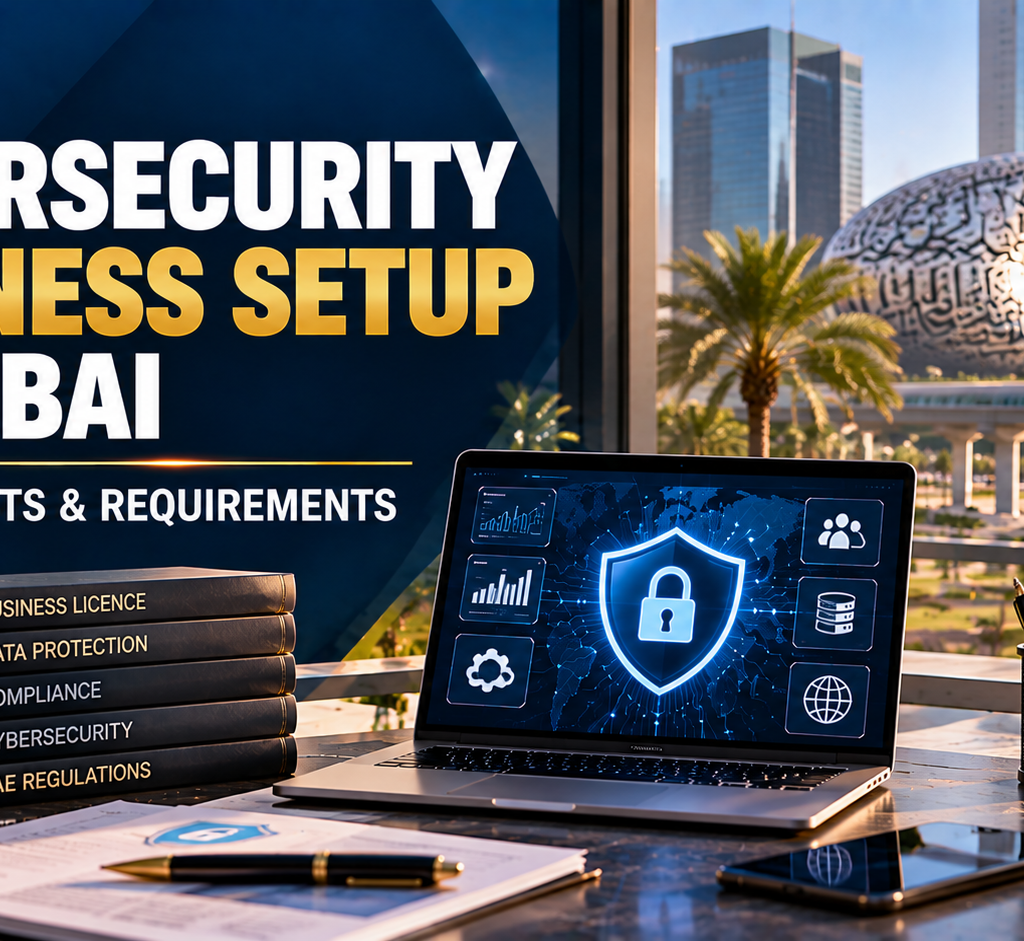
Cybersecurity Business Setup in Dubai: Licence, Costs & Requirements — Dubai office workspace with cybersecurity technology, UAE flag, compliance documents, and Museum of the Future in the background.

Cybersecurity Business Setup in Dubai: Licence, Costs & Requirements

Cybersecurity Business Setup in Dubai: Licence, Costs & Requirements Table of Contents Quick Answer Why Cybersecurity Is Becoming a Business Opportunity Choose the Exact Cybersecurity Activity Mainland or Free Zone? Licensing, Approvals and Professional Credibility Office and Technical Infrastructure Data Protection and Client Confidentiality Pricing a Cybersecurity Business Corporate Tax, VAT and Accounting First-Year Setup Budget Cybersecurity Business Setup Checklist Building a Repeatable Security Delivery Process AB Capital Support Also Read FAQs Quick Answer A cybersecurity business in Dubai needs the correct commercial activity and licence, and some cybersecurity services may involve specific regulatory requirements. Dubai’s cybersecurity ecosystem includes dedicated licence activities for businesses providing cybersecurity services to organisations. The first step is to define whether the company will provide cybersecurity consultancy, managed security services, software, testing, training, technology trading or another specialised service. The activity determines the licensing route, approvals and operating requirements. Summarize with ChatGPT Why Cybersecurity Is Becoming a Business Opportunity Every organisation now depends on digital systems, which means cybersecurity has become an operational requirement rather than an optional IT service. Banks, retailers, healthcare providers, logistics companies, professional firms and government-facing businesses all need to manage cyber risk. Dubai’s position as a technology and business hub creates a customer base for cybersecurity providers. New companies can serve SMEs that need practical security support, while more established firms can target enterprise clients with managed detection, governance, risk and compliance, cloud security or specialist testing. The opportunity is attractive, but credibility is critical. Customers are trusting a cybersecurity provider with sensitive systems, so professional qualifications, experienced staff, secure internal processes and clear contracts matter. Choose the Exact Cybersecurity Activity ‘Cybersecurity’ is not one service. A consultancy may advise clients on security strategy and risk. A managed security provider may monitor systems. A penetration-testing company may conduct authorised security assessments. A software company may sell security tools. A training business may educate employees. Dubai Electronic Security Center (DESC) lists cybersecurity-related licensing activities, including Cyber Security Consultancy. The exact licence and approvals should be confirmed with the relevant authority before incorporation. Do not describe the business too broadly if the actual service is specialised. A precise activity makes it easier to understand what the company is legally authorised to do. Mainland or Free Zone? Mainland can be appropriate for companies that want to contract widely with UAE customers and build a conventional local services operation. A technology-oriented Free Zone may be attractive for firms that want a specialised ecosystem or international operating model. The decision should include customer requirements. Some enterprise clients may require local contracting, specific certifications, insurance or vendor onboarding. Others may be comfortable with a Free Zone entity. Ask target customers what they expect before choosing the structure. Licensing, Approvals and Professional Credibility A cybersecurity company should distinguish between a business licence and professional capability. The licence permits the company to conduct its approved activity; it does not automatically prove that the team is qualified to deliver high-risk security services. Build a credentials pack containing team qualifications, relevant experience, methodologies, sample deliverables, insurance details and security policies. For penetration testing and similar services, contracts should define authorised scope, testing windows, reporting and liability. If a service touches regulated sectors or critical systems, additional rules may apply. Obtain specialist advice where the project falls within a regulated environment. For certain Dubai government-facing cybersecurity services, DESC also maintains certified-provider programmes covering areas such as incident response and penetration testing. Requirements should be checked against the exact service and customer type. Office and Technical Infrastructure Cybersecurity firms can operate from relatively compact offices, but their internal technology environment needs to be secure. Use strong identity controls, privileged-access management, endpoint protection, encrypted communications, secure backups and detailed logging. If the business operates a security operations centre, technical requirements can become much larger. Consider monitoring infrastructure, redundancy, secure customer connections, incident escalation and staffing coverage. These operating costs should be included in the business plan. Data Protection and Client Confidentiality Cybersecurity providers often see confidential information that other professional services firms never access. Contracts should therefore address confidentiality, data handling, access rights, retention and incident notification. Employees and contractors should understand that client credentials, vulnerability reports and security findings are highly sensitive. Create procedures for storing and destroying client information and for controlling access after an engagement ends. Businesses handling personal information should also consider the UAE’s applicable data protection and cyber laws. The UAE Government’s cyber laws resource provides access to relevant federal and Dubai legislation and policies. Pricing a Cybersecurity Business Cybersecurity revenue can come from assessments, project work, monthly managed services, retainers, software subscriptions or training. Recurring managed-security revenue can create predictability, while project work can generate larger individual engagements. Avoid competing only on price. A strong proposition could focus on a specific customer segment, such as SMEs, fintech firms, healthcare companies, e-commerce businesses or logistics operators. Sector expertise can be a stronger differentiator than a generic ‘cybersecurity services’ label. Corporate Tax, VAT and Accounting Cybersecurity companies are generally within the UAE business tax framework according to their circumstances. The UAE Corporate Tax system has a 0% rate on taxable income up to AED 375,000 and 9% above that threshold, subject to the law and applicable conditions. VAT registration can become mandatory when taxable supplies and imports exceed AED 375,000, with voluntary registration above AED 187,500 subject to the rules. The Federal Tax Authority confirms these VAT thresholds for eligible UAE-resident businesses. Professional service businesses should maintain detailed project invoices, contracts, employee costs, subcontractor costs and revenue schedules. Clear records are useful for both management reporting and tax compliance. Calculate UAE Corporate Tax First-Year Setup Budget The licence is only one component of the budget. Include incorporation and renewal, workspace, visas, salaries, insurance, laptops, security software, cloud services, professional certifications, accounting, tax compliance and marketing. A cybersecurity firm should also maintain a technology reserve. If a major customer requires a particular platform, certification or secure environment, the business should have capital available to meet the requirement without disrupting

Cybersecurity Business Setup in Dubai: Licence, Costs & Requirements Read More »

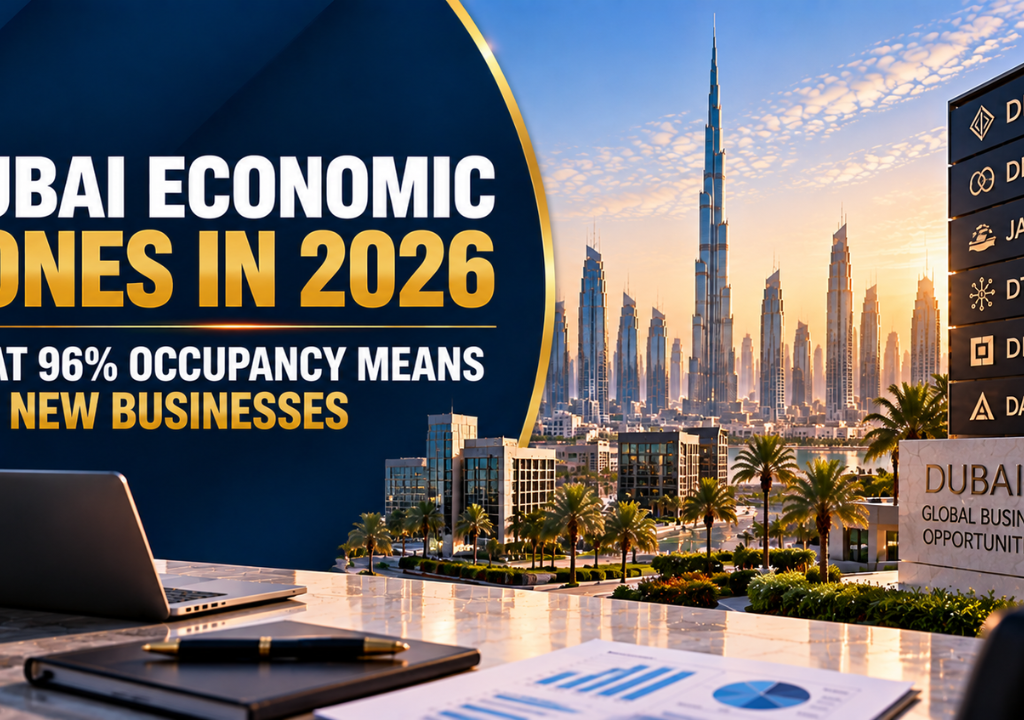
Dubai Economic Zones in 2026- What 96% Occupancy Means for New Businesses

Dubai Economic Zones in 2026: What 96% Occupancy Means for New Businesses

DIEZ Growth in 2026: Which Dubai Economic Zones Are Attracting Businesses? Table of Contents What 96% Occupancy Actually Tells Us DIEZ’s Three Main Ecosystems Dubai Airport Freezone Dubai Silicon Oasis Dubai CommerCity What Company Growth Means for Entrepreneurs How to Choose the Right Economic Zone Occupancy and Availability AB Capital’s Support Also Read FAQs Quick Answer: Dubai economic zones are showing strong demand in 2026. Dubai Integrated Economic Zones (DIEZ), covering Dubai Airport Freezone (DAFZ), Dubai Silicon Oasis (DSO) and Dubai CommerCity, reported 96% occupancy in H1 2026, while the number of companies increased 13% year on year and the workforce grew 24%. For new businesses, this signals strong demand for Dubai’s economic infrastructure, but it also means founders should choose their zone based on sector fit, premises, customers, licence activity and long-term operating needs. Summarize with ChatGPT What 96% Occupancy Actually Tells Us Occupancy is not a guarantee that every business opportunity is attractive. However, a 96% occupancy level is a useful indicator of demand for commercial space and economic-zone infrastructure. It suggests that established zones are not simply empty registration locations; businesses are using them for actual operations. DIEZ’s H1 2026 results show 96% occupancy across its three economic zones, with company numbers up 13% year on year and workforce growth of 24% compared with H1 2025. Read the official H1 2026 announcement. For entrepreneurs, the key question becomes which ecosystem best matches the company. A technology startup may value one type of community, while an importer, e-commerce company or multinational regional office may need a different infrastructure package. DIEZ’s Three Main Ecosystems DIEZ brings together three distinct business environments. DAFZ is closely associated with airport connectivity and international trade. Dubai Silicon Oasis has a strong technology and innovation profile. Dubai CommerCity is focused on e-commerce and digital commerce. This distinction is useful because “Free Zone” is not one standard product. The infrastructure and ecosystem can influence hiring, networking, logistics, office requirements and customer access. Dubai Airport Freezone DAFZ’s location near Dubai International Airport is strategically relevant to businesses that depend on international connectivity. Importers, distributors, professional service companies and regional offices can benefit from proximity to major transport infrastructure. Businesses considering DAFZ should still review the exact licence activity, facility requirements, costs and customer model before making a decision. Visit the official Dubai Airport Freezone website for current licensing, facilities and business information. Dubai Silicon Oasis DSO is particularly relevant for technology-oriented companies and businesses that value an innovation ecosystem. The official DSO site describes the zone as an economic zone for knowledge and innovation and highlights areas including AI and IoT, robotics, cybersecurity, Web3 and other future-focused sectors. Visit Dubai Silicon Oasis. Activities can include technology, services and industrial operations subject to the zone’s licensing framework. The zone has also developed into a broader community rather than a simple licensing jurisdiction. For a software, AI, engineering or technology company, ecosystem fit can be as important as the headline licence fee. For a deeper look at the setup process, see AB Capital’s Company Formation in Dubai Silicon Oasis: Complete 2026 Guide. Dubai CommerCity Dubai CommerCity is designed around e-commerce and digital commerce. Its official website describes it as a dedicated digital-commerce free zone serving brands, marketplaces and enablers across the Middle East, Africa and South Asia. An e-commerce company should consider not only its online storefront but also warehousing, fulfilment, payment processing, imports, returns and customer support. The official zone also highlights warehouse, fulfilment and last-mile options. Explore the official Dubai CommerCity website for current facilities and setup information. What Company Growth Means for Entrepreneurs DIEZ reported a 13% year-on-year increase in company numbers in H1 2026, alongside 24% workforce growth. This indicates expansion across the economic-zone ecosystem and a growing employment base. For new founders, this can mean access to a larger community of suppliers, professionals and potential partners. It can also mean more competition, which makes positioning and customer acquisition increasingly important. The growth figures should therefore be viewed as market context rather than as a guarantee of success for an individual company. How to Choose the Right Economic Zone Use a five-part test: sector, customer, infrastructure, people and future plans. Sector: Does the zone permit your exact business activity and support your industry? Customer: Where are your customers, and how will the company serve them? Infrastructure: Do you need a desk, private office, warehouse, laboratory, retail space or specialised facilities? People: What are your hiring, commuting and visa requirements? Future plans: Can the structure support your expected expansion and operational changes? Compare total annual operating cost rather than licence price alone. Include office or warehouse costs, visas, deposits, accounting, tax compliance, banking support, insurance and renewal costs. Factor What to Check Business activity Whether your exact activity is permitted and what approvals may be required. Premises Office, warehouse, retail or specialised-space requirements. Customers Where customers are located and how the company will serve them. Employees Visa requirements, workspace and hiring needs. Total cost Licence, premises, visas, compliance, accounting, banking and renewal. Growth plan Whether the structure can support future expansion and additional activities. AB Capital’s Mainland vs Free Zone Company Setup in Dubai 2026 guide provides a broader comparison. Occupancy and Availability High occupancy can make space selection more competitive. Businesses should not assume that a particular office package or facility will always be available at a fixed price. Ask for a current quotation and clarify what is included. For companies that need physical space, this should be part of the initial setup timeline rather than an afterthought. Confirm premises, lease terms, permitted use, visa implications and additional facility costs before finalising the structure. The 96% figure describes occupancy across DIEZ’s three economic zones in H1 2026; it does not mean that every individual building, office type or facility is 96% occupied. AB Capital’s Support AB Capital can help compare Dubai Free Zones and economic-zone options based on the business activity, ownership, visa needs, banking plan and operating model. A good setup is

Dubai Economic Zones in 2026: What 96% Occupancy Means for New Businesses Read More »

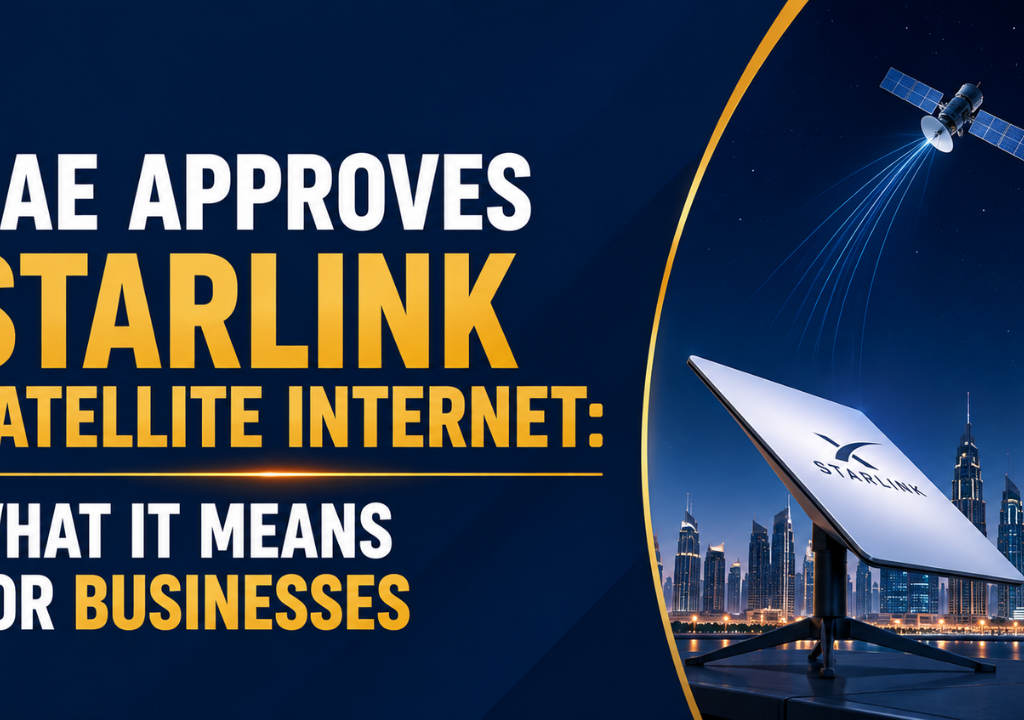
UAE Approves Starlink Satellite Internet- What It Means for Businesses

UAE Approves Starlink Satellite Internet: What It Means for Businesses

Table of Contents Quick Answer: What Does the Starlink UAE Approval Mean? What Has the UAE Approved? Why Satellite Internet Matters in the UAE What Could Starlink Mean for UAE Businesses? Starlink Will Complement Fibre and 5G What This Means for New Businesses Setting Up in the UAE Which Businesses Could Benefit Most? What Businesses Should Consider Before Using Satellite Internet? UAE Regulatory Requirements Still Apply A Bigger Signal for the UAE Digital Economy What We Know and What We Still Do Not Know Potential Long-Term Business Impact How AB Capital Can Help Businesses Setting Up in the UAE Frequently Asked Questions Final Thoughts The UAE has approved Starlink Satellite Communications LLC to establish and operate a public satellite communications network and provide broadband satellite internet services in the country. The Telecommunications and Digital Government Regulatory Authority (TDRA) announced the 10-year General Space Services License on 28 August 2026. The development adds satellite connectivity to the UAE’s existing digital infrastructure rather than replacing fibre and 5G. TDRA says the licence can support individuals, businesses and government entities, with relevance to aviation, maritime transport, energy, logistics and emergency response. Quick Answer: What Does the Starlink UAE Approval Mean? The UAE has granted Starlink a 10-year licence to establish, operate and manage a public satellite communications network and provide broadband satellite internet services. The licence covers individuals, businesses and government entities and includes satellite connectivity services for maritime and aviation sectors within the applicable UAE regulatory framework. TDRA’s announcement does not announce public pricing or a specific commercial launch date. Summarize this article on ChatGPT What Has the UAE Approved? A 10-year General Space Services License Authority to establish, operate and manage a public satellite communications network Authority to provide broadband satellite internet services in the UAE Licence scope covering individuals, businesses and government entities Satellite connectivity for maritime and aviation sectors under the applicable framework Why Satellite Internet Matters in the UAE The UAE already has strong fibre and mobile connectivity, so satellite internet is being positioned as an additional layer. TDRA says it can diversify access options and strengthen network resilience, readiness and continuity. WAM’s official report confirms the same regulatory announcement. For a conventional office in central Dubai, satellite may not be necessary. For remote sites, transport operations, industrial facilities or emergency scenarios, having another connectivity route could be more valuable. What Could Starlink Mean for UAE Businesses? 1. Better Connectivity for Remote Operations Businesses operating at remote, temporary or mobile sites may benefit from another way to connect teams, systems and equipment. This could be relevant to construction, infrastructure, field services and industrial operations. 2. Stronger Business Continuity Cloud software, communications, monitoring and logistics platforms increasingly depend on reliable connectivity. Satellite connectivity could become one component of a broader contingency plan where the business case supports it. 3. Logistics and Supply Chains Logistics is specifically identified by TDRA as a sector that can benefit. Distributed warehouses, transport operations and remote facilities may have use cases for an additional connectivity option. 4. Aviation and Maritime Connectivity The licence includes satellite connectivity for aviation and maritime sectors within the approved regulatory and technical framework. These industries often have connectivity needs that differ from fixed offices. 5. Energy and Critical Infrastructure Energy is also named by TDRA. Remote industrial assets can require reliable communications and monitoring, making resilient connectivity strategically relevant. 6. Emergency Response TDRA identifies emergency response as another critical area. Satellite communications can provide an additional option when terrestrial infrastructure is unavailable or disrupted. Starlink Will Complement Fibre and 5G The UAE announcement does not present satellite connectivity as a replacement for existing networks. Instead, it adds a space-based layer alongside fibre-optic and 5G infrastructure. What This Means for New Businesses Setting Up in the UAE For entrepreneurs considering business setup in Dubai or elsewhere in the UAE, the approval is another example of the country’s investment in digital infrastructure and emerging technology. A business location is increasingly evaluated by more than licensing and office costs. Connectivity, cloud access, digital operations, logistics and resilience can all influence where an international company chooses to establish its regional base. Which Businesses Could Benefit Most? Logistics and supply-chain operators Energy and industrial companies Maritime businesses Aviation-related companies Construction and infrastructure projects Remote field-service businesses Emergency and resilience teams Technology companies operating connected devices or remote infrastructure What Businesses Should Consider Before Using Satellite Internet? Which locations are most dependent on reliable connectivity? Do you need a backup connection? Would satellites improve your business continuity plan? What equipment and installation would be required? What service level would your operation need? What will the total cost be once commercial pricing is announced? Are any additional UAE regulatory approvals relevant to your use case? UAE Regulatory Requirements Still Apply Starlink’s licensed services remain subject to UAE requirements covering security, information infrastructure protection, service quality, reliability and continuity, consumer rights, data privacy, spectrum use and technical coordination. TDRA also provides information on satellite services and approved telecommunications equipment. A Bigger Signal for the UAE Digital Economy The Starlink decision comes during a broader period of telecommunications and digital-infrastructure development. Earlier in August 2026, TDRA announced 20-year renewals of the public telecommunications licences of e& and du, providing a long-term framework for continued investment in digital infrastructure. See the TDRA announcement. Together, these developments point to a connectivity environment where established telecom networks and emerging technologies can operate alongside each other. What We Know and What We Still Do Not Know Confirmed: Starlink has received a 10-year UAE licence. Confirmed: The licence covers broadband satellite internet services. Confirmed: Businesses and government entities are within the licence scope. Confirmed: Maritime and aviation connectivity is included within the regulatory framework. Not announced in the TDRA release: consumer pricing, business pricing and a specific commercial launch date. Potential Long-Term Business Impact If commercial services become widely available, the strongest use cases may be in environments where connectivity is remote, mobile or operationally critical. Companies could potentially use satellite connectivity

UAE Approves Starlink Satellite Internet: What It Means for Businesses Read More »

Types of Trade Licenses in Dubai- Which One Does Your Business Need?

Types of Trade Licenses in Dubai: Which One Does Your Business Need?

Quick Answer: The main types of trade licenses in Dubai are generally based on the nature of the business activity. The most common categories include Commercial, Professional and Industrial licences, while specific sectors such as tourism and certain specialised activities can have additional licensing requirements or approvals. The right licence depends on what your business actually does, where it will operate, the legal structure you choose and whether your activity requires approval from another government authority. For example, a trading company may require a Commercial Licence, while a consultancy or other service-based business may require a Professional Licence/activity. A manufacturing company would generally need an Industrial Licence. Choosing the correct licence is important because your licence determines which activities your company is legally permitted to conduct. Summarize this article on ChatGPT What Is a Trade Licence in Dubai? A Dubai trade licence is an official authorisation that allows a company to conduct specified business activities in Dubai. When establishing a company, you normally need to select approved business activities and obtain a licence corresponding to those activities. The licence defines the commercial activities your company is authorised to carry out, so the choice should be based on your business model rather than simply the cheapest available package. Types of Trade Licenses in Dubai Commercial Licence Used generally for trading goods and commercial activities. Examples: General trading, import and export, wholesale, retail, distribution and certain e-commerce activities. Professional Licence Generally associated with professional, consultancy and service-based activities. Examples: Management consultancy, marketing consultancy, accounting, IT consultancy, design, educational consultancy and technical services. Industrial Licence Generally relevant to manufacturing and industrial activities. Examples: Manufacturing, production, processing, assembly, packaging and industrial operations. Tourism Licence Tourism businesses can require specific tourism-related licensing and approvals. Examples: Travel agencies, tour operators, tourism services and certain hospitality and destination management activities. E-Commerce Activities Online businesses generally need the underlying commercial or professional activity and applicable e-commerce-related activity. Examples: Online retail, digital services and online consultancy. Trade Licence Categories at a Glance Licence Type Generally Suitable For Examples Commercial Licence Trading and commercial businesses Retail, wholesale, import/export Professional Licence Services and professional activities Consultancy, design, IT services Industrial Licence Manufacturing and production Factories, processing, assembly Tourism Licence / Approvals Tourism-related businesses Travel, tours, tourism services E-commerce Activity Online businesses Online retail, digital services Important: The exact licence category and activity depend on the business model and licensing authority. Some activities also require additional approvals. How to Choose the Right Trade Licence in Dubai Step 1: Define your business activity Write down exactly what you intend to sell or provide. Step 2: Identify your customers Consider consumers, businesses, government entities, UAE customers and international customers. Step 3: Decide between Mainland and Free Zone A mainland structure can suit businesses needing wider UAE operations, while a free zone can suit businesses seeking a specialised ecosystem or international-focused setup. Step 4: Consider your office requirements Decide whether you need an office, retail space, warehouse, factory, flexi-desk or shared workspace. Step 5: Check additional approvals Regulated sectors such as healthcare, education, finance, food, tourism, real estate, transport and construction can require additional approvals. Dubai Mainland vs Free Zone Trade Licence Factor Mainland Free Zone Market Wider UAE market Free zone-focused structure Ownership 100% foreign ownership available for many activities 100% foreign ownership generally available under applicable rules Business activities Broad range Depends on free zone Office options Mainland commercial premises Free zone workspace options Best for Businesses needing wider UAE operations Businesses suited to a specific free zone Neither option is automatically better. The right choice depends on the business activity, market access, workspace and growth plans. How Much Does a Trade Licence Cost in Dubai? There is no single Dubai trade licence price that applies to every business. The total cost can depend on: Business activity Mainland or free zone Legal structure Number of activities Office requirements Number of visas External approvals Government fees Establishment card Immigration requirements Professional service fees A better way to calculate your budget Consider: Licence + registration + premises + visas + government fees + banking + tax/accounting + other approvals. Documents Required for a Dubai Trade Licence The exact documents depend on the authority, company structure and business activity. Passport copies of shareholders Passport copies of managers Proposed company name Business activity details Application forms Proof of address, where required Corporate documents for corporate shareholders Business plan for certain activities External approvals, where applicable How to Get a Trade Licence in Dubai 1. Choose your business activity Determine exactly what your company will do. 2. Select the business jurisdiction Choose mainland or an appropriate free zone. 3. Choose the legal structure Select the structure suitable for your shareholders and business model. 4. Reserve your company name Choose an acceptable trade name. 5. Submit the application Provide the required documents. 6. Obtain approvals Complete any additional approvals. 7. Arrange your premises Complete office, shop, warehouse or other premises requirements. 8. Pay the applicable fees Pay relevant government and licensing charges. 9. Receive your licence Operate according to the activities listed on the licence. 10. Complete post-licensing requirements These may include establishment card, visas, bank account, Corporate Tax, VAT and accounting setup. Can One Dubai Company Have Multiple Business Activities? In many cases, businesses can apply for more than one compatible business activity under the same company, subject to the rules of the relevant licensing authority and any required approvals. Can Foreigners Get a Trade Licence in Dubai? Yes. Foreign entrepreneurs can establish businesses in Dubai under applicable mainland and free zone regulations. Many activities allow 100% foreign ownership, although exact rules depend on the activity and jurisdiction. Foreign ownership and business activity are separate questions: even with full ownership, the company still needs the correct licence and any required approvals. Do You Need a Local Sponsor for a Dubai Trade Licence? For many business activities, a UAE national shareholder or local sponsor is not automatically required. Many activities allow full foreign ownership, although specific regulated activities

Types of Trade Licenses in Dubai: Which One Does Your Business Need? Read More »

Company Formation in Dubai Healthcare City- Complete Guide for 2026

Company Formation in Dubai Healthcare City: Complete Guide for 2026

Quick answer: Company formation in Dubai Healthcare City (DHCC) allows entrepreneurs, healthcare professionals, investors and businesses to establish a company within Dubai’s specialised healthcare and wellness Free Zone. DHCC supports both clinical and non-clinical businesses, with legal structures including a Free Zone Limited Liability Company (FZ-LLC) and branches of UAE or foreign companies. The setup process depends heavily on whether the business is clinical or non-clinical, because healthcare operators and professionals require additional regulatory approvals and licences. DHCC is not only for hospitals and doctors. The ecosystem also covers areas such as healthcare, wellness, education, hospitality, retail and other supporting businesses. This makes it an interesting option for entrepreneurs who want to build a business around Dubai’s growing healthcare and wellness sector. If you are considering company formation in Dubai Healthcare City in 2026, the most important thing is to understand which type of business you are establishing and what approvals it will need before you start the application. What is Dubai Healthcare City? Dubai Healthcare City, commonly known as DHCC, is a specialised healthcare and wellness Free Zone in Dubai. It was created as an ecosystem where healthcare providers, medical professionals, businesses, researchers and supporting companies can operate within a dedicated environment. DHCC currently operates across two main locations: The ecosystem includes healthcare facilities as well as businesses supporting healthcare, wellness, retail, hospitality, education and related sectors. For businesses, the main attraction is that you are not simply setting up a company in Dubai. You are entering an environment built around a specific industry. Is Dubai Healthcare City a Free Zone? Yes. Dubai Healthcare City is a Free Zone and offers 100% ownership for businesses established within its framework. DHCC also supports different investment models, including leasing, freehold land and joint ventures, depending on the project. This can make DHCC attractive to international entrepreneurs and investors who want to establish a Dubai business without bringing in a local equity partner. However, healthcare businesses have an additional layer of regulation. Owning the company and being permitted to provide healthcare services are two separate considerations. Clinical vs Non-Clinical Company Formation in DHCC This is probably the most important distinction to understand before setting up a company in Dubai Healthcare City. Clinical Business A clinical business provides healthcare services directly to patients. Examples can include: These businesses require regulatory approval and facility licensing in addition to the commercial company setup. Non-Clinical Business A non-clinical business does not directly provide regulated healthcare treatment. Examples can include businesses operating in: The licensing requirements can be simpler than those for clinical businesses, depending on the exact activity. This distinction is important because a company cannot simply obtain a commercial licence and start providing medical services. Clinical facilities and healthcare professionals must obtain the relevant approvals and licences from DHCA – Regulations. Why Choose Company Formation in Dubai Healthcare City? DHCC can be a strong choice if your business is connected to healthcare, wellness or related industries. Key advantages include: DHCC describes its ecosystem as a healthcare and wellness Free Zone with a community that includes healthcare providers and supporting businesses. What Businesses Can Be Set Up in Dubai Healthcare City? DHCC’s permitted activities cover more than traditional medical businesses. The exact activity must be checked against the current permitted activity and licensing categories, but the wider DHCC ecosystem includes areas such as: Business Category Examples Healthcare Clinics, medical centres and healthcare providers Wellness Wellness and personal care businesses Education Healthcare and related education Research Medical and scientific research Retail Healthcare-related retail Hospitality Healthcare and wellness hospitality Professional Services Approved supporting services Technology Approved healthcare and technology activities The authority actively encourages businesses across healthcare, education, hospitality, retail and wellness clusters. Legal Structures Available in DHCC The current DHCC regulations provide for several legal structures. 1. Free Zone Limited Liability Company A Free Zone Limited Liability Company (FZ-LLC) is a company established within the Free Zone. It can be suitable for investors who want to create a new business in DHCC. The company has its own legal identity, while shareholder liability is generally limited according to the applicable legal framework. 2. Branch of a Foreign Company An overseas company can establish a branch in DHCC, subject to the relevant requirements. This can be useful for an international healthcare group or company that wants to establish a presence in Dubai without creating a completely separate business structure. 3. Branch of a UAE Company A company already established elsewhere in the UAE may also be able to establish a branch in DHCC. The exact requirements depend on the parent company’s structure and proposed activity. DHCC’s current regulations recognise FZ-LLCs, branches of foreign companies and branches of UAE companies/establishments as legal structures. DHCC Company Structure at a Glance Structure Best Suited For FZ-LLC New businesses and investors Foreign Company Branch International companies expanding into Dubai UAE Company Branch Existing UAE businesses expanding into DHCC Choosing the structure should be based on your business plans, ownership, existing company structure and intended activities. DHCC Commercial Licence A company operating in Dubai Healthcare City needs the appropriate commercial licence for its approved activities. DHCC’s regulations state that commercial licences are valid for one year and are renewable annually. The licence allows a company to conduct the activities approved for that business. This means licence renewal should become part of your regular compliance calendar after incorporation. Company Formation in Dubai Healthcare City: Step-by-Step Process The exact process differs depending on whether you are establishing a clinical or non-clinical business. Here’s the general process. Step 1: Choose Your Business Activity Start by clearly defining what the business will do. This is especially important in DHCC because healthcare activities can have specific regulatory requirements. For example, setting up: A healthcare consultancy is very different from setting up: A medical clinic. The second business will need additional facility and professional licensing. Step 2: Choose the Legal Structure Decide whether you need: If you are starting a new company, an FZ-LLC may be appropriate. If you

Company Formation in Dubai Healthcare City: Complete Guide for 2026 Read More »

Start a SaaS Business in the UAE- Complete Step-by-Step Guide for 2026

Start a SaaS Business in the UAE: Complete Step-by-Step Guide for 2026

Introduction Software as a Service (SaaS) has transformed how businesses operate. Instead of purchasing software once and installing it on individual computers, companies now subscribe to cloud-based applications that can be accessed from anywhere with an internet connection. From project management tools and CRM platforms to AI-powered business solutions and accounting software, SaaS products have become an essential part of modern business operations. As the global SaaS industry continues to expand, entrepreneurs are looking for locations that not only support innovation but also provide a stable business environment, access to international markets, and room for long-term growth. This is one of the reasons why many founders are choosing to start a SaaS business in the UAE. The UAE has evolved far beyond its traditional strengths in trade and tourism. Today, it is positioning itself as a regional technology and innovation hub through investments in artificial intelligence, cloud computing, digital infrastructure, smart government initiatives, and startup-friendly policies. Cities like Dubai and Abu Dhabi are attracting software companies, fintech startups, AI firms, and technology entrepreneurs from around the world. Whether you’re building a B2B SaaS platform, an AI-powered productivity tool, an HR management system, a healthcare application, or an enterprise software solution, the UAE provides an environment that supports innovation while connecting businesses to markets across the Middle East, Africa, Asia, and Europe. However, building a successful SaaS company requires much more than writing code or launching a website. Founders need to think about company formation, licensing, taxation, banking, intellectual property, funding, compliance, pricing, customer acquisition, and long-term scalability. This comprehensive guide explains everything you need to know before launching a SaaS company in the UAE, helping you make informed decisions from day one. What is a SaaS Business? SaaS stands for Software as a Service. Instead of selling software as a one-time product, SaaS companies provide customers with access to software through a subscription model. Users typically pay monthly or annually to use the platform online without installing complex software on their own servers. This business model has become increasingly popular because it offers flexibility for both businesses and customers. For customers, SaaS eliminates the need for expensive hardware, manual software installations, and complicated upgrades. For founders, SaaS creates recurring revenue through subscription-based pricing, making it easier to forecast income and plan long-term growth. Common Examples of SaaS Businesses SaaS solutions exist in almost every industry. Popular examples include: Whether your customers are small businesses, enterprises, schools, hospitals, or individual consumers, there is likely a SaaS opportunity within your industry. Why the SaaS Industry Continues to Grow Several long-term trends continue driving demand for cloud-based software. Businesses Prefer Subscription Models Companies increasingly prefer paying monthly subscription fees instead of making large upfront software investments. This helps reduce capital expenditure while allowing businesses to scale their software usage as they grow. Remote Work Has Increased Demand Hybrid and remote working models have accelerated the adoption of cloud-based collaboration tools, communication platforms, cybersecurity software, and workflow management applications. Digital Transformation Is Accelerating Organizations across industries continue investing in digital transformation to improve efficiency, automate processes, and enhance customer experiences. As a result, demand for specialized software solutions continues growing. Artificial Intelligence Is Creating New Opportunities AI-powered SaaS products are becoming increasingly common. Businesses now seek software capable of: Entrepreneurs entering the SaaS industry today have more opportunities than ever before. Why Start a SaaS Business in the UAE? For technology founders, choosing the right country can significantly influence the success of a startup. The UAE has become one of the most attractive locations for software companies because it combines business-friendly regulations with strong infrastructure and international market access. Let’s explore the reasons behind this growing popularity. Government Support for Technology and Innovation The UAE has made technology one of its national priorities. Over the past decade, the government has launched multiple initiatives aimed at encouraging: This long-term vision creates an ecosystem where technology companies can thrive. Unlike many countries where startups struggle with outdated regulations, the UAE continues updating its policies to encourage innovation and attract international investment. For SaaS founders, this creates confidence that the business environment will continue evolving alongside technological advancements. Strategic Access to International Markets One of the UAE’s biggest competitive advantages is its location. A company established in Dubai can serve customers across multiple continents without needing separate regional headquarters. Businesses operating from the UAE can easily reach: For SaaS businesses, physical borders matter less than they do for manufacturing companies. However, having a regional headquarters in a globally connected city can improve investor confidence, customer trust, and operational efficiency. This makes the UAE particularly attractive for founders planning international expansion. Modern Digital Infrastructure Software companies rely heavily on infrastructure. Reliable internet connectivity, secure cloud services, modern data centres, and digital government systems all contribute to smoother operations. The UAE has invested significantly in digital infrastructure over the past decade. This benefits SaaS founders by providing: These foundations help technology businesses operate efficiently while supporting long-term growth. Access to International Talent A successful SaaS company requires much more than developers. As the business grows, founders typically need specialists in: The UAE’s multicultural workforce makes it easier to build diverse teams with international experience. Professionals from across the world choose Dubai and Abu Dhabi as places to live and work, giving startups access to a broad talent pool. A Growing Startup Ecosystem Technology companies rarely succeed in isolation. Founders benefit from being surrounded by other entrepreneurs, investors, accelerators, incubators, mentors, and networking opportunities. The UAE’s startup ecosystem has matured considerably in recent years. Technology events, innovation hubs, co-working spaces, startup competitions, and venture capital activity continue increasing. This collaborative environment helps founders learn faster, build partnerships, and connect with potential investors. UAE vs USA vs UK vs Singapore for SaaS Startups Choosing the right jurisdiction depends on your goals, funding strategy, target customers, and operational requirements. The comparison below highlights some of the key differences. Factor UAE USA UK Singapore Ease of Business Setup Excellent Good Good Excellent

Start a SaaS Business in the UAE: Complete Step-by-Step Guide for 2026 Read More »

Why More People Are Choosing Dubai in 2026

UK vs India vs Dubai: Why More People Are Choosing Dubai in 2026

Introduction If you’ve been following global business trends over the last few years, you’ve probably noticed one city appearing in almost every conversation about entrepreneurship, investment, and relocation: Dubai. From startup founders and business owners to skilled professionals and high-net-worth individuals, thousands of people are choosing to move to the UAE every year. While people relocate for different reasons, one trend has become increasingly clear in 2026: more entrepreneurs and professionals are leaving the UK and India for Dubai. This shift isn’t happening because one country is “better” than another. Every country has its own strengths, opportunities, and challenges. However, Dubai offers a combination of business-friendly policies, world-class infrastructure, strategic location, modern lifestyle, and international connectivity that is difficult to ignore. For many entrepreneurs, the decision is no longer simply about relocating. It’s about positioning themselves closer to global markets, building businesses with international reach, and creating long-term financial opportunities. In this guide, we’ll explore why people are leaving the UK and India for Dubai, compare the advantages of each destination, and explain why Dubai continues to attract ambitious entrepreneurs, investors, and families from around the world. Why is Dubai Attracting So Much Global Attention? Over the past two decades, Dubai has transformed from a regional trading centre into one of the world’s most recognised business destinations. Today, it is home to multinational corporations, technology startups, financial institutions, manufacturing companies, logistics providers, luxury brands, healthcare businesses, and thousands of small and medium-sized enterprises. Unlike many cities that depend heavily on one industry, Dubai has developed a diversified economy that includes: This diversity creates opportunities for entrepreneurs across multiple sectors. For someone planning to relocate or expand internationally, this means there are far more opportunities to build, grow, and diversify a business. UK vs India vs Dubai: A Quick Comparison Every entrepreneur has different priorities. Some focus on taxation, while others care more about market access, lifestyle, or business regulations. The table below provides a broad comparison of key factors. Factor UK India Dubai Ease of Starting a Business Good Improving Excellent Global Business Connectivity High High Excellent Personal Income Tax Applicable Applicable No personal income tax Strategic Global Location Moderate Strong Excellent International Banking Excellent Good Excellent Infrastructure Excellent Developing rapidly World-class Safety High Varies by city Very High Access to Global Markets Good Good Excellent Rather than replacing the UK or India, Dubai complements them by offering businesses a gateway to international markets. Many entrepreneurs maintain operations in their home country while establishing a regional headquarters in Dubai. Why Entrepreneurs are Leaving the UK for Dubai The United Kingdom remains one of the world’s strongest economies and continues to be an attractive destination for innovation, finance, education, and technology. However, many entrepreneurs are increasingly exploring international expansion, and Dubai has become one of the preferred destinations. Several factors contribute to this trend. 1. Higher Operating Costs Running a business involves much more than generating revenue. Business owners must also manage: As operating expenses increase, many companies look for jurisdictions where they can improve operational efficiency while maintaining access to international markets. Dubai offers flexible office solutions, digital government services, and a growing business ecosystem that appeals to expanding companies. 2. International Expansion Opportunities Many UK businesses already serve customers in Europe. Dubai provides access to a completely different set of markets, including: Rather than focusing on a single region, entrepreneurs can use Dubai as a strategic base for international expansion. This geographical advantage is one of the city’s biggest strengths. 3. Business-Friendly Policies Entrepreneurs often value speed and efficiency. Dubai has invested heavily in digitising government services. Many administrative processes, including company registration, licensing, immigration procedures, and business services, have become significantly more streamlined. This enables founders to spend less time on paperwork and more time growing their businesses. 4. Lifestyle and Quality of Life Business decisions are rarely based solely on financial considerations. Many entrepreneurs also think about: Dubai offers modern infrastructure alongside a multicultural environment where residents from over 200 nationalities live and work together. UK Tax vs UAE Tax: Why Many UK Business Owners Are Expanding to Dubai Why More Indians are Moving to Dubai The relationship between India and the UAE has always been strong. Today, the Indian community represents one of the largest expatriate populations in the UAE, contributing significantly to business, healthcare, education, retail, technology, and professional services. Several factors explain why many Indian entrepreneurs choose Dubai. 1. Close Geographic Proximity Unlike relocating to countries on the other side of the world, Dubai is only a short flight from most major Indian cities. This allows entrepreneurs to: For many founders, maintaining strong connections with India while operating internationally is a major advantage. 2. Strong Indian Business Community Starting a business becomes easier when an established professional network already exists. Dubai is home to thousands of successful Indian entrepreneurs operating across industries such as: This creates opportunities for partnerships, networking, mentorship, and collaboration. 3. Better Global Market Access India offers a large domestic market. Dubai, however, provides direct access to international customers. Businesses operating from Dubai often trade with countries across: This allows companies to diversify revenue streams instead of relying on one market alone. 4. Attractive Business Environment Entrepreneurs generally look for environments that encourage growth. Dubai continues investing in: These initiatives create opportunities for both startups and established businesses. Why Dubai Is Becoming the First Choice for Global Entrepreneurs When entrepreneurs compare different countries, they usually evaluate several key areas. Dubai consistently performs well across many of them. Strategic Location Few cities enjoy Dubai’s geographic advantage. Within approximately eight hours of flying time, businesses can reach major markets across: For companies involved in import-export, consulting, logistics, manufacturing, or international trade, this significantly improves accessibility. World-Class Infrastructure Infrastructure plays an important role in business growth. Dubai offers: Efficient infrastructure reduces operational delays and improves productivity. Stable Economic Environment Business owners value predictability. Dubai has built a reputation for maintaining a stable business environment supported by long-term economic planning and continued investment in

UK vs India vs Dubai: Why More People Are Choosing Dubai in 2026 Read More »

How to Start a Food Truck Business in Dubai in 2026- License, Costs & Complete Setup Guide

How to Start a Food Truck Business in Dubai in 2026: License, Costs & Complete Setup Guide

Dubai’s food industry has evolved far beyond traditional restaurants and cafes. Over the last decade, food trucks have become a popular part of the city’s dining culture, serving everything from gourmet burgers and specialty coffee to international street food and healthy meal concepts. For entrepreneurs looking to enter the food and beverage sector without investing in a large restaurant, starting a Food Truck Business in Dubai can be an attractive option. Food trucks offer flexibility, lower operational costs compared to full-scale restaurants, and the ability to reach customers in different locations across the city. However, launching a successful food truck involves much more than buying a vehicle and serving food. Entrepreneurs must comply with licensing requirements, food safety regulations, municipality approvals, location permissions, and operational guidelines. This guide explains everything you need to know about starting a food truck business in Dubai in 2026, including licensing requirements, estimated costs, legal considerations, and practical tips for long-term success. Why Food Trucks are Growing in Dubai Dubai’s diverse population and strong tourism industry have created consistent demand for unique dining experiences. Today’s consumers often prefer convenience, affordability, and innovative food concepts. Food trucks meet all three requirements. Several factors continue driving growth in the sector: Increasing Demand for Street Food Consumers are becoming more interested in quick, high-quality meals that offer something different from traditional restaurants. Lower Investment Than Restaurants A food truck generally requires less capital than opening a full restaurant with extensive seating and interior fit-outs. Growing Event Industry Dubai hosts numerous festivals, sporting events, exhibitions, corporate gatherings, and community events where food trucks are regularly featured. Social Media Marketing Opportunities Visually appealing food concepts often perform well on platforms such as Instagram, TikTok, and Facebook, helping food truck owners attract customers organically. Is a Food Truck Business Profitable in Dubai? A food truck can be profitable when operated correctly. Success depends on several factors: Many successful operators generate repeat customers by focusing on a specific niche rather than offering an overly broad menu. Popular concepts include: Benefits of Starting a Food Truck Business in Dubai Lower Startup Costs Compared to a traditional restaurant, food trucks often require a smaller initial investment. Flexibility Owners can participate in events, markets, festivals, and high-traffic locations. Easier Brand Testing Food trucks allow entrepreneurs to test concepts before committing to larger investments. Mobility Unlike fixed-location restaurants, food trucks can move to areas with higher customer demand. Strong Marketing Potential Unique food concepts can quickly gain attention through social media and word-of-mouth recommendations. Food Truck Business Requirements in Dubai Operating a food truck involves several approvals and requirements. Business License A valid business license is required to legally operate. Food Safety Compliance Food preparation, storage, transportation, and hygiene standards must comply with Dubai Municipality regulations. Vehicle Approval The truck itself must meet technical and safety requirements. Location Permissions Food trucks cannot simply park anywhere and begin trading. Specific approvals may be required depending on the operating location. Staff Requirements Employees handling food may need health certifications and other regulatory approvals. Step-by-Step Guide to Starting a Food Truck Business in Dubai Step 1: Develop a Business Concept Before applying for licenses, define your concept. Consider: Cuisine Type Examples include: Target Customers Determine whether you will serve: Pricing Strategy Pricing should balance profitability with customer expectations. Step 2: Prepare a Business Plan A detailed business plan can help clarify operational and financial requirements. Include: A strong plan can also assist when opening a business bank account or seeking investors. Step 3: Choose the Right Business Structure Entrepreneurs must decide on the most appropriate company structure. Options may include: Mainland Company Often preferred for businesses targeting customers across Dubai. Other Approved Structures Depending on business activities and operational requirements. The most suitable structure depends on the business model and future expansion plans. Step 4: Obtain a Food Business License A food truck is not simply a vehicle; it is a regulated food business. The licensing process typically involves approvals from relevant authorities. Required documentation may include: Step 5: Purchase and Customize the Food Truck The vehicle must be designed specifically for food service operations. Key considerations include: Kitchen Equipment Ventilation Systems Proper ventilation is critical for safety and regulatory compliance. Water Systems Food preparation requires access to clean water and appropriate waste disposal systems. Branding Vehicle branding can significantly influence customer recognition and marketing success. Step 6: Obtain Municipality and Health Approvals Food businesses are subject to strict health and safety requirements. Authorities may evaluate: Compliance is essential to maintaining customer trust and avoiding penalties. Step 7: Secure Trading Locations One of the most important factors affecting profitability is location. Food trucks often perform well at: Securing access to high-traffic locations can significantly impact revenue. Food Truck Business Setup Cost in Dubai The total investment varies depending on the truck size, concept, equipment, and branding requirements. Estimated Cost Breakdown Expense Estimated Cost (AED) Business License 10,000 – 25,000+ Food Truck Vehicle 80,000 – 300,000+ Kitchen Equipment 20,000 – 100,000+ Branding & Design 5,000 – 20,000+ Initial Inventory 5,000 – 25,000+ Staff & Training Varies Marketing 5,000 – 30,000+ Estimated Startup Budget 120,000 AED to 500,000 AED+ The final amount depends on the concept and scale of operations. Common Challenges Food Truck Owners Face Location Restrictions Not all areas permit food truck operations. Seasonal Demand Customer traffic may vary depending on weather and events. Equipment Maintenance Mobile kitchens require ongoing maintenance and servicing. Competition Popular food categories often attract multiple operators. Regulatory Compliance Maintaining food safety standards requires continuous attention. Tips for Running a Successful Food Truck Business Focus on One Strong Concept Simple menus often perform better than overly complex offerings. Invest in Branding Customers remember memorable food truck brands. Use Social Media Effectively Regular updates help customers find your location. Prioritize Food Quality Repeat business depends on consistency. Participate in Events Events can significantly increase visibility and revenue. Monitor Costs Profitability depends on controlling food, staffing, and operational expenses. Why Dubai is an Excellent Market for

How to Start a Food Truck Business in Dubai in 2026: License, Costs & Complete Setup Guide Read More »

7 Costly UAE Business Setup Mistakes in 2026 That Smart Entrepreneurs Are Avoiding

7 Costly UAE Business Setup Mistakes in 2026 That Smart Entrepreneurs Are Avoiding

The UAE continues to attract entrepreneurs, startups, consultants, ecommerce brands, and international investors at record speed. Dubai especially has positioned itself as one of the world’s strongest business hubs because of its tax-friendly environment, global connectivity, advanced infrastructure, and investor-focused regulations. But in 2026, there is one growing problem many business owners still do not realize. A large number of UAE companies are being structured using outdated business setup strategies. What worked a few years ago is no longer enough today. The UAE business landscape has evolved rapidly with: Yet many founders are still relying on: This creates serious long-term risks for businesses that believe obtaining a trade license alone is enough to operate successfully in the UAE. The reality in 2026 is very different. Why Traditional UAE Business Setup Advice Is Becoming Risky A few years ago, many entrepreneurs entered Dubai with a simple approach: That model worked during the earlier free zone expansion phase. But the UAE is no longer operating like a startup economy. Today, the country is positioning itself as: This shift is positive for serious businesses because it improves: However, it also means that shortcuts and poorly structured setups are becoming increasingly dangerous. 1. The Free Zone vs Mainland Strategy Has Completely Changed For years, business owners entering Dubai had to choose between two clear options: Free Zone or Mainland Traditionally: But in 2026, the conversation has become far more advanced. Several free zone structures now allow businesses to access mainland opportunities through: This means some businesses can now expand more efficiently without immediately establishing separate mainland entities. Companies paying attention to these changes are: However, many entrepreneurs still follow outdated advice that no longer reflects current UAE regulations. 2. The “Free Zone Means Tax Free” Myth Is Still Hurting Businesses One of the biggest misconceptions still circulating in the market is: “Free Zone Companies Do Not Pay Corporate Tax” This assumption is no longer automatically correct. The introduction of UAE Corporate Tax changed the landscape significantly. Many business owners still believe: But UAE authorities now review businesses far more carefully. A company’s eligibility for favorable Corporate Tax treatment can depend on: Businesses making mistakes in these areas may create tax exposure without realizing it. 3. Weak Accounting Systems Are Becoming A Major Liability Many SMEs in the UAE still operate with: That approach may create major problems moving forward. The UAE is steadily building a more advanced digital compliance ecosystem. As e invoicing and digital reporting systems continue expanding, businesses with poor financial controls may face: The companies preparing early will gain a significant long-term advantage. 4. Banking Has Become More Important Than The License Itself Many entrepreneurs still focus almost entirely on: “Which Free Zone is Cheapest?” But experienced founders now understand something important: Banking compatibility matters more than cheap setup pricing. Corporate banks in the UAE now evaluate businesses based on: Businesses with weak structures or mismatched activities often face: This is one reason many businesses established cheaply years ago are now restructuring entirely. 5. Cheap Setup Packages Often Create Expensive Long-Term Problems Many setup advertisements focus only on: But very few explain: A company that looks affordable initially can become expensive later through: In 2026, smart entrepreneurs are focusing on sustainable business structures instead of simply chasing the cheapest package available. 6. UAE Technology And AI Businesses Have Massive Untapped Opportunities One of the most overlooked developments in the UAE today is the country’s increasing focus on: The UAE is actively positioning itself as a global innovation economy. This creates long-term opportunities for: Many entrepreneurs still do not realize how aggressively the UAE is supporting technology-driven business ecosystems. Businesses that position themselves correctly today may benefit significantly over the next decade. 7. Business Setup in Dubai is No Longer Just Administrative Work In the past, UAE company formation was often treated as simple paperwork. Today, structuring a company properly requires businesses to think about: The businesses that dominate the next decade in the UAE will not necessarily be the biggest businesses. They will be the businesses that were structured correctly from the beginning. That difference is becoming more important every year. What Smart UAE Businesses are doing Differently in 2026 The companies growing fastest in Dubai today are usually focusing on: Instead of asking: “What is the Cheapest Business Setup?” they are asking: “What Structure Supports Long-Term Growth?” That mindset shift is separating serious businesses from short-term setups. Why More Entrepreneurs Are Seeking Strategic Setup Guidance Experienced business owners entering the UAE now spend more time understanding: before incorporating a company. This is because: At AB Capital Services, this shift has become increasingly visible over the last two years. Entrepreneurs are asking deeper questions about Corporate Tax, compliance, banking, and international structuring instead of focusing only on obtaining the fastest license. That reflects how much the UAE business environment has matured. Final Thoughts The UAE remains one of the best business destinations in the world. But the rules of successful company formation are evolving rapidly. In 2026, business setup is no longer just about: The businesses succeeding today are building structures that support: Because in modern Dubai, the biggest competitive advantage is no longer simply having a company. It is having the right structure behind that company. Also Read

7 Costly UAE Business Setup Mistakes in 2026 That Smart Entrepreneurs Are Avoiding Read More »

We Analyzed 50 Dubai Businesses – Here's What Actually Works in 2026

We Analyzed 50 Dubai Businesses – Here’s What Actually Works in 2026

Over the past 18 months at AB Capital Services, we’ve facilitated company formation for entrepreneurs across every conceivable business model, from solo freelancers operating from DMCC flexi-desks to manufacturing operations requiring 10,000 square feet in JAFZA. We don’t just process licenses and close files. We track what happens next: which businesses scale, which pivot, which struggle, and which fold within the first year. This article synthesizes insights from 50 businesses we’ve supported from incorporation through their first 12-24 months of operations. The sample spans free zones (DMCC, IFZA, DIFC, JAFZA), mainland setups, and various industries including e-commerce, consulting, trading, technology, and F&B. We’ve intentionally excluded real estate and financial services, sectors with unique regulatory frameworks that don’t translate to most entrepreneurs. What emerged wasn’t a list of “hot business ideas” or generic success tips. It was a clear pattern: businesses that thrive in Dubai 2026 share specific structural decisions, compliance approaches, and operational habits. Businesses that struggle make predictable mistakes, most of which occur during setup, not operations. Here’s what the data actually shows. The Sample: Who We Analyzed Before diving into patterns, context matters. Our analysis focused on: Industries Represented: Setup Structures: Founder Profiles: Revenue Ranges (Year 1): This distribution mirrors the broader Dubai SME landscape: most new ventures start small, cluster in services or digital businesses, and choose free zones for initial setup due to lower barriers and full ownership. Pattern #1: Jurisdiction Match Determines First-Year Success More Than Business Model The single strongest predictor of first-year satisfaction wasn’t industry choice, founder experience, or even capital, it was jurisdiction-business model alignment. What Worked: E-commerce businesses in IFZA or Dubai CommerCity: All 9 e-commerce companies we tracked chose free zones with e-commerce focus. Eight of nine reported “meeting or exceeding expectations” at 12 months. The single underperformer cited unrelated product-market fit issues, not setup challenges. Why it worked: E-commerce licenses in these zones cost AED 8,500-15,000 annually, include flexi-desk space, and crucially, allow direct-to-consumer sales through their own websites and platforms like Noon and Amazon.ae without appointing distributors. International consulting firms in DMCC or DIFC: Professional services targeting international clients thrived in premium free zones. Ten consulting businesses (management consulting, tech advisory, financial consulting) set up in DMCC or DIFC. Nine remained operational and profitable for 18 months, with average first-year revenue of AED 1.2 million. Why it worked: Clients care about registered addresses. A DIFC entity signals credibility to international corporations. The higher setup cost (AED 18,000-35,000 annually) pays for itself through higher contract values and fewer questions about legitimacy. Local service businesses in mainland: Four service businesses targeting UAE consumers (fitness training, home maintenance, event planning, tutoring) chose mainland setup. All four reported this was critical to their success. Mainland allows them to market directly to Dubai residents, accept local contracts, and operate without distributor complications. What Didn’t Work: E-commerce in premium free zones: Two entrepreneurs established e-commerce businesses in DMCC, attracted by the prestige address. Both reported wishing they’d chosen IFZA instead. The DMCC license cost AED 15,000-18,000 versus IFZA’s AED 8,500, yet provided no additional benefit for online retail. Both businesses were profitable but regretted the unnecessary cost drain. Trading companies in mainland without clear UAE market focus: Three trading companies set up mainland operations planning to serve both UAE and international markets. All three faced challenges. Mainland provides UAE market access (good for local B2B), but international trading benefits more from free zone structures with zero-tax qualifying income and customs advantages. One pivoted to the free zone after year one; two continued but acknowledged the setup wasn’t optimal. The Lesson: Free zones aren’t automatically “better” or “easier.” Mainland isn’t just “for local market access.” Successful founders matched jurisdiction to their actual revenue model: Match jurisdiction to where money actually comes from, not generic advice about “foreign ownership” or “tax benefits.” Pattern #2: Corporate Tax Compliance Separates Professional Operations from Amateur Hour September 30, 2026 marked the first major corporate tax filing deadline for calendar-year businesses. We tracked how our 50 businesses approached this new compliance requirement. The Winners (34 businesses): These companies established proper accounting infrastructure from day one: Result: All 34 filed corporate tax returns before the September 30 deadline. Zero penalties. Most discovered they owed minimal or no tax (due to AED 375,000 threshold or free zone 0% status), but they filed correctly and on time. The Strugglers (16 businesses): These companies treated accounting as an afterthought: Result: Three missed the September 30 deadline entirely (AED 500/month penalties accruing). Seven filed on time but with questionable accuracy, creating audit risk. Six filed correctly but only after expensive catch-up accounting work (AED 8,000-15,000 in emergency fees). The most striking difference: The 34 winners spent AED 3,000-6,000 annually on regular accounting services. The 16 strugglers spent AED 8,000-20,000 on emergency catch-up work, plus penalties for some, plus ongoing stress and audit risk. Why This Matters: Corporate tax is three years old. By 2026, there’s no excuse for treating it as a surprise. Yet business owners still underestimate compliance infrastructure importance. The pattern is clear: businesses that invested in proper accounting from day one experienced corporate tax as a non-event. Businesses that skipped this “boring” foundational work experienced it as a crisis. AB Capital Services, as an FTA-approved tax agency with TAN 30008239 and one of the first agencies in UAE to achieve certification through the English language examination, works exclusively with businesses in the first category. From company formation, we build compliance infrastructure, bookkeeping systems, monthly financial oversight, proactive tax planning, so September deadlines don’t become September crises. Our clients filed corporate tax returns in 2026 the same way they filed VAT returns: on schedule, accurately, with zero drama. This is how professional operations work. Pattern #3: The Virtual Office Trap (And When It Actually Works) Thirty-one of our 50 businesses started with virtual offices or flexi-desk arrangements. This breakdown reveals when this works and when it creates problems. Virtual Office Success Stories (19 businesses): Profile: Service businesses with no client-facing requirements Result:

We Analyzed 50 Dubai Businesses – Here’s What Actually Works in 2026 Read More »

Dubai Free Zone Visa Benefits for Employees- The Complete 2026 Guide

Dubai Free Zone Visa Benefits for Employees: The Complete 2026 Guide

Quick Answer Dubai free zone visa benefits for employees include zero personal income tax on all earnings, a UAE residence visa valid for 2 to 3 years, the right to sponsor family members, access to world-class healthcare and education, employment in companies with 100% foreign ownership, streamlined visa processing through free zone authorities, and a clear pathway to the UAE Golden Visa for qualifying professionals. In 2026, over 40 free zones operate across Dubai, each with its own visa quota system, employee protection framework, and sectoral focus. This guide covers every benefit in full — the financial advantages, the residency rights, the family sponsorship rules, the employment protections, the cost of a Dubai free zone employment visa, and how the free zone employee visa compares to a mainland employment visa. 1. What a Dubai Free Zone Employment Visa Actually Is A Dubai free zone employment visa is a UAE residence visa issued to an employee or investor of a company registered within a designated free zone. The visa is sponsored by the free zone company through the relevant free zone authority — DMCC, IFZA, DAFZA, JAFZA, Meydan, Dubai Silicon Oasis, and others — rather than through the mainland Ministry of Human Resources and Emiratisation (MOHRE). The visa gives the holder the legal right to live and work in the UAE. It comes with an Emirates ID, mandatory health insurance, and the right to open a UAE personal bank account, obtain a UAE driving licence, and enrol children in UAE schools. The free zone authority acts as the administrative intermediary between the company, the employee, and the UAE immigration authorities. The key distinction from a mainland employment visa: free zone employment is governed by the specific free zone authority’s labour regulations rather than by MOHRE directly. In practice, most free zones have aligned their employee protections closely with the UAE Labour Law (Federal Decree Law No. 33 of 2021), but the administrative process for visa issuance, renewal, and cancellation runs through the free zone rather than through MOHRE service centres. 2. The Zero Personal Income Tax Advantage The most significant of all Dubai free zone visa benefits for employees is that there is no personal income tax in the UAE. An employee earning AED 25,000 per month receives AED 25,000 per month. There are no payroll deductions, no PAYE equivalent, and no national insurance equivalent. The same salary in the United Kingdom at the 40% tax bracket would produce a net salary of approximately AED 16,500 after income tax and national insurance. In Germany, the effective deduction on a comparable salary reaches 35% to 42%. In Australia, approximately 32%. The real financial impact: an employee earning AED 30,000 per month in a Dubai free zone retains AED 360,000 per year gross. Assuming modest annual living costs of AED 180,000 (rent, food, transport, and schooling for one child), the annual saving capacity is AED 180,000. The equivalent employee in London, Singapore, or Sydney earning the same gross compensation would save 30% to 40% less after tax, even accounting for differences in cost of living. This is not a temporary arrangement. The UAE has had no personal income tax since its founding and there are no announced plans to introduce one. The UAE Constitution places restrictions on the introduction of personal income tax at the federal level. Employees who structure their financial planning around tax-free income in Dubai are working with a stable policy environment, not a temporary incentive. 3. UAE Residence Visa: Rights, Validity, and What It Unlocks A Dubai free zone employment visa provides a UAE residence visa that is valid for 2 years in most free zones, with some authorities offering 3 year validity. The visa is renewable as long as the employment relationship continues and the company remains active and compliant with its free zone obligations. The residence visa is the foundation of legal life in the UAE. Everything else flows from it. Without a valid residence visa, an individual cannot open a personal bank account, obtain a UAE driving licence, register children in school, or access subsidised healthcare. The residence visa is not just a work permit — it is the document that establishes an individual as a legal resident of the UAE with full access to the country’s services and infrastructure. What the UAE residence visa unlocks for free zone employees 4. Family Sponsorship: Who You Can Bring and What the Requirements Are One of the most practically important Dubai free zone visa benefits for employees is the ability to sponsor immediate family members for UAE residence. A free zone employee who holds a valid UAE residence visa and meets the minimum salary requirement can bring their spouse, children, and in certain circumstances their parents to live with them in the UAE. Minimum salary requirements for family sponsorship Dependent Category Minimum Monthly Salary (AED) Additional Requirements Spouse 4,000 (or 3,000 with accommodation provided) Valid Ejari tenancy contract in employee’s name Children under 18 Included in spouse sponsorship if married Birth certificates attested and translated into Arabic Sons aged 18 to 25 (students) 4,000 minimum plus proof of full time enrollment University enrollment certificate required annually Unmarried daughters (any age) 4,000 minimum No upper age limit for unmarried daughters Parents 20,000 minimum or AED 10,000 with accommodation proof Significantly higher threshold; not available to all employees Domestic worker (maid) No specific minimum but practical minimum AED 8,000 to AED 10,000 Separate domestic worker visa process; requires accommodation proof Important on the Ejari requirement: the tenancy contract for the employee’s UAE accommodation must be registered on the Ejari system operated by the Real Estate Regulatory Authority (RERA) in Dubai. An unregistered tenancy contract is not accepted as proof of accommodation for dependent visa applications. Employees renting informally without an Ejari registered contract cannot sponsor dependents regardless of their salary level. Spouses on dependent visas can work: a spouse on a dependent visa in the UAE has the right to work for any UAE employer on the mainland or

Dubai Free Zone Visa Benefits for Employees: The Complete 2026 Guide Read More »

How to Start a Yoga Studio in Dubai- Yoga Studio License, Costs and Complete Setup Guide

How to Start a Yoga Studio in Dubai: Yoga Studio License, Costs and Complete Setup Guide

If you are planning to start a yoga studio in Dubai, you need a yoga studio license in Dubai issued through the Dubai Department of Economy and Tourism (DET) or a relevant free zone authority, along with approvals from the Dubai Sports Council or Dubai Health Authority depending on your business model. Dubai’s wellness industry is one of the fastest growing sectors in the UAE, and yoga studios are among the most in demand fitness businesses in the emirate. This guide covers everything you need to know about the yoga studio license in Dubai, setup costs, location requirements, staffing rules, and the step by step process to get your studio operational in 2026. Quick Answer To start a yoga studio in Dubai, you need a fitness or wellness business license from the Dubai Department of Economy and Tourism, approval from the Dubai Sports Council for sports and fitness activities, and in some cases a Dubai Health Authority (DHA) permit if health or therapeutic services are offered. The total cost of setting up a yoga studio in Dubai ranges from AED 25,000 to AED 80,000 depending on your location, studio size, and license type. The process typically takes 3 to 6 weeks and requires a physical studio space with a valid Ejari tenancy contract. How to Start a Yoga Studio in Dubai: What You Need to Know A yoga studio in Dubai is classified as a fitness and wellness business under UAE commercial law. Unlike a freelance yoga instructor who operates under a personal freelance permit, a yoga studio is a full commercial entity that requires a trade license, a registered physical location, staff visas, and regulatory approvals from multiple government bodies. Dubai has a well regulated fitness sector. Operating a yoga studio without the correct license and approvals is a compliance risk that can result in fines and forced closure. Getting the right structure from the start protects your investment and allows you to scale without regulatory interruption. There are two main routes for setting up a yoga studio in Dubai: For most yoga studio owners targeting the Dubai consumer market, a mainland DET license with Dubai Sports Council approval is the correct and most commercially flexible structure. Why the Yoga Studio License in Dubai Matters Dubai has over 3.8 million residents and a highly health conscious, internationally diverse population. The yoga and wellness market in Dubai is not a niche — it is a mainstream consumer category with studios operating across Jumeirah, Downtown Dubai, Dubai Marina, Business Bay, and JLT commanding monthly membership fees of AED 500 to AED 2,500 per client. The Dubai Sports Council regulates all sports and fitness businesses in Dubai. Without their approval, your yoga studio cannot legally advertise as a fitness facility, hire certified instructors on staff visas, or obtain the necessary NOC for your DET trade license. This approval is not optional — it is a prerequisite for the DET fitness license. The Dubai Health Authority (DHA) approval becomes relevant if your yoga studio offers services that cross into therapeutic or medical wellness territory, such as yoga therapy, rehabilitation yoga, or pranayama treatments marketed as health interventions. Most standard yoga studios do not require DHA approval, but this must be confirmed based on your specific activity list. Benefits of Starting a Yoga Studio in Dubai Step by Step Process to Get a Yoga Studio License in Dubai Yoga Studio License Dubai: Cost Breakdown 2026 Cost Item Estimated Cost (AED) DET Trade License (Fitness/Wellness Activity) 12,000 to 20,000 Dubai Sports Council Approval Fee 5,000 to 10,000 DHA Approval (if therapeutic services offered) 3,000 to 8,000 Ejari Registration (tenancy contract) 220 Studio Fit Out and Equipment 30,000 to 150,000 Studio Rent (annual, varies by location) 80,000 to 300,000 Investor Visa (owner) 3,500 to 5,000 Staff Visas (per instructor) 3,000 to 4,500 each Health Insurance (per person per year) 600 to 2,000 Corporate Tax Registration Free (FTA) VAT Registration (if applicable) Free (FTA) Total License and Approval Costs AED 20,000 to AED 43,000 Total First Year Investment (incl. fit out and rent) AED 150,000 to AED 550,000 Note: Studio fit out, equipment, and rent costs vary significantly by location and size. The license and approval costs alone range from AED 20,000 to AED 43,000. AB Capital handles all licensing and approval steps. Fit out and rental costs are separate and managed directly by the studio owner. Requirements for a Yoga Studio License in Dubai The following documents and criteria are required for a yoga studio license in Dubai: Instructor qualifications: All yoga instructors employed at the studio must hold internationally recognised certifications. The Dubai Sports Council and DHA both verify instructor credentials. Instructors with Yoga Alliance RYT 200, RYT 500, or equivalent internationally accredited qualifications are accepted. Unqualified instructors cannot be legally employed at a licensed yoga studio in Dubai. Market Insights: Yoga and Wellness Industry in Dubai 2026 Common Mistakes When Starting a Yoga Studio in Dubai Why Entrepreneurs Choose Dubai to Start a Yoga Studio Dubai is one of the most commercially attractive cities in the world to operate a yoga studio for reasons that go well beyond the wellness market size. The combination of zero personal income tax, a high spending resident population, strong corporate wellness demand, and year-round tourism creates a revenue environment that few other cities can match. A well located Dubai yoga studio with 100 active members paying AED 1,200 per month generates AED 1.44 million in annual revenue. At a 25 to 35% net margin, that is AED 360,000 to AED 504,000 in annual profit with no personal income tax on the owner’s drawings. Dubai’s diverse population also means your yoga studio can serve clients from South Asia, East Asia, Europe, the Arab world, and Africa simultaneously from a single location. This multicultural clientele creates natural demand for different yoga styles, class formats, and pricing tiers within the same studio. The UAE’s 10 year Golden Visa is available to business owners and investors, giving yoga studio founders long

How to Start a Yoga Studio in Dubai: Yoga Studio License, Costs and Complete Setup Guide Read More »

How to Start a Travel Agency in Dubai- Licensing and Cost Guide by AB Capital Services Dubai

How to Start a Travel Agency in Dubai: Licensing and Cost Guide

In short, starting a travel agency in Dubai requires obtaining a Tourism Service Provider (TSP) license from the Dubai Department of Economy and Tourism (DET), formerly DTCM. Depending on your business activity outbound tourism, inbound tourism, or both you will also need approval from the UAE Ministry of Economy. The total cost to set up a travel agency in Dubai ranges from AED 15,000 to AED 45,000 depending on the jurisdiction (mainland or free zone) and the scope of your license. The process typically takes 2 to 4 weeks when documentation is complete. If you’re planning to start a travel agency in Dubai, you need a tourism license, a registered trade name, and compliance with UAE travel trade regulations. Dubai’s tourism sector is one of the fastest growing in the world, and the emirate actively welcomes new travel businesses. This guide covers everything you need to know from licensing requirements and costs to the step by step setup process so you can launch your travel agency in Dubai with clarity and confidence. How to Start a Travel Agency in Dubai: Licensing and Cost Guide Dubai is home to over 3,000 registered travel agencies and handles more than 14 million international tourists annually. Starting a travel agency in Dubai means tapping into a regulated but opportunity rich market. There are two main types of travel agency licenses in Dubai: Your license type determines the activities you’re permitted to conduct. Selling airline tickets and hotel packages requires a separate IATA accreditation in addition to the DET license. The primary regulatory body is the Dubai Department of Economy and Tourism (DET). For free zone setups, the relevant free zone authority takes over licensing and registration. Why it Matters for Businesses in Dubai Dubai’s strategic location makes it a natural hub for global travel operations. Positioned between Europe, Asia, and Africa, a Dubai based travel agency can serve clients from dozens of markets simultaneously. The UAE government has made tourism a national economic priority. Dubai Tourism Vision 2025 targets 25 million visitors per year. This means growing demand for travel services, tours, accommodation packages, and corporate travel management. Operating without a proper license is a serious compliance risk. Unlicensed travel businesses face fines, blacklisting, and forced closure by DET. Getting the correct license from Day 1 protects your investment. Benefits of Starting a Travel Agency in Dubai Step by Step Process to Start a Travel Agency in Dubai Cost Breakdown: Starting a Travel Agency in Dubai The following table outlines estimated costs for setting up a travel agency in Dubai as of 2025. Costs vary by jurisdiction and business structure. Cost Item Mainland (AED) Free Zone (AED) Trade Name Registration 620 to 900 500 to 800 Initial Approval Fee 300 to 500 Included in package Tourism License (DET / TSP) 10,000 to 20,000 8,000 to 18,000 Office Lease (annual) 15,000 to 60,000 10,000 to 40,000 MOE Approval (if needed) 2,000 to 5,000 N/A VAT Registration Free Free IATA Accreditation 5,000 to 12,000 5,000 to 12,000 Miscellaneous & Notarization 1,000 to 3,000 1,000 to 2,000 Total Estimated Setup Cost AED 20,000 to 45,000 AED 15,000 to 35,000 Note: Costs above exclude ongoing costs such as employee visas, annual license renewal, and accounting fees. Requirements to Start a Travel Agency in Dubai You will need the following documents and eligibility criteria: Minimum share capital: DET does not enforce a fixed minimum capital for travel agencies, but free zones may require AED 10,000 to AED 50,000 depending on the jurisdiction. Market Insights and Statistics Common Mistakes Businesses Make When Starting a Travel Agency in Dubai Why Entrepreneurs Choose Dubai for Travel Agency Setup Dubai’s combination of world class infrastructure, zero income tax, and a globally connected travel market makes it one of the best cities in the world to operate a travel agency. Entrepreneurs benefit from 100% profit repatriation in free zones, meaning you can transfer all earnings back to your home country without restriction. Mainland companies enjoy unrestricted access to all UAE markets, including government contracts for corporate travel. Dubai’s cultural diversity also means your travel agency can effectively target clients from South Asia, the Arab world, Europe, and Africa all from a single office. The UAE’s 5 year and 10 year Golden Visas are also available to business owners and investors, giving travel agency founders long-term residency security. How AB Capital Helps Entrepreneurs Start a Travel Agency in Dubai AB Capital is a Dubai based corporate services firm that supports entrepreneurs at every stage of the business setup process. For travel agency founders, AB Capital Services Dubai, provides end to end assistance: Most travel agency setups handled by AB Capital Dubai, are completed in 5 to 10 working days for straightforward free zone cases, and 12 to 18 working days for mainland DET-licensed setups, subject to document readiness and government processing times. Key Facts: Starting a Travel Agency in Dubai Factor Details Licensing Authority Dubai Department of Economy and Tourism (DET) License Type Tourism Service Provider (TSP) License Jurisdiction Options Dubai Mainland or Free Zone Estimated Setup Cost AED 15,000 to AED 45,000 Typical Setup Timeline 10 to 25 working days Foreign Ownership 100% in free zones; 100% in mainland (post 2021 law) VAT Registration Threshold AED 375,000 annual taxable supply IATA Requirement Mandatory for direct airline ticket sales Visa Eligibility Shareholder + employee visas available post license Annual License Renewal Required every year Key Takeaways Summary Starting a travel agency in Dubai requires a Tourism Service Provider license from the Dubai Department of Economy and Tourism, a registered trade name, and a physical office address. Setup costs range from AED 15,000 to AED 45,000 depending on whether you operate on the mainland or through a free zone. The process involves trade name approval, initial DET approvals, lease registration, and optional IATA accreditation for airline ticket sales. With the right documentation and a professional setup partner, a travel agency in Dubai can be fully operational in 2 to 4 weeks. Dubai’s position as a

How to Start a Travel Agency in Dubai: Licensing and Cost Guide Read More »

UAE Economic Resilience- Why the UAE Economy Keeps Getting Stronger After Every Global Crisis

UAE Economic Resilience 2026: Why the UAE Economy Keeps Getting Stronger After Every Global Crisis

Quick Answer The UAE economy has repeatedly proven its strength during global crises. Whether it was the 2008 global financial crisis, the COVID 19 pandemic, severe rainfall disruptions in 2024, or geopolitical tensions in the region, the UAE has consistently maintained economic stability and investor confidence. This resilience comes from strong leadership, economic diversification, pro business policies, world class infrastructure, and strategic long term planning. Because of this stability, Dubai and the wider UAE remain one of the most attractive destinations for entrepreneurs and global investors. Understanding UAE Economic Resilience UAE Economic Resilience refers to the country’s ability to absorb economic shocks, adapt quickly, and continue growing even during global uncertainty. Unlike many economies that slow down during crises, the UAE has demonstrated a unique pattern. Every major disruption has been followed by policy reforms, infrastructure investments, and business growth. This ability to recover quickly has turned the UAE into one of the most trusted global business hubs. Several key factors explain this resilience: Today the UAE is widely recognized as one of the most stable economies in the Middle East and globally. Major Global Crises and How the UAE Responded 2008 Global Financial Crisis The 2008 financial crisis impacted economies worldwide. Many countries experienced severe market crashes and financial instability. The UAE also faced pressure due to global market uncertainty. However, the government took decisive steps to stabilize the economy. UAE Response As a result, the UAE gradually reduced dependence on oil revenues. Today non oil sectors contribute more than 70% of the UAE GDP. This shift played a major role in strengthening UAE Economic Resilience. COVID 19 Pandemic The COVID 19 pandemic was one of the biggest global disruptions in modern history. Tourism, aviation, and retail sectors around the world were heavily affected. However, the UAE responded faster than many developed economies. UAE Response These policies helped businesses continue operating. The results were remarkable. Between 2020 and 2024 the UAE experienced over 150% growth in new business registrations. Dubai quickly became one of the top destinations for entrepreneurs relocating globally. 2024 Heavy Rainfall and Flooding In 2024 the UAE experienced record rainfall which temporarily disrupted transport and daily activities. Despite the scale of the event, the recovery process was rapid. UAE Response The ability to recover quickly reinforced global confidence in UAE economic stability. 2026 Geopolitical Tensions Global analysts often highlight geopolitical risks in the region. However, the UAE continues to maintain a stable and secure business environment. The country has invested heavily in economic planning and investor protection. UAE Strategic Approach This strategic planning strengthens UAE Economic Resilience, ensuring that businesses and investors remain protected. Why the UAE Economy Continues to Grow Several structural factors explain why the UAE remains resilient even during global uncertainty. Economic Diversification The UAE has transformed its economy beyond oil. Major sectors contributing to growth include: Dubai alone hosts over 40 free zones supporting international businesses. Business Friendly Policies The UAE has implemented policies designed to attract global entrepreneurs. Key advantages include: These policies make the UAE one of the most attractive locations for international business expansion. Strategic Global Location Dubai connects three major continents. From the UAE businesses can easily access: More than 2 billion consumers are reachable within a four hour flight radius. This geographic advantage strengthens Dubai economic growth. UAE Business Environment During Global Uncertainty When global markets face instability, investors usually move their capital to safe and stable economies. The UAE has increasingly become one of these destinations. Reasons include: Because of these advantages, Dubai consistently ranks among the top global cities for foreign investment. Key Economic Indicators Supporting UAE Economic Resilience Indicator UAE Performance Non oil GDP contribution Over 70% Corporate tax 9% Free zones 40+ Global trade connectivity Top 10 globally Startup growth Rapidly expanding These indicators demonstrate why investor confidence in the UAE remains high. Why Entrepreneurs Continue Choosing Dubai Dubai remains one of the most preferred destinations for global entrepreneurs. Several factors contribute to this. Investor Advantages Because of these benefits, Dubai business opportunities continue expanding every year. Opportunities for Businesses in the UAE The UAE economy continues to open new sectors for growth. Promising industries include: Entrepreneurs who enter these sectors early often gain strong market advantages. How AB Capital Helps Entrepreneurs Start Businesses in the UAE Starting a business in the UAE requires understanding licensing regulations, jurisdiction options, and compliance requirements. This is where experienced corporate advisors become important. AB Capital Services Dubai assists entrepreneurs with end to end business setup solutions. Their services include: AB Capital focuses on simplifying the process so entrepreneurs can start operations quickly. Average Turnaround Time Typical business setup timelines handled by AB Capital include: Their approach is focused on efficient execution and long term business support. Key Takeaways The UAE economy has repeatedly demonstrated strong resilience during global crises Frequently Asked Questions Why is the UAE economy considered resilient? The UAE economy is considered resilient because it has diversified beyond oil, invested heavily in infrastructure, and implemented pro-business policies that attract global investment even during economic uncertainty. How did the UAE recover from the 2008 financial crisis? The UAE responded to the financial crisis by continuing major infrastructure projects, strengthening banking regulations, and accelerating economic diversification. These actions helped stabilize the economy and support long term growth. How did Dubai manage economic challenges during COVID 19? Dubai introduced stimulus packages, flexible visa policies, and digital government services to help businesses operate during the pandemic. These policies allowed the economy to recover quickly. Is the UAE a safe place for international investors? Yes. The UAE offers political stability, strong regulations, investor friendly policies, and world class infrastructure, making it one of the safest destinations for international investment. Why do entrepreneurs choose Dubai for business setup? Entrepreneurs choose Dubai because of its strategic global location, tax advantages, strong infrastructure, and access to international markets.

UAE Economic Resilience 2026: Why the UAE Economy Keeps Getting Stronger After Every Global Crisis Read More »

Most Profitable Small Business Ideas in Dubai for a Couple in 2026

Most Profitable Small Business Ideas in Dubai for a Couple in 2026

Direct Answer: The most profitable small business ideas in Dubai for a couple in 2026 include e-commerce businesses, digital marketing agencies, home based catering services, consulting firms, online education platforms, travel planning services, real estate brokerage partnerships, and niche retail trading. These businesses work well for couples because they require relatively low startup investment, allow shared responsibilities, and benefit from Dubai’s tax friendly environment and strong consumer demand. With Dubai’s corporate tax set at 9% on profits above AED 375000 and no personal income tax, couples can build scalable businesses with higher profit margins compared to many global cities. Why Dubai is Ideal for Couple Run Businesses Short answer: Dubai offers one of the most supportive environments for couples starting businesses because of low taxes, a large expatriate market, strong infrastructure, and easy company formation processes. Dubai consistently ranks among the top cities globally for entrepreneurship. According to multiple global economic reports, the UAE hosts over 800000 small and medium enterprises, which contribute more than 60% of the country’s GDP. Many of these businesses are small partnerships or family owned companies. Couples starting businesses in Dubai benefit from several advantages. Key Advantages: Because of these factors, many entrepreneurs search for profitable small business ideas in Dubai for couples who want financial independence and lifestyle flexibility. Most Profitable Small Business Ideas in Dubai for a Couple in 2026 1. E Commerce Store Short answer: An e-commerce business is one of the most profitable small businesses couples can start in Dubai because it has low overhead costs and access to global customers. Dubai has one of the highest online shopping rates in the Middle East. The UAE e-commerce market is projected to exceed USD 9 billion by 2026. Couples can divide roles efficiently. Example responsibilities: Popular niches 2. Digital Marketing Agency Short answer: Digital marketing agencies generate high margins because businesses constantly need online visibility. Dubai hosts more than 500,000 registered businesses, many of which require digital marketing support. Services couples can offer: Startup costs remain relatively low since the business primarily requires expertise rather than physical infrastructure. 3. Home Based Catering Business Short answer: Catering businesses are highly profitable in Dubai due to constant demand from events, corporate gatherings, and private celebrations. Dubai hosts thousands of corporate events, weddings, and private parties each year. Couples can operate this business effectively. Example roles: Profit margins in catering businesses can reach 25% to 40% depending on scale and specialization. 4. Consulting and Professional Services Short answer: Professional consulting businesses require minimal capital investment and can generate strong profits quickly. Consulting services in Dubai remain in high demand. Common consulting areas include: If one partner has industry expertise while the other focuses on operations or marketing, this model works particularly well for couples. 5. Travel Planning and Tourism Services Short answer: Tourism services remain profitable because Dubai attracts millions of visitors every year. The UAE tourism sector is expected to generate over USD 30 billion annually in economic impact. Couples can start travel related businesses such as: One partner may focus on customer experience while the other manages partnerships with hotels and transport companies. 6. Online Education and Coaching Short answer: Online education businesses allow couples to monetize knowledge without significant physical infrastructure. Global demand for online education continues to grow. Popular education niches include: Dubai’s international population creates strong demand for educational services. 7. Real Estate Brokerage Partnership Short answer: Real estate brokerage remains one of the highest earning industries in Dubai. Dubai’s real estate market recorded over AED 400 billion in transactions in recent years. Couples often succeed in this sector because they can share client management responsibilities. Typical division of roles: Commission rates typically range between 2% and 5% per transaction. 8. Specialized Retail Trading Short answer: Niche retail trading companies remain profitable because Dubai is a global trading hub. Popular trading niches include: Gold and jewelry trading: Dubai’s location allows businesses to import products from Asia and export them globally. Steps for Couples to Start a Business in Dubai Short answer: Starting a business in Dubai involves choosing a business activity, registering the company, securing licenses, and opening a bank account. Step by Step Process: Step 1. Choose the Business Activity Identify the specific services or products the business will offer. Step 2. Choose Business Jurisdiction Options include: Each jurisdiction has different regulations and costs. Step 3. Register the Company Submit shareholder documents, passport copies, and business details. Step 4. Obtain Trade License The trade license allows the company to legally operate in Dubai. Step 5. Apply for Residence Visas Business owners can apply for investor visas and sponsor family members. Step 6. Open Corporate Bank Account A UAE business bank account allows companies to conduct financial transactions. Estimated Startup Cost for Small Businesses in Dubai Business Type Estimated Startup Cost E-Commerce Business AED 15000 to AED 40000 Digital Marketing Agency AED 12000 to AED 30000 Consulting Firm AED 15000 to AED 35000 Catering Business AED 25000 to AED 60000 Travel Agency AED 30000 to AED 80000 Real Estate Brokerage AED 20000 to AED 50000 Costs vary depending on licensing requirements, office space, and visa allocation. You can also use the below Dubai Business Setup Cost Calculator to know the exact price of each business activity. How AB Capital Services Dubai Helps Entrepreneurs Start Businesses Many entrepreneurs prefer working with professional consultants to simplify the business setup process. AB Capital Services Dubai specializes in company formation, visa processing, banking assistance, tax advisory, and business compliance services across mainland and free zone jurisdictions. The firm has helped more than 1500 companies establish operations in the UAE and offers multilingual support in English, Hindi, Arabic, Punjabi, and Malayalam. Their team typically completes company setup procedures within an average turnaround time of 3 to 7 working days depending on the jurisdiction and documentation readiness. Services provided include: Because of their end to end support model, many entrepreneurs choose AB Capital when launching small businesses in Dubai. Key Takeaways Frequently Asked Questions 1.

Most Profitable Small Business Ideas in Dubai for a Couple in 2026 Read More »