
Low Cost Business Setup in Dubai, UAE by AB Capital Services

UAE Business News

Why More People Are Choosing Dubai in 2026

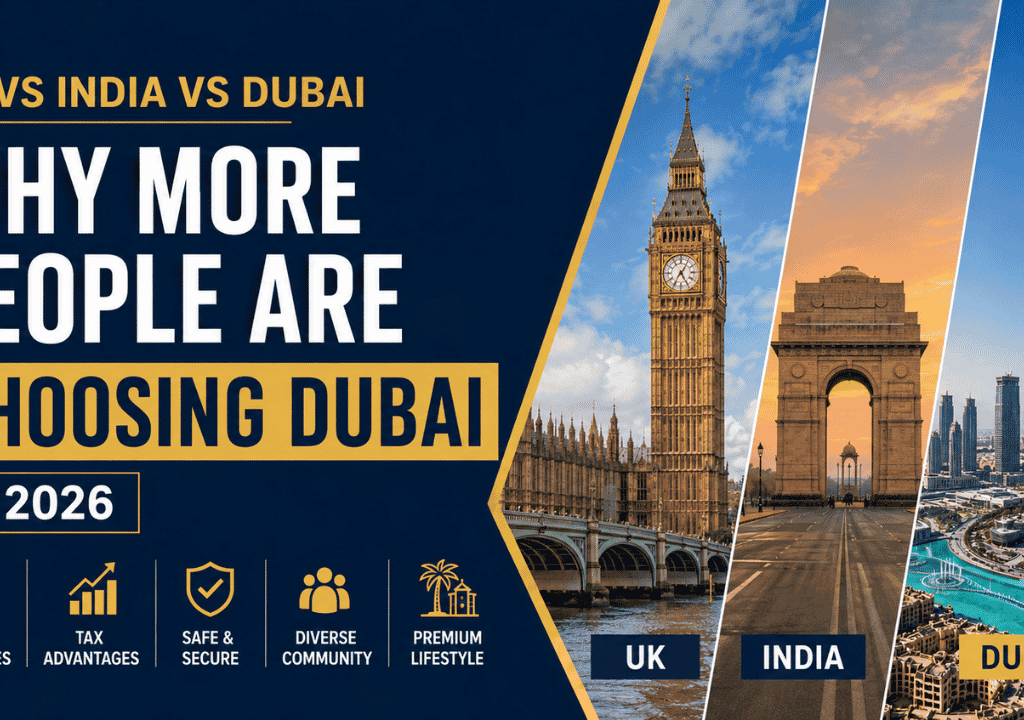
UK vs India vs Dubai: Why More People Are Choosing Dubai in 2026

Introduction If you’ve been following global business trends over the last few years, you’ve probably noticed one city appearing in almost every conversation about entrepreneurship, investment, and relocation: Dubai. From startup founders and business owners to skilled professionals and high-net-worth individuals, thousands of people are choosing to move to the UAE every year. While people relocate for different reasons, one trend has become increasingly clear in 2026: more entrepreneurs and professionals are leaving the UK and India for Dubai. This shift isn’t happening because one country is “better” than another. Every country has its own strengths, opportunities, and challenges. However, Dubai offers a combination of business-friendly policies, world-class infrastructure, strategic location, modern lifestyle, and international connectivity that is difficult to ignore. For many entrepreneurs, the decision is no longer simply about relocating. It’s about positioning themselves closer to global markets, building businesses with international reach, and creating long-term financial opportunities. In this guide, we’ll explore why people are leaving the UK and India for Dubai, compare the advantages of each destination, and explain why Dubai continues to attract ambitious entrepreneurs, investors, and families from around the world. Why is Dubai Attracting So Much Global Attention? Over the past two decades, Dubai has transformed from a regional trading centre into one of the world’s most recognised business destinations. Today, it is home to multinational corporations, technology startups, financial institutions, manufacturing companies, logistics providers, luxury brands, healthcare businesses, and thousands of small and medium-sized enterprises. Unlike many cities that depend heavily on one industry, Dubai has developed a diversified economy that includes: This diversity creates opportunities for entrepreneurs across multiple sectors. For someone planning to relocate or expand internationally, this means there are far more opportunities to build, grow, and diversify a business. UK vs India vs Dubai: A Quick Comparison Every entrepreneur has different priorities. Some focus on taxation, while others care more about market access, lifestyle, or business regulations. The table below provides a broad comparison of key factors. Factor UK India Dubai Ease of Starting a Business Good Improving Excellent Global Business Connectivity High High Excellent Personal Income Tax Applicable Applicable No personal income tax Strategic Global Location Moderate Strong Excellent International Banking Excellent Good Excellent Infrastructure Excellent Developing rapidly World-class Safety High Varies by city Very High Access to Global Markets Good Good Excellent Rather than replacing the UK or India, Dubai complements them by offering businesses a gateway to international markets. Many entrepreneurs maintain operations in their home country while establishing a regional headquarters in Dubai. Why Entrepreneurs are Leaving the UK for Dubai The United Kingdom remains one of the world’s strongest economies and continues to be an attractive destination for innovation, finance, education, and technology. However, many entrepreneurs are increasingly exploring international expansion, and Dubai has become one of the preferred destinations. Several factors contribute to this trend. 1. Higher Operating Costs Running a business involves much more than generating revenue. Business owners must also manage: As operating expenses increase, many companies look for jurisdictions where they can improve operational efficiency while maintaining access to international markets. Dubai offers flexible office solutions, digital government services, and a growing business ecosystem that appeals to expanding companies. 2. International Expansion Opportunities Many UK businesses already serve customers in Europe. Dubai provides access to a completely different set of markets, including: Rather than focusing on a single region, entrepreneurs can use Dubai as a strategic base for international expansion. This geographical advantage is one of the city’s biggest strengths. 3. Business-Friendly Policies Entrepreneurs often value speed and efficiency. Dubai has invested heavily in digitising government services. Many administrative processes, including company registration, licensing, immigration procedures, and business services, have become significantly more streamlined. This enables founders to spend less time on paperwork and more time growing their businesses. 4. Lifestyle and Quality of Life Business decisions are rarely based solely on financial considerations. Many entrepreneurs also think about: Dubai offers modern infrastructure alongside a multicultural environment where residents from over 200 nationalities live and work together. UK Tax vs UAE Tax: Why Many UK Business Owners Are Expanding to Dubai Why More Indians are Moving to Dubai The relationship between India and the UAE has always been strong. Today, the Indian community represents one of the largest expatriate populations in the UAE, contributing significantly to business, healthcare, education, retail, technology, and professional services. Several factors explain why many Indian entrepreneurs choose Dubai. 1. Close Geographic Proximity Unlike relocating to countries on the other side of the world, Dubai is only a short flight from most major Indian cities. This allows entrepreneurs to: For many founders, maintaining strong connections with India while operating internationally is a major advantage. 2. Strong Indian Business Community Starting a business becomes easier when an established professional network already exists. Dubai is home to thousands of successful Indian entrepreneurs operating across industries such as: This creates opportunities for partnerships, networking, mentorship, and collaboration. 3. Better Global Market Access India offers a large domestic market. Dubai, however, provides direct access to international customers. Businesses operating from Dubai often trade with countries across: This allows companies to diversify revenue streams instead of relying on one market alone. 4. Attractive Business Environment Entrepreneurs generally look for environments that encourage growth. Dubai continues investing in: These initiatives create opportunities for both startups and established businesses. Why Dubai Is Becoming the First Choice for Global Entrepreneurs When entrepreneurs compare different countries, they usually evaluate several key areas. Dubai consistently performs well across many of them. Strategic Location Few cities enjoy Dubai’s geographic advantage. Within approximately eight hours of flying time, businesses can reach major markets across: For companies involved in import-export, consulting, logistics, manufacturing, or international trade, this significantly improves accessibility. World-Class Infrastructure Infrastructure plays an important role in business growth. Dubai offers: Efficient infrastructure reduces operational delays and improves productivity. Stable Economic Environment Business owners value predictability. Dubai has built a reputation for maintaining a stable business environment supported by long-term economic planning and continued investment in

UK vs India vs Dubai: Why More People Are Choosing Dubai in 2026 Read More »

How to Start a Food Truck Business in Dubai in 2026- License, Costs & Complete Setup Guide

How to Start a Food Truck Business in Dubai in 2026: License, Costs & Complete Setup Guide

Dubai’s food industry has evolved far beyond traditional restaurants and cafes. Over the last decade, food trucks have become a popular part of the city’s dining culture, serving everything from gourmet burgers and specialty coffee to international street food and healthy meal concepts. For entrepreneurs looking to enter the food and beverage sector without investing in a large restaurant, starting a Food Truck Business in Dubai can be an attractive option. Food trucks offer flexibility, lower operational costs compared to full-scale restaurants, and the ability to reach customers in different locations across the city. However, launching a successful food truck involves much more than buying a vehicle and serving food. Entrepreneurs must comply with licensing requirements, food safety regulations, municipality approvals, location permissions, and operational guidelines. This guide explains everything you need to know about starting a food truck business in Dubai in 2026, including licensing requirements, estimated costs, legal considerations, and practical tips for long-term success. Why Food Trucks are Growing in Dubai Dubai’s diverse population and strong tourism industry have created consistent demand for unique dining experiences. Today’s consumers often prefer convenience, affordability, and innovative food concepts. Food trucks meet all three requirements. Several factors continue driving growth in the sector: Increasing Demand for Street Food Consumers are becoming more interested in quick, high-quality meals that offer something different from traditional restaurants. Lower Investment Than Restaurants A food truck generally requires less capital than opening a full restaurant with extensive seating and interior fit-outs. Growing Event Industry Dubai hosts numerous festivals, sporting events, exhibitions, corporate gatherings, and community events where food trucks are regularly featured. Social Media Marketing Opportunities Visually appealing food concepts often perform well on platforms such as Instagram, TikTok, and Facebook, helping food truck owners attract customers organically. Is a Food Truck Business Profitable in Dubai? A food truck can be profitable when operated correctly. Success depends on several factors: Many successful operators generate repeat customers by focusing on a specific niche rather than offering an overly broad menu. Popular concepts include: Benefits of Starting a Food Truck Business in Dubai Lower Startup Costs Compared to a traditional restaurant, food trucks often require a smaller initial investment. Flexibility Owners can participate in events, markets, festivals, and high-traffic locations. Easier Brand Testing Food trucks allow entrepreneurs to test concepts before committing to larger investments. Mobility Unlike fixed-location restaurants, food trucks can move to areas with higher customer demand. Strong Marketing Potential Unique food concepts can quickly gain attention through social media and word-of-mouth recommendations. Food Truck Business Requirements in Dubai Operating a food truck involves several approvals and requirements. Business License A valid business license is required to legally operate. Food Safety Compliance Food preparation, storage, transportation, and hygiene standards must comply with Dubai Municipality regulations. Vehicle Approval The truck itself must meet technical and safety requirements. Location Permissions Food trucks cannot simply park anywhere and begin trading. Specific approvals may be required depending on the operating location. Staff Requirements Employees handling food may need health certifications and other regulatory approvals. Step-by-Step Guide to Starting a Food Truck Business in Dubai Step 1: Develop a Business Concept Before applying for licenses, define your concept. Consider: Cuisine Type Examples include: Target Customers Determine whether you will serve: Pricing Strategy Pricing should balance profitability with customer expectations. Step 2: Prepare a Business Plan A detailed business plan can help clarify operational and financial requirements. Include: A strong plan can also assist when opening a business bank account or seeking investors. Step 3: Choose the Right Business Structure Entrepreneurs must decide on the most appropriate company structure. Options may include: Mainland Company Often preferred for businesses targeting customers across Dubai. Other Approved Structures Depending on business activities and operational requirements. The most suitable structure depends on the business model and future expansion plans. Step 4: Obtain a Food Business License A food truck is not simply a vehicle; it is a regulated food business. The licensing process typically involves approvals from relevant authorities. Required documentation may include: Step 5: Purchase and Customize the Food Truck The vehicle must be designed specifically for food service operations. Key considerations include: Kitchen Equipment Ventilation Systems Proper ventilation is critical for safety and regulatory compliance. Water Systems Food preparation requires access to clean water and appropriate waste disposal systems. Branding Vehicle branding can significantly influence customer recognition and marketing success. Step 6: Obtain Municipality and Health Approvals Food businesses are subject to strict health and safety requirements. Authorities may evaluate: Compliance is essential to maintaining customer trust and avoiding penalties. Step 7: Secure Trading Locations One of the most important factors affecting profitability is location. Food trucks often perform well at: Securing access to high-traffic locations can significantly impact revenue. Food Truck Business Setup Cost in Dubai The total investment varies depending on the truck size, concept, equipment, and branding requirements. Estimated Cost Breakdown Expense Estimated Cost (AED) Business License 10,000 – 25,000+ Food Truck Vehicle 80,000 – 300,000+ Kitchen Equipment 20,000 – 100,000+ Branding & Design 5,000 – 20,000+ Initial Inventory 5,000 – 25,000+ Staff & Training Varies Marketing 5,000 – 30,000+ Estimated Startup Budget 120,000 AED to 500,000 AED+ The final amount depends on the concept and scale of operations. Common Challenges Food Truck Owners Face Location Restrictions Not all areas permit food truck operations. Seasonal Demand Customer traffic may vary depending on weather and events. Equipment Maintenance Mobile kitchens require ongoing maintenance and servicing. Competition Popular food categories often attract multiple operators. Regulatory Compliance Maintaining food safety standards requires continuous attention. Tips for Running a Successful Food Truck Business Focus on One Strong Concept Simple menus often perform better than overly complex offerings. Invest in Branding Customers remember memorable food truck brands. Use Social Media Effectively Regular updates help customers find your location. Prioritize Food Quality Repeat business depends on consistency. Participate in Events Events can significantly increase visibility and revenue. Monitor Costs Profitability depends on controlling food, staffing, and operational expenses. Why Dubai is an Excellent Market for

How to Start a Food Truck Business in Dubai in 2026: License, Costs & Complete Setup Guide Read More »

Pros & Cons of Forex Trading License in Dubai in 2026

Pros & Cons of Forex Trading License in Dubai in 2026

Dubai has become one of the most sought-after destinations for financial services businesses, investment firms, fintech startups, and trading companies looking to expand internationally. As the UAE continues strengthening its reputation as a global financial hub, interest in obtaining a Forex Trading License in Dubai has increased significantly among entrepreneurs and investors. The appeal is easy to understand. Dubai offers a strategic location, access to international markets, advanced banking infrastructure, investor-friendly regulations, and a growing financial ecosystem. However, unlike a standard trading or consultancy business, a forex company operates within a highly regulated industry where compliance, capital requirements, and risk management play a critical role. Before launching a forex business, it is important to understand both the opportunities and challenges involved. This guide explores the advantages, disadvantages, costs, requirements, and business potential of obtaining a Forex Trading License in Dubai in 2026. What is a Forex Trading License in Dubai? A Forex Trading License allows a company to legally engage in approved foreign exchange-related activities. Depending on the license category and regulatory approvals, businesses may offer services such as currency trading, brokerage operations, introducing broker services, trading technology solutions, and certain investment-related activities. Unlike individual traders who buy and sell currencies using their personal accounts, licensed forex companies operate commercially and provide services to clients or investors. Activities Commonly Associated with Forex Businesses Activity Description Forex Brokerage Facilitating currency trading for clients Introducing Broker Services Referring traders to licensed brokers Proprietary Trading Trading using company funds Trading Technology Solutions Developing or operating trading platforms Market Analysis & Research Providing market insights and reports Financial Services Support Assisting investors and traders Why Dubai is Attracting Forex Businesses in 2026 Over the last decade, Dubai has transformed into one of the region’s leading financial centers. The city’s position between Europe, Asia, and Africa allows businesses to serve multiple markets from a single location. The UAE’s focus on innovation, fintech, and financial services has further increased interest from global investors and brokerage firms. Key Reasons Entrepreneurs Choose Dubai For entrepreneurs looking to build a long-term financial services business, Dubai offers a strong foundation. Why Start a Forex Trading Business? Many investors initially focus on the trading industry because of its revenue potential. However, successful forex businesses generate value in several ways beyond trading itself. Growing Global Demand The foreign exchange market remains one of the largest financial markets in the world. Businesses, investors, institutions, and traders rely on currency markets every day. Scalable Business Model Unlike many traditional businesses, a forex company can serve clients from multiple countries without requiring physical offices in every market. Recurring Revenue Opportunities Brokerage firms often generate ongoing revenue through trading commissions, spreads, platform fees, and other service-based income streams. Expansion Potential Many forex businesses eventually expand into: This flexibility makes the sector attractive for ambitious entrepreneurs. Pros of Obtaining a Forex Trading License in Dubai 1. Strong Business Credibility Trust is essential in financial services. A licensed forex company generally enjoys greater credibility than an unregulated operation. Investors, banks, liquidity providers, and business partners often view regulated businesses as more reliable and transparent. For many forex companies, credibility becomes a major competitive advantage. 2. Access to International Markets Dubai’s geographic location allows businesses to connect with clients across Europe, Asia, Africa, and the Middle East. This access provides significant growth opportunities without being limited to a single market. 3. Banking Advantages One of the biggest challenges for financial businesses globally is obtaining reliable banking support. Although banking approvals depend on various factors, properly structured and licensed forex businesses generally have stronger opportunities when approaching financial institutions. 4. Opportunity for High Revenue Growth The forex industry offers significant growth potential. As client numbers increase, businesses can often scale operations without proportionally increasing costs, creating attractive long-term revenue opportunities. 5. Strong Financial Ecosystem Dubai is home to: Operating within this ecosystem can create valuable networking and business development opportunities. 6. International Reputation A company based in Dubai often benefits from the city’s global reputation as a respected business destination. For international clients and partners, this can create additional confidence. 7. Long-Term Expansion Opportunities Many successful financial businesses begin with one service and gradually expand into multiple revenue streams. A properly structured forex business can evolve into a broader financial services operation over time. Cons of Obtaining a Forex Trading License in Dubai While the opportunities are attractive, there are also important challenges. 1. High Setup Costs Forex licensing is not considered a low-cost business setup. Entrepreneurs must budget for: The total investment is significantly higher than most standard UAE business activities. 2. Capital Requirements Financial businesses are generally expected to maintain adequate capital levels. The amount depends on the type of activity being conducted and the regulatory framework involved. This creates a higher barrier to entry compared to many other industries. 3. Extensive Compliance Obligations Running a forex business involves ongoing compliance responsibilities. Businesses May Need Systems for: Compliance is not optional. It is a core part of operating within the financial sector. 4. Longer Licensing Process Unlike many UAE company formations that can be completed relatively quickly, forex-related licensing typically requires more detailed review and assessment. Entrepreneurs should prepare for a longer approval timeline. 5. Technology Costs Modern traders expect reliable platforms, secure infrastructure, and smooth user experiences. Technology investments often include: These costs can be substantial. 6. Competitive Industry The forex market is highly competitive. New entrants must compete with established brokers that already possess strong brands, large client bases, and experienced teams. Pros vs Cons Summary Pros Cons International Credibility High Initial Investment Access to Global Markets Capital Requirements Banking Opportunities Compliance Burden Revenue Growth Potential Longer Approval Process Strong Financial Ecosystem Technology Costs Global Reputation Competitive Market Business Scalability Ongoing Operational Expenses Who Should Start a Forex Trading Company? A Forex Trading License in Dubai is generally best suited for: Ideal Applicants These businesses often possess the experience and resources needed to operate successfully. Who Should Avoid a Forex Trading License? Not every entrepreneur

Pros & Cons of Forex Trading License in Dubai in 2026 Read More »

Dubai Launches New Social Support System in 2026- What Residents, Businesses, and Investors Need to Know

Dubai Launches New Social Support System in 2026: What Residents, Businesses, and Investors Need to Know

Dubai has taken another significant step toward strengthening its social infrastructure with the introduction of a comprehensive framework designed to improve social services, support vulnerable groups, and enhance community wellbeing across the emirate. The new legislation expands the role of the Community Development Authority (CDA) and introduces several major initiatives, including a Community Development Fund, a Social Observatory, and a centralized platform to coordinate social support services. While the announcement primarily focuses on social development, its impact extends beyond welfare programs. The initiative reflects Dubai’s long-term vision of creating a more inclusive, resilient, and sustainable society while maintaining its position as one of the world’s most attractive destinations for business, investment, and talent. Why Dubai is Expanding Its Social Development Framework As Dubai’s population continues to grow and diversify, the demand for efficient social services, community support systems, and citizen wellbeing programs has increased significantly. The emirate is home to professionals, entrepreneurs, investors, skilled workers, and families from more than 200 nationalities. Managing the needs of such a diverse population requires modern systems capable of delivering support quickly and effectively. The newly introduced framework aims to improve coordination between government entities, enhance social protection programs, and ensure support reaches those who need it most. Rather than operating through separate channels, social services will increasingly be connected through a unified system that allows faster assessments, improved case management, and better allocation of resources. A New Community Development Fund to Support Social Growth One of the most important developments is the creation of a dedicated Community Development Fund. The fund is expected to provide financial assistance to eligible individuals and families while supporting initiatives that contribute to community wellbeing across Dubai. The broader objective goes beyond direct financial aid. The fund is designed to: The initiative also highlights Dubai’s commitment to creating opportunities that help individuals become economically independent rather than relying solely on financial assistance. Social Observatory to Improve Early Intervention Another notable development is the establishment of a Social Observatory. The observatory will focus on monitoring social trends, analyzing community data, identifying emerging challenges, and supporting evidence-based decision making. In practical terms, this means Dubai will be able to identify potential social issues earlier and implement targeted solutions before they become larger challenges. By leveraging data, analytics, and long-term planning, policymakers can better understand community needs and allocate resources more effectively. This proactive approach aligns with Dubai’s broader strategy of using innovation and technology to improve public services and quality of life. Unified Social Services Platform to Improve Efficiency A major challenge in social support systems globally is fragmentation. Individuals often need to interact with multiple agencies to access assistance, resulting in delays and duplication of processes. Dubai’s new unified social services platform aims to simplify this experience. The system will allow relevant authorities to coordinate support services more effectively while reducing administrative complexity. Potential benefits include: The platform is expected to create a more connected social support ecosystem throughout Dubai. Greater Protection for Vulnerable Members of Society The legislation places strong emphasis on supporting individuals who may require additional care and protection. This includes initiatives focused on: The goal is to ensure that social services are accessible, coordinated, and responsive to changing needs. By strengthening protection frameworks, Dubai continues to position itself as a city focused not only on economic growth but also on social wellbeing. What this Means for Businesses Operating in Dubai Although the legislation focuses on social development, businesses may also benefit indirectly. A stronger social support system contributes to: For employers, these factors can create a more stable and productive environment for employees and their families. Companies increasingly consider quality of life, public services, and social infrastructure when deciding where to establish regional operations. Initiatives such as these strengthen Dubai’s appeal as a long-term destination for international businesses. Positive Signals for Investors and Entrepreneurs Investors often evaluate more than economic indicators when assessing a market. Strong social infrastructure plays an important role in supporting sustainable economic growth. The introduction of integrated social systems demonstrates Dubai’s commitment to building a balanced ecosystem where economic development and community wellbeing advance together. This approach enhances investor confidence by supporting long-term stability and creating conditions that attract skilled professionals, entrepreneurs, and international talent. Supporting Dubai’s Long-Term Vision The latest reforms are consistent with Dubai’s broader strategy of becoming one of the world’s leading cities for business, innovation, and quality of life. The emirate continues investing not only in infrastructure and economic growth but also in the systems that support communities and improve living standards. By combining social development initiatives with economic progress, Dubai is creating an environment where individuals, families, businesses, and investors can thrive together. The Growing Importance of Strategic Planning in the UAE As Dubai continues evolving its regulatory and development frameworks, entrepreneurs and investors are paying closer attention to long-term planning when entering the UAE market. Beyond company formation, businesses increasingly consider factors such as workforce wellbeing, community infrastructure, regulatory stability, and quality of life when evaluating opportunities. Industry specialists, including firms such as AB Capital Services, have observed growing interest from international entrepreneurs seeking jurisdictions that offer both economic opportunity and long-term social stability. Developments like this further strengthen Dubai’s position as one of the most attractive destinations for sustainable business growth. Conclusion Dubai’s new social development framework represents far more than a legislative update. The creation of a Community Development Fund, Social Observatory, and integrated social services platform demonstrates the emirate’s commitment to building a stronger, more inclusive, and future-ready society. For residents, the reforms promise improved access to support services and greater social protection. For businesses and investors, they provide another signal that Dubai remains focused on creating a stable environment where economic success and community wellbeing go hand in hand. As the city continues implementing ambitious development plans, initiatives such as these reinforce why Dubai remains one of the most desirable places in the world to live, work, invest, and build a business.

Dubai Launches New Social Support System in 2026: What Residents, Businesses, and Investors Need to Know Read More »

7 Costly UAE Business Setup Mistakes in 2026 That Smart Entrepreneurs Are Avoiding

7 Costly UAE Business Setup Mistakes in 2026 That Smart Entrepreneurs Are Avoiding

The UAE continues to attract entrepreneurs, startups, consultants, ecommerce brands, and international investors at record speed. Dubai especially has positioned itself as one of the world’s strongest business hubs because of its tax-friendly environment, global connectivity, advanced infrastructure, and investor-focused regulations. But in 2026, there is one growing problem many business owners still do not realize. A large number of UAE companies are being structured using outdated business setup strategies. What worked a few years ago is no longer enough today. The UAE business landscape has evolved rapidly with: Yet many founders are still relying on: This creates serious long-term risks for businesses that believe obtaining a trade license alone is enough to operate successfully in the UAE. The reality in 2026 is very different. Why Traditional UAE Business Setup Advice Is Becoming Risky A few years ago, many entrepreneurs entered Dubai with a simple approach: That model worked during the earlier free zone expansion phase. But the UAE is no longer operating like a startup economy. Today, the country is positioning itself as: This shift is positive for serious businesses because it improves: However, it also means that shortcuts and poorly structured setups are becoming increasingly dangerous. 1. The Free Zone vs Mainland Strategy Has Completely Changed For years, business owners entering Dubai had to choose between two clear options: Free Zone or Mainland Traditionally: But in 2026, the conversation has become far more advanced. Several free zone structures now allow businesses to access mainland opportunities through: This means some businesses can now expand more efficiently without immediately establishing separate mainland entities. Companies paying attention to these changes are: However, many entrepreneurs still follow outdated advice that no longer reflects current UAE regulations. 2. The “Free Zone Means Tax Free” Myth Is Still Hurting Businesses One of the biggest misconceptions still circulating in the market is: “Free Zone Companies Do Not Pay Corporate Tax” This assumption is no longer automatically correct. The introduction of UAE Corporate Tax changed the landscape significantly. Many business owners still believe: But UAE authorities now review businesses far more carefully. A company’s eligibility for favorable Corporate Tax treatment can depend on: Businesses making mistakes in these areas may create tax exposure without realizing it. 3. Weak Accounting Systems Are Becoming A Major Liability Many SMEs in the UAE still operate with: That approach may create major problems moving forward. The UAE is steadily building a more advanced digital compliance ecosystem. As e invoicing and digital reporting systems continue expanding, businesses with poor financial controls may face: The companies preparing early will gain a significant long-term advantage. 4. Banking Has Become More Important Than The License Itself Many entrepreneurs still focus almost entirely on: “Which Free Zone is Cheapest?” But experienced founders now understand something important: Banking compatibility matters more than cheap setup pricing. Corporate banks in the UAE now evaluate businesses based on: Businesses with weak structures or mismatched activities often face: This is one reason many businesses established cheaply years ago are now restructuring entirely. 5. Cheap Setup Packages Often Create Expensive Long-Term Problems Many setup advertisements focus only on: But very few explain: A company that looks affordable initially can become expensive later through: In 2026, smart entrepreneurs are focusing on sustainable business structures instead of simply chasing the cheapest package available. 6. UAE Technology And AI Businesses Have Massive Untapped Opportunities One of the most overlooked developments in the UAE today is the country’s increasing focus on: The UAE is actively positioning itself as a global innovation economy. This creates long-term opportunities for: Many entrepreneurs still do not realize how aggressively the UAE is supporting technology-driven business ecosystems. Businesses that position themselves correctly today may benefit significantly over the next decade. 7. Business Setup in Dubai is No Longer Just Administrative Work In the past, UAE company formation was often treated as simple paperwork. Today, structuring a company properly requires businesses to think about: The businesses that dominate the next decade in the UAE will not necessarily be the biggest businesses. They will be the businesses that were structured correctly from the beginning. That difference is becoming more important every year. What Smart UAE Businesses are doing Differently in 2026 The companies growing fastest in Dubai today are usually focusing on: Instead of asking: “What is the Cheapest Business Setup?” they are asking: “What Structure Supports Long-Term Growth?” That mindset shift is separating serious businesses from short-term setups. Why More Entrepreneurs Are Seeking Strategic Setup Guidance Experienced business owners entering the UAE now spend more time understanding: before incorporating a company. This is because: At AB Capital Services, this shift has become increasingly visible over the last two years. Entrepreneurs are asking deeper questions about Corporate Tax, compliance, banking, and international structuring instead of focusing only on obtaining the fastest license. That reflects how much the UAE business environment has matured. Final Thoughts The UAE remains one of the best business destinations in the world. But the rules of successful company formation are evolving rapidly. In 2026, business setup is no longer just about: The businesses succeeding today are building structures that support: Because in modern Dubai, the biggest competitive advantage is no longer simply having a company. It is having the right structure behind that company. Also Read

7 Costly UAE Business Setup Mistakes in 2026 That Smart Entrepreneurs Are Avoiding Read More »

We Analyzed 50 Dubai Businesses – Here's What Actually Works in 2026

We Analyzed 50 Dubai Businesses – Here’s What Actually Works in 2026

Over the past 18 months at AB Capital Services, we’ve facilitated company formation for entrepreneurs across every conceivable business model, from solo freelancers operating from DMCC flexi-desks to manufacturing operations requiring 10,000 square feet in JAFZA. We don’t just process licenses and close files. We track what happens next: which businesses scale, which pivot, which struggle, and which fold within the first year. This article synthesizes insights from 50 businesses we’ve supported from incorporation through their first 12-24 months of operations. The sample spans free zones (DMCC, IFZA, DIFC, JAFZA), mainland setups, and various industries including e-commerce, consulting, trading, technology, and F&B. We’ve intentionally excluded real estate and financial services, sectors with unique regulatory frameworks that don’t translate to most entrepreneurs. What emerged wasn’t a list of “hot business ideas” or generic success tips. It was a clear pattern: businesses that thrive in Dubai 2026 share specific structural decisions, compliance approaches, and operational habits. Businesses that struggle make predictable mistakes, most of which occur during setup, not operations. Here’s what the data actually shows. The Sample: Who We Analyzed Before diving into patterns, context matters. Our analysis focused on: Industries Represented: Setup Structures: Founder Profiles: Revenue Ranges (Year 1): This distribution mirrors the broader Dubai SME landscape: most new ventures start small, cluster in services or digital businesses, and choose free zones for initial setup due to lower barriers and full ownership. Pattern #1: Jurisdiction Match Determines First-Year Success More Than Business Model The single strongest predictor of first-year satisfaction wasn’t industry choice, founder experience, or even capital, it was jurisdiction-business model alignment. What Worked: E-commerce businesses in IFZA or Dubai CommerCity: All 9 e-commerce companies we tracked chose free zones with e-commerce focus. Eight of nine reported “meeting or exceeding expectations” at 12 months. The single underperformer cited unrelated product-market fit issues, not setup challenges. Why it worked: E-commerce licenses in these zones cost AED 8,500-15,000 annually, include flexi-desk space, and crucially, allow direct-to-consumer sales through their own websites and platforms like Noon and Amazon.ae without appointing distributors. International consulting firms in DMCC or DIFC: Professional services targeting international clients thrived in premium free zones. Ten consulting businesses (management consulting, tech advisory, financial consulting) set up in DMCC or DIFC. Nine remained operational and profitable for 18 months, with average first-year revenue of AED 1.2 million. Why it worked: Clients care about registered addresses. A DIFC entity signals credibility to international corporations. The higher setup cost (AED 18,000-35,000 annually) pays for itself through higher contract values and fewer questions about legitimacy. Local service businesses in mainland: Four service businesses targeting UAE consumers (fitness training, home maintenance, event planning, tutoring) chose mainland setup. All four reported this was critical to their success. Mainland allows them to market directly to Dubai residents, accept local contracts, and operate without distributor complications. What Didn’t Work: E-commerce in premium free zones: Two entrepreneurs established e-commerce businesses in DMCC, attracted by the prestige address. Both reported wishing they’d chosen IFZA instead. The DMCC license cost AED 15,000-18,000 versus IFZA’s AED 8,500, yet provided no additional benefit for online retail. Both businesses were profitable but regretted the unnecessary cost drain. Trading companies in mainland without clear UAE market focus: Three trading companies set up mainland operations planning to serve both UAE and international markets. All three faced challenges. Mainland provides UAE market access (good for local B2B), but international trading benefits more from free zone structures with zero-tax qualifying income and customs advantages. One pivoted to the free zone after year one; two continued but acknowledged the setup wasn’t optimal. The Lesson: Free zones aren’t automatically “better” or “easier.” Mainland isn’t just “for local market access.” Successful founders matched jurisdiction to their actual revenue model: Match jurisdiction to where money actually comes from, not generic advice about “foreign ownership” or “tax benefits.” Pattern #2: Corporate Tax Compliance Separates Professional Operations from Amateur Hour September 30, 2026 marked the first major corporate tax filing deadline for calendar-year businesses. We tracked how our 50 businesses approached this new compliance requirement. The Winners (34 businesses): These companies established proper accounting infrastructure from day one: Result: All 34 filed corporate tax returns before the September 30 deadline. Zero penalties. Most discovered they owed minimal or no tax (due to AED 375,000 threshold or free zone 0% status), but they filed correctly and on time. The Strugglers (16 businesses): These companies treated accounting as an afterthought: Result: Three missed the September 30 deadline entirely (AED 500/month penalties accruing). Seven filed on time but with questionable accuracy, creating audit risk. Six filed correctly but only after expensive catch-up accounting work (AED 8,000-15,000 in emergency fees). The most striking difference: The 34 winners spent AED 3,000-6,000 annually on regular accounting services. The 16 strugglers spent AED 8,000-20,000 on emergency catch-up work, plus penalties for some, plus ongoing stress and audit risk. Why This Matters: Corporate tax is three years old. By 2026, there’s no excuse for treating it as a surprise. Yet business owners still underestimate compliance infrastructure importance. The pattern is clear: businesses that invested in proper accounting from day one experienced corporate tax as a non-event. Businesses that skipped this “boring” foundational work experienced it as a crisis. AB Capital Services, as an FTA-approved tax agency with TAN 30008239 and one of the first agencies in UAE to achieve certification through the English language examination, works exclusively with businesses in the first category. From company formation, we build compliance infrastructure, bookkeeping systems, monthly financial oversight, proactive tax planning, so September deadlines don’t become September crises. Our clients filed corporate tax returns in 2026 the same way they filed VAT returns: on schedule, accurately, with zero drama. This is how professional operations work. Pattern #3: The Virtual Office Trap (And When It Actually Works) Thirty-one of our 50 businesses started with virtual offices or flexi-desk arrangements. This breakdown reveals when this works and when it creates problems. Virtual Office Success Stories (19 businesses): Profile: Service businesses with no client-facing requirements Result:

We Analyzed 50 Dubai Businesses – Here’s What Actually Works in 2026 Read More »

How to Choose the Best Accounting Agency in Dubai in 2026

How to Choose the Best Accounting Agency in Dubai in 2026

The introduction of corporate tax in June 2023 fundamentally changed the UAE business landscape. For the first time in decades, companies across Dubai face mandatory tax filing, compliance deadlines, and potential penalties reaching AED 10,000 for missed registrations. This shift has elevated accounting from a back-office function to a strategic business necessity. Choosing the best accounting agency in Dubai is no longer about finding someone to balance your books, it’s about selecting a partner who can navigate corporate tax complexities, meet Federal Tax Authority deadlines, and protect your business from costly compliance mistakes. With 2026 marking the first full year of mandatory corporate tax returns for most businesses, the stakes have never been higher. This comprehensive guide provides the framework for evaluating accounting agencies in Dubai, understanding the new tax landscape, and making an informed decision that protects your business while optimizing your tax position. Understanding Dubai’s Accounting Landscape in 2026 The UAE accounting industry has evolved rapidly since corporate tax implementation. What was previously a market dominated by bookkeeping services has transformed into a sophisticated ecosystem of tax advisors, audit firms, and compliance specialists. The New Reality: Corporate Tax Compliance Since June 2023, UAE businesses face a 9% corporate tax on profits exceeding AED 375,000. While this rate is among the lowest globally, the compliance requirements are extensive and unforgiving. The Federal Tax Authority mandates: Filing Timeline: Every registered business must file corporate tax returns within 9 months from their financial year-end. For companies following the calendar year (ending December 31, 2025), the filing deadline is September 30, 2026. Companies with different fiscal years have proportionally adjusted deadlines. Mandatory Filing: Even businesses with zero taxable income, those operating at a loss, or free zone companies enjoying 0% tax rates must file annual returns. Non-filing triggers automatic penalties regardless of whether tax is owed. Registration Requirements: All UAE businesses must register through the EmaraTax portal to obtain a Tax Registration Number. The registration deadline varies based on trade license issuance date, but failure to register attracts a AED 10,000 penalty. Record-Keeping Obligations: Businesses must maintain comprehensive financial records, supporting documentation, and tax-related files for a minimum of 7 years. The FTA can request these during audits or inspections at any time. This regulatory framework creates an environment where the best accounting agency in Dubai must offer far more than basic bookkeeping. They need corporate tax expertise, FTA portal proficiency, and the ability to navigate complex compliance scenarios. The Cost of Getting It Wrong: Penalties and Consequences Before examining selection criteria, understanding the consequences of poor accounting decisions provides critical context. Corporate Tax Penalties (2026) Late Filing Penalties: Example: A business that misses its September 30, 2026 deadline by 14 months faces penalties of AED 6,000 (12 months × AED 500) + AED 2,000 (2 months × AED 1,000) = AED 8,000—nearly enough to hire a professional accounting agency for a full year. Late Payment Interest: Late Registration: Record-Keeping Violations: These aren’t theoretical penalties—the FTA has demonstrated commitment to enforcement. Businesses that treat compliance casually face financial consequences that far exceed professional accounting fees. 12 Critical Factors for Choosing the Best Accounting Agency in Dubai 1. Corporate Tax Expertise and FTA Certification The single most important criterion in 2026 is corporate tax competency. The best accounting agency in Dubai must demonstrate: FTA Registration: Verify the agency is registered as a Tax Agent with the Federal Tax Authority. This registration confirms they meet minimum competency requirements and can legally represent your business before the FTA. Proven Track Record: Ask for evidence of corporate tax returns filed in 2025-2026. First-time filers should be viewed cautiously, corporate tax is too new for anyone to claim decades of experience, but agencies that prepared for implementation before June 2023 have a head start. Team Credentials: Inquire about team qualifications. Look for chartered accountants (CA, ACCA, CPA), certified tax professionals, and UAE-specific credentials. International qualifications matter, but UAE tax knowledge is equally critical. Test Their Knowledge: During initial consultations, ask specific questions: Vague or generic answers signal insufficient expertise. Detailed, confident responses with references to specific FTA guidance demonstrate genuine competency. 2. Comprehensive Service Range Tax compliance doesn’t exist in isolation. The best accounting agency in Dubai offers integrated services that address all financial aspects of your business: Core Services Required: Advanced Services for Growing Businesses: A fragmented approach where you use different providers for bookkeeping, tax, and audit creates coordination nightmares and increases error risk. Integrated service delivery from a single accounting agency ensures consistency and accountability. 3. Technology Platform and Digital Capabilities Modern accounting is digital-first. Evaluate the accounting agency’s technology infrastructure: Cloud Accounting Systems: The agency should use recognized platforms (Xero, QuickBooks Online, Zoho Books) that provide real-time access to your financial data. Avoid agencies still operating on desktop software or Excel spreadsheets. EmaraTax Portal Proficiency: The FTA’s EmaraTax portal is the gateway for all corporate tax interactions. Your accounting agency must demonstrate expert navigation of this system, including return filing, payment processing, and responding to FTA queries. Document Management: Look for agencies using secure document management systems with version control, audit trails, and encrypted storage. Your tax records contain sensitive financial information requiring robust security. Client Portal Access: The best accounting agency in Dubai provides clients with secure portal access to view financial statements, tax filings, and supporting documentation 24/7. Automation Capabilities: Ask how they use automation for routine tasks like bank reconciliation, invoice processing, and compliance reminders. Automation reduces human error and frees accountants to focus on strategic advisory work. 4. Industry-Specific Knowledge Different industries face unique accounting and tax challenges: Real Estate Companies: Must understand property valuation, capital gains treatment, and developer-specific tax rules. Trading Companies: Need expertise in inventory valuation methods, cost of goods sold calculations, and customs duty implications. Professional Services Firms: Require understanding of work-in-progress accounting, project-based revenue recognition, and professional indemnity considerations. E-commerce Businesses: Must navigate digital services VAT rules, marketplace accounting, and cross-border transaction complexities. Free Zone Companies: Need specialists who understand QFZP qualification criteria,

How to Choose the Best Accounting Agency in Dubai in 2026 Read More »

Dubai Free Zone Visa Benefits for Employees- The Complete 2026 Guide

Dubai Free Zone Visa Benefits for Employees: The Complete 2026 Guide

Quick Answer Dubai free zone visa benefits for employees include zero personal income tax on all earnings, a UAE residence visa valid for 2 to 3 years, the right to sponsor family members, access to world-class healthcare and education, employment in companies with 100% foreign ownership, streamlined visa processing through free zone authorities, and a clear pathway to the UAE Golden Visa for qualifying professionals. In 2026, over 40 free zones operate across Dubai, each with its own visa quota system, employee protection framework, and sectoral focus. This guide covers every benefit in full — the financial advantages, the residency rights, the family sponsorship rules, the employment protections, the cost of a Dubai free zone employment visa, and how the free zone employee visa compares to a mainland employment visa. 1. What a Dubai Free Zone Employment Visa Actually Is A Dubai free zone employment visa is a UAE residence visa issued to an employee or investor of a company registered within a designated free zone. The visa is sponsored by the free zone company through the relevant free zone authority — DMCC, IFZA, DAFZA, JAFZA, Meydan, Dubai Silicon Oasis, and others — rather than through the mainland Ministry of Human Resources and Emiratisation (MOHRE). The visa gives the holder the legal right to live and work in the UAE. It comes with an Emirates ID, mandatory health insurance, and the right to open a UAE personal bank account, obtain a UAE driving licence, and enrol children in UAE schools. The free zone authority acts as the administrative intermediary between the company, the employee, and the UAE immigration authorities. The key distinction from a mainland employment visa: free zone employment is governed by the specific free zone authority’s labour regulations rather than by MOHRE directly. In practice, most free zones have aligned their employee protections closely with the UAE Labour Law (Federal Decree Law No. 33 of 2021), but the administrative process for visa issuance, renewal, and cancellation runs through the free zone rather than through MOHRE service centres. 2. The Zero Personal Income Tax Advantage The most significant of all Dubai free zone visa benefits for employees is that there is no personal income tax in the UAE. An employee earning AED 25,000 per month receives AED 25,000 per month. There are no payroll deductions, no PAYE equivalent, and no national insurance equivalent. The same salary in the United Kingdom at the 40% tax bracket would produce a net salary of approximately AED 16,500 after income tax and national insurance. In Germany, the effective deduction on a comparable salary reaches 35% to 42%. In Australia, approximately 32%. The real financial impact: an employee earning AED 30,000 per month in a Dubai free zone retains AED 360,000 per year gross. Assuming modest annual living costs of AED 180,000 (rent, food, transport, and schooling for one child), the annual saving capacity is AED 180,000. The equivalent employee in London, Singapore, or Sydney earning the same gross compensation would save 30% to 40% less after tax, even accounting for differences in cost of living. This is not a temporary arrangement. The UAE has had no personal income tax since its founding and there are no announced plans to introduce one. The UAE Constitution places restrictions on the introduction of personal income tax at the federal level. Employees who structure their financial planning around tax-free income in Dubai are working with a stable policy environment, not a temporary incentive. 3. UAE Residence Visa: Rights, Validity, and What It Unlocks A Dubai free zone employment visa provides a UAE residence visa that is valid for 2 years in most free zones, with some authorities offering 3 year validity. The visa is renewable as long as the employment relationship continues and the company remains active and compliant with its free zone obligations. The residence visa is the foundation of legal life in the UAE. Everything else flows from it. Without a valid residence visa, an individual cannot open a personal bank account, obtain a UAE driving licence, register children in school, or access subsidised healthcare. The residence visa is not just a work permit — it is the document that establishes an individual as a legal resident of the UAE with full access to the country’s services and infrastructure. What the UAE residence visa unlocks for free zone employees 4. Family Sponsorship: Who You Can Bring and What the Requirements Are One of the most practically important Dubai free zone visa benefits for employees is the ability to sponsor immediate family members for UAE residence. A free zone employee who holds a valid UAE residence visa and meets the minimum salary requirement can bring their spouse, children, and in certain circumstances their parents to live with them in the UAE. Minimum salary requirements for family sponsorship Dependent Category Minimum Monthly Salary (AED) Additional Requirements Spouse 4,000 (or 3,000 with accommodation provided) Valid Ejari tenancy contract in employee’s name Children under 18 Included in spouse sponsorship if married Birth certificates attested and translated into Arabic Sons aged 18 to 25 (students) 4,000 minimum plus proof of full time enrollment University enrollment certificate required annually Unmarried daughters (any age) 4,000 minimum No upper age limit for unmarried daughters Parents 20,000 minimum or AED 10,000 with accommodation proof Significantly higher threshold; not available to all employees Domestic worker (maid) No specific minimum but practical minimum AED 8,000 to AED 10,000 Separate domestic worker visa process; requires accommodation proof Important on the Ejari requirement: the tenancy contract for the employee’s UAE accommodation must be registered on the Ejari system operated by the Real Estate Regulatory Authority (RERA) in Dubai. An unregistered tenancy contract is not accepted as proof of accommodation for dependent visa applications. Employees renting informally without an Ejari registered contract cannot sponsor dependents regardless of their salary level. Spouses on dependent visas can work: a spouse on a dependent visa in the UAE has the right to work for any UAE employer on the mainland or

Dubai Free Zone Visa Benefits for Employees: The Complete 2026 Guide Read More »

How to Start a Yoga Studio in Dubai- Yoga Studio License, Costs and Complete Setup Guide

How to Start a Yoga Studio in Dubai: Yoga Studio License, Costs and Complete Setup Guide

If you are planning to start a yoga studio in Dubai, you need a yoga studio license in Dubai issued through the Dubai Department of Economy and Tourism (DET) or a relevant free zone authority, along with approvals from the Dubai Sports Council or Dubai Health Authority depending on your business model. Dubai’s wellness industry is one of the fastest growing sectors in the UAE, and yoga studios are among the most in demand fitness businesses in the emirate. This guide covers everything you need to know about the yoga studio license in Dubai, setup costs, location requirements, staffing rules, and the step by step process to get your studio operational in 2026. Quick Answer To start a yoga studio in Dubai, you need a fitness or wellness business license from the Dubai Department of Economy and Tourism, approval from the Dubai Sports Council for sports and fitness activities, and in some cases a Dubai Health Authority (DHA) permit if health or therapeutic services are offered. The total cost of setting up a yoga studio in Dubai ranges from AED 25,000 to AED 80,000 depending on your location, studio size, and license type. The process typically takes 3 to 6 weeks and requires a physical studio space with a valid Ejari tenancy contract. How to Start a Yoga Studio in Dubai: What You Need to Know A yoga studio in Dubai is classified as a fitness and wellness business under UAE commercial law. Unlike a freelance yoga instructor who operates under a personal freelance permit, a yoga studio is a full commercial entity that requires a trade license, a registered physical location, staff visas, and regulatory approvals from multiple government bodies. Dubai has a well regulated fitness sector. Operating a yoga studio without the correct license and approvals is a compliance risk that can result in fines and forced closure. Getting the right structure from the start protects your investment and allows you to scale without regulatory interruption. There are two main routes for setting up a yoga studio in Dubai: For most yoga studio owners targeting the Dubai consumer market, a mainland DET license with Dubai Sports Council approval is the correct and most commercially flexible structure. Why the Yoga Studio License in Dubai Matters Dubai has over 3.8 million residents and a highly health conscious, internationally diverse population. The yoga and wellness market in Dubai is not a niche — it is a mainstream consumer category with studios operating across Jumeirah, Downtown Dubai, Dubai Marina, Business Bay, and JLT commanding monthly membership fees of AED 500 to AED 2,500 per client. The Dubai Sports Council regulates all sports and fitness businesses in Dubai. Without their approval, your yoga studio cannot legally advertise as a fitness facility, hire certified instructors on staff visas, or obtain the necessary NOC for your DET trade license. This approval is not optional — it is a prerequisite for the DET fitness license. The Dubai Health Authority (DHA) approval becomes relevant if your yoga studio offers services that cross into therapeutic or medical wellness territory, such as yoga therapy, rehabilitation yoga, or pranayama treatments marketed as health interventions. Most standard yoga studios do not require DHA approval, but this must be confirmed based on your specific activity list. Benefits of Starting a Yoga Studio in Dubai Step by Step Process to Get a Yoga Studio License in Dubai Yoga Studio License Dubai: Cost Breakdown 2026 Cost Item Estimated Cost (AED) DET Trade License (Fitness/Wellness Activity) 12,000 to 20,000 Dubai Sports Council Approval Fee 5,000 to 10,000 DHA Approval (if therapeutic services offered) 3,000 to 8,000 Ejari Registration (tenancy contract) 220 Studio Fit Out and Equipment 30,000 to 150,000 Studio Rent (annual, varies by location) 80,000 to 300,000 Investor Visa (owner) 3,500 to 5,000 Staff Visas (per instructor) 3,000 to 4,500 each Health Insurance (per person per year) 600 to 2,000 Corporate Tax Registration Free (FTA) VAT Registration (if applicable) Free (FTA) Total License and Approval Costs AED 20,000 to AED 43,000 Total First Year Investment (incl. fit out and rent) AED 150,000 to AED 550,000 Note: Studio fit out, equipment, and rent costs vary significantly by location and size. The license and approval costs alone range from AED 20,000 to AED 43,000. AB Capital handles all licensing and approval steps. Fit out and rental costs are separate and managed directly by the studio owner. Requirements for a Yoga Studio License in Dubai The following documents and criteria are required for a yoga studio license in Dubai: Instructor qualifications: All yoga instructors employed at the studio must hold internationally recognised certifications. The Dubai Sports Council and DHA both verify instructor credentials. Instructors with Yoga Alliance RYT 200, RYT 500, or equivalent internationally accredited qualifications are accepted. Unqualified instructors cannot be legally employed at a licensed yoga studio in Dubai. Market Insights: Yoga and Wellness Industry in Dubai 2026 Common Mistakes When Starting a Yoga Studio in Dubai Why Entrepreneurs Choose Dubai to Start a Yoga Studio Dubai is one of the most commercially attractive cities in the world to operate a yoga studio for reasons that go well beyond the wellness market size. The combination of zero personal income tax, a high spending resident population, strong corporate wellness demand, and year-round tourism creates a revenue environment that few other cities can match. A well located Dubai yoga studio with 100 active members paying AED 1,200 per month generates AED 1.44 million in annual revenue. At a 25 to 35% net margin, that is AED 360,000 to AED 504,000 in annual profit with no personal income tax on the owner’s drawings. Dubai’s diverse population also means your yoga studio can serve clients from South Asia, East Asia, Europe, the Arab world, and Africa simultaneously from a single location. This multicultural clientele creates natural demand for different yoga styles, class formats, and pricing tiers within the same studio. The UAE’s 10 year Golden Visa is available to business owners and investors, giving yoga studio founders long

How to Start a Yoga Studio in Dubai: Yoga Studio License, Costs and Complete Setup Guide Read More »

How to Start a Travel Agency in Dubai- Licensing and Cost Guide by AB Capital Services Dubai

How to Start a Travel Agency in Dubai: Licensing and Cost Guide

In short, starting a travel agency in Dubai requires obtaining a Tourism Service Provider (TSP) license from the Dubai Department of Economy and Tourism (DET), formerly DTCM. Depending on your business activity outbound tourism, inbound tourism, or both you will also need approval from the UAE Ministry of Economy. The total cost to set up a travel agency in Dubai ranges from AED 15,000 to AED 45,000 depending on the jurisdiction (mainland or free zone) and the scope of your license. The process typically takes 2 to 4 weeks when documentation is complete. If you’re planning to start a travel agency in Dubai, you need a tourism license, a registered trade name, and compliance with UAE travel trade regulations. Dubai’s tourism sector is one of the fastest growing in the world, and the emirate actively welcomes new travel businesses. This guide covers everything you need to know from licensing requirements and costs to the step by step setup process so you can launch your travel agency in Dubai with clarity and confidence. How to Start a Travel Agency in Dubai: Licensing and Cost Guide Dubai is home to over 3,000 registered travel agencies and handles more than 14 million international tourists annually. Starting a travel agency in Dubai means tapping into a regulated but opportunity rich market. There are two main types of travel agency licenses in Dubai: Your license type determines the activities you’re permitted to conduct. Selling airline tickets and hotel packages requires a separate IATA accreditation in addition to the DET license. The primary regulatory body is the Dubai Department of Economy and Tourism (DET). For free zone setups, the relevant free zone authority takes over licensing and registration. Why it Matters for Businesses in Dubai Dubai’s strategic location makes it a natural hub for global travel operations. Positioned between Europe, Asia, and Africa, a Dubai based travel agency can serve clients from dozens of markets simultaneously. The UAE government has made tourism a national economic priority. Dubai Tourism Vision 2025 targets 25 million visitors per year. This means growing demand for travel services, tours, accommodation packages, and corporate travel management. Operating without a proper license is a serious compliance risk. Unlicensed travel businesses face fines, blacklisting, and forced closure by DET. Getting the correct license from Day 1 protects your investment. Benefits of Starting a Travel Agency in Dubai Step by Step Process to Start a Travel Agency in Dubai Cost Breakdown: Starting a Travel Agency in Dubai The following table outlines estimated costs for setting up a travel agency in Dubai as of 2025. Costs vary by jurisdiction and business structure. Cost Item Mainland (AED) Free Zone (AED) Trade Name Registration 620 to 900 500 to 800 Initial Approval Fee 300 to 500 Included in package Tourism License (DET / TSP) 10,000 to 20,000 8,000 to 18,000 Office Lease (annual) 15,000 to 60,000 10,000 to 40,000 MOE Approval (if needed) 2,000 to 5,000 N/A VAT Registration Free Free IATA Accreditation 5,000 to 12,000 5,000 to 12,000 Miscellaneous & Notarization 1,000 to 3,000 1,000 to 2,000 Total Estimated Setup Cost AED 20,000 to 45,000 AED 15,000 to 35,000 Note: Costs above exclude ongoing costs such as employee visas, annual license renewal, and accounting fees. Requirements to Start a Travel Agency in Dubai You will need the following documents and eligibility criteria: Minimum share capital: DET does not enforce a fixed minimum capital for travel agencies, but free zones may require AED 10,000 to AED 50,000 depending on the jurisdiction. Market Insights and Statistics Common Mistakes Businesses Make When Starting a Travel Agency in Dubai Why Entrepreneurs Choose Dubai for Travel Agency Setup Dubai’s combination of world class infrastructure, zero income tax, and a globally connected travel market makes it one of the best cities in the world to operate a travel agency. Entrepreneurs benefit from 100% profit repatriation in free zones, meaning you can transfer all earnings back to your home country without restriction. Mainland companies enjoy unrestricted access to all UAE markets, including government contracts for corporate travel. Dubai’s cultural diversity also means your travel agency can effectively target clients from South Asia, the Arab world, Europe, and Africa all from a single office. The UAE’s 5 year and 10 year Golden Visas are also available to business owners and investors, giving travel agency founders long-term residency security. How AB Capital Helps Entrepreneurs Start a Travel Agency in Dubai AB Capital is a Dubai based corporate services firm that supports entrepreneurs at every stage of the business setup process. For travel agency founders, AB Capital Services Dubai, provides end to end assistance: Most travel agency setups handled by AB Capital Dubai, are completed in 5 to 10 working days for straightforward free zone cases, and 12 to 18 working days for mainland DET-licensed setups, subject to document readiness and government processing times. Key Facts: Starting a Travel Agency in Dubai Factor Details Licensing Authority Dubai Department of Economy and Tourism (DET) License Type Tourism Service Provider (TSP) License Jurisdiction Options Dubai Mainland or Free Zone Estimated Setup Cost AED 15,000 to AED 45,000 Typical Setup Timeline 10 to 25 working days Foreign Ownership 100% in free zones; 100% in mainland (post 2021 law) VAT Registration Threshold AED 375,000 annual taxable supply IATA Requirement Mandatory for direct airline ticket sales Visa Eligibility Shareholder + employee visas available post license Annual License Renewal Required every year Key Takeaways Summary Starting a travel agency in Dubai requires a Tourism Service Provider license from the Dubai Department of Economy and Tourism, a registered trade name, and a physical office address. Setup costs range from AED 15,000 to AED 45,000 depending on whether you operate on the mainland or through a free zone. The process involves trade name approval, initial DET approvals, lease registration, and optional IATA accreditation for airline ticket sales. With the right documentation and a professional setup partner, a travel agency in Dubai can be fully operational in 2 to 4 weeks. Dubai’s position as a

How to Start a Travel Agency in Dubai: Licensing and Cost Guide Read More »

UAE Economic Resilience- Why the UAE Economy Keeps Getting Stronger After Every Global Crisis

UAE Economic Resilience 2026: Why the UAE Economy Keeps Getting Stronger After Every Global Crisis

Quick Answer The UAE economy has repeatedly proven its strength during global crises. Whether it was the 2008 global financial crisis, the COVID 19 pandemic, severe rainfall disruptions in 2024, or geopolitical tensions in the region, the UAE has consistently maintained economic stability and investor confidence. This resilience comes from strong leadership, economic diversification, pro business policies, world class infrastructure, and strategic long term planning. Because of this stability, Dubai and the wider UAE remain one of the most attractive destinations for entrepreneurs and global investors. Understanding UAE Economic Resilience UAE Economic Resilience refers to the country’s ability to absorb economic shocks, adapt quickly, and continue growing even during global uncertainty. Unlike many economies that slow down during crises, the UAE has demonstrated a unique pattern. Every major disruption has been followed by policy reforms, infrastructure investments, and business growth. This ability to recover quickly has turned the UAE into one of the most trusted global business hubs. Several key factors explain this resilience: Today the UAE is widely recognized as one of the most stable economies in the Middle East and globally. Major Global Crises and How the UAE Responded 2008 Global Financial Crisis The 2008 financial crisis impacted economies worldwide. Many countries experienced severe market crashes and financial instability. The UAE also faced pressure due to global market uncertainty. However, the government took decisive steps to stabilize the economy. UAE Response As a result, the UAE gradually reduced dependence on oil revenues. Today non oil sectors contribute more than 70% of the UAE GDP. This shift played a major role in strengthening UAE Economic Resilience. COVID 19 Pandemic The COVID 19 pandemic was one of the biggest global disruptions in modern history. Tourism, aviation, and retail sectors around the world were heavily affected. However, the UAE responded faster than many developed economies. UAE Response These policies helped businesses continue operating. The results were remarkable. Between 2020 and 2024 the UAE experienced over 150% growth in new business registrations. Dubai quickly became one of the top destinations for entrepreneurs relocating globally. 2024 Heavy Rainfall and Flooding In 2024 the UAE experienced record rainfall which temporarily disrupted transport and daily activities. Despite the scale of the event, the recovery process was rapid. UAE Response The ability to recover quickly reinforced global confidence in UAE economic stability. 2026 Geopolitical Tensions Global analysts often highlight geopolitical risks in the region. However, the UAE continues to maintain a stable and secure business environment. The country has invested heavily in economic planning and investor protection. UAE Strategic Approach This strategic planning strengthens UAE Economic Resilience, ensuring that businesses and investors remain protected. Why the UAE Economy Continues to Grow Several structural factors explain why the UAE remains resilient even during global uncertainty. Economic Diversification The UAE has transformed its economy beyond oil. Major sectors contributing to growth include: Dubai alone hosts over 40 free zones supporting international businesses. Business Friendly Policies The UAE has implemented policies designed to attract global entrepreneurs. Key advantages include: These policies make the UAE one of the most attractive locations for international business expansion. Strategic Global Location Dubai connects three major continents. From the UAE businesses can easily access: More than 2 billion consumers are reachable within a four hour flight radius. This geographic advantage strengthens Dubai economic growth. UAE Business Environment During Global Uncertainty When global markets face instability, investors usually move their capital to safe and stable economies. The UAE has increasingly become one of these destinations. Reasons include: Because of these advantages, Dubai consistently ranks among the top global cities for foreign investment. Key Economic Indicators Supporting UAE Economic Resilience Indicator UAE Performance Non oil GDP contribution Over 70% Corporate tax 9% Free zones 40+ Global trade connectivity Top 10 globally Startup growth Rapidly expanding These indicators demonstrate why investor confidence in the UAE remains high. Why Entrepreneurs Continue Choosing Dubai Dubai remains one of the most preferred destinations for global entrepreneurs. Several factors contribute to this. Investor Advantages Because of these benefits, Dubai business opportunities continue expanding every year. Opportunities for Businesses in the UAE The UAE economy continues to open new sectors for growth. Promising industries include: Entrepreneurs who enter these sectors early often gain strong market advantages. How AB Capital Helps Entrepreneurs Start Businesses in the UAE Starting a business in the UAE requires understanding licensing regulations, jurisdiction options, and compliance requirements. This is where experienced corporate advisors become important. AB Capital Services Dubai assists entrepreneurs with end to end business setup solutions. Their services include: AB Capital focuses on simplifying the process so entrepreneurs can start operations quickly. Average Turnaround Time Typical business setup timelines handled by AB Capital include: Their approach is focused on efficient execution and long term business support. Key Takeaways The UAE economy has repeatedly demonstrated strong resilience during global crises Frequently Asked Questions Why is the UAE economy considered resilient? The UAE economy is considered resilient because it has diversified beyond oil, invested heavily in infrastructure, and implemented pro-business policies that attract global investment even during economic uncertainty. How did the UAE recover from the 2008 financial crisis? The UAE responded to the financial crisis by continuing major infrastructure projects, strengthening banking regulations, and accelerating economic diversification. These actions helped stabilize the economy and support long term growth. How did Dubai manage economic challenges during COVID 19? Dubai introduced stimulus packages, flexible visa policies, and digital government services to help businesses operate during the pandemic. These policies allowed the economy to recover quickly. Is the UAE a safe place for international investors? Yes. The UAE offers political stability, strong regulations, investor friendly policies, and world class infrastructure, making it one of the safest destinations for international investment. Why do entrepreneurs choose Dubai for business setup? Entrepreneurs choose Dubai because of its strategic global location, tax advantages, strong infrastructure, and access to international markets.

UAE Economic Resilience 2026: Why the UAE Economy Keeps Getting Stronger After Every Global Crisis Read More »

Most Profitable Small Business Ideas in Dubai for a Couple in 2026

Most Profitable Small Business Ideas in Dubai for a Couple in 2026

Direct Answer: The most profitable small business ideas in Dubai for a couple in 2026 include e-commerce businesses, digital marketing agencies, home based catering services, consulting firms, online education platforms, travel planning services, real estate brokerage partnerships, and niche retail trading. These businesses work well for couples because they require relatively low startup investment, allow shared responsibilities, and benefit from Dubai’s tax friendly environment and strong consumer demand. With Dubai’s corporate tax set at 9% on profits above AED 375000 and no personal income tax, couples can build scalable businesses with higher profit margins compared to many global cities. Why Dubai is Ideal for Couple Run Businesses Short answer: Dubai offers one of the most supportive environments for couples starting businesses because of low taxes, a large expatriate market, strong infrastructure, and easy company formation processes. Dubai consistently ranks among the top cities globally for entrepreneurship. According to multiple global economic reports, the UAE hosts over 800000 small and medium enterprises, which contribute more than 60% of the country’s GDP. Many of these businesses are small partnerships or family owned companies. Couples starting businesses in Dubai benefit from several advantages. Key Advantages: Because of these factors, many entrepreneurs search for profitable small business ideas in Dubai for couples who want financial independence and lifestyle flexibility. Most Profitable Small Business Ideas in Dubai for a Couple in 2026 1. E Commerce Store Short answer: An e-commerce business is one of the most profitable small businesses couples can start in Dubai because it has low overhead costs and access to global customers. Dubai has one of the highest online shopping rates in the Middle East. The UAE e-commerce market is projected to exceed USD 9 billion by 2026. Couples can divide roles efficiently. Example responsibilities: Popular niches 2. Digital Marketing Agency Short answer: Digital marketing agencies generate high margins because businesses constantly need online visibility. Dubai hosts more than 500,000 registered businesses, many of which require digital marketing support. Services couples can offer: Startup costs remain relatively low since the business primarily requires expertise rather than physical infrastructure. 3. Home Based Catering Business Short answer: Catering businesses are highly profitable in Dubai due to constant demand from events, corporate gatherings, and private celebrations. Dubai hosts thousands of corporate events, weddings, and private parties each year. Couples can operate this business effectively. Example roles: Profit margins in catering businesses can reach 25% to 40% depending on scale and specialization. 4. Consulting and Professional Services Short answer: Professional consulting businesses require minimal capital investment and can generate strong profits quickly. Consulting services in Dubai remain in high demand. Common consulting areas include: If one partner has industry expertise while the other focuses on operations or marketing, this model works particularly well for couples. 5. Travel Planning and Tourism Services Short answer: Tourism services remain profitable because Dubai attracts millions of visitors every year. The UAE tourism sector is expected to generate over USD 30 billion annually in economic impact. Couples can start travel related businesses such as: One partner may focus on customer experience while the other manages partnerships with hotels and transport companies. 6. Online Education and Coaching Short answer: Online education businesses allow couples to monetize knowledge without significant physical infrastructure. Global demand for online education continues to grow. Popular education niches include: Dubai’s international population creates strong demand for educational services. 7. Real Estate Brokerage Partnership Short answer: Real estate brokerage remains one of the highest earning industries in Dubai. Dubai’s real estate market recorded over AED 400 billion in transactions in recent years. Couples often succeed in this sector because they can share client management responsibilities. Typical division of roles: Commission rates typically range between 2% and 5% per transaction. 8. Specialized Retail Trading Short answer: Niche retail trading companies remain profitable because Dubai is a global trading hub. Popular trading niches include: Gold and jewelry trading: Dubai’s location allows businesses to import products from Asia and export them globally. Steps for Couples to Start a Business in Dubai Short answer: Starting a business in Dubai involves choosing a business activity, registering the company, securing licenses, and opening a bank account. Step by Step Process: Step 1. Choose the Business Activity Identify the specific services or products the business will offer. Step 2. Choose Business Jurisdiction Options include: Each jurisdiction has different regulations and costs. Step 3. Register the Company Submit shareholder documents, passport copies, and business details. Step 4. Obtain Trade License The trade license allows the company to legally operate in Dubai. Step 5. Apply for Residence Visas Business owners can apply for investor visas and sponsor family members. Step 6. Open Corporate Bank Account A UAE business bank account allows companies to conduct financial transactions. Estimated Startup Cost for Small Businesses in Dubai Business Type Estimated Startup Cost E-Commerce Business AED 15000 to AED 40000 Digital Marketing Agency AED 12000 to AED 30000 Consulting Firm AED 15000 to AED 35000 Catering Business AED 25000 to AED 60000 Travel Agency AED 30000 to AED 80000 Real Estate Brokerage AED 20000 to AED 50000 Costs vary depending on licensing requirements, office space, and visa allocation. You can also use the below Dubai Business Setup Cost Calculator to know the exact price of each business activity. How AB Capital Services Dubai Helps Entrepreneurs Start Businesses Many entrepreneurs prefer working with professional consultants to simplify the business setup process. AB Capital Services Dubai specializes in company formation, visa processing, banking assistance, tax advisory, and business compliance services across mainland and free zone jurisdictions. The firm has helped more than 1500 companies establish operations in the UAE and offers multilingual support in English, Hindi, Arabic, Punjabi, and Malayalam. Their team typically completes company setup procedures within an average turnaround time of 3 to 7 working days depending on the jurisdiction and documentation readiness. Services provided include: Because of their end to end support model, many entrepreneurs choose AB Capital when launching small businesses in Dubai. Key Takeaways Frequently Asked Questions 1.

Most Profitable Small Business Ideas in Dubai for a Couple in 2026 Read More »

Company Formation in DMCC Free Zone- Complete 2026 Guide for Entrepreneurs and Global Businesses

Company Formation in DMCC Free Zone: Complete 2026 Guide for Entrepreneurs and Global Businesses

Dubai has become one of the world’s most powerful hubs for international trade and entrepreneurship. Among the many business jurisdictions in the UAE, the DMCC Free Zone stands out as one of the most prestigious and globally recognized locations for starting a company. For entrepreneurs looking to expand internationally, Company Formation in DMCC Free Zone is considered one of the smartest strategic decisions. DMCC, also known as the Dubai Multi Commodities Centre, has built a reputation as a global business hub that attracts companies from more than 180 countries. The free zone offers a powerful combination of modern infrastructure, strong regulations, global connectivity, and investor friendly policies. For many international entrepreneurs, Company Formation in DMCC Free Zone provides access to one of the fastest growing economies in the world while benefiting from Dubai’s strategic position between Europe, Asia, and Africa. This detailed guide explains everything you need to know about starting a company in DMCC including the benefits, costs, company structures, documents required, visa options, and why thousands of businesses choose this jurisdiction every year. Quick Answer: Company Formation in DMCC Free Zone Company Formation in DMCC Free Zone is one of the most popular ways to start a business in Dubai because it allows entrepreneurs to own 100% of their company while benefiting from a globally recognized business ecosystem. DMCC, located in the Jumeirah Lakes Towers district of Dubai, is home to more than 24,000 companies from over 180 countries, making it one of the largest and most respected free zones in the UAE. Entrepreneurs choose Company Formation in DMCC Free Zone because it offers strong advantages such as low corporate tax of 9%, modern infrastructure, global trade connectivity, and simplified company registration procedures. Businesses can be registered within two to four weeks, depending on documentation and approvals. Typical company setup costs start from AED 35,000 and can go up to AED 70,000 or more, depending on the license type, office space requirements, and visa allocation. DMCC supports a wide range of industries including: Because of its reputation, infrastructure, and investor friendly policies, Company Formation in DMCC Free Zone is widely considered one of the best options for entrepreneurs looking to start a company in Dubai. Key Facts About Company Formation in DMCC Free Zone Factor Details Ownership 100% foreign ownership Corporate Tax 9% on profits above AED 375,000 Setup Time Usually 2 to 4 weeks Minimum Cost Around AED 35,000 Business Activities 600+ permitted activities Location Jumeirah Lakes Towers, Dubai Global Companies 24,000+ Businesses Why Entrepreneurs Prefer DMCC Businesses often choose Company Formation in DMCC Free Zone because the free zone offers a combination of credibility, international trade opportunities, and efficient regulatory systems. The jurisdiction is frequently ranked among the top global free zones for business setup, attracting investors from Europe, Asia, Africa, and North America. For entrepreneurs looking to establish a strong presence in Dubai’s global business ecosystem, Company Formation in DMCC Free Zone provides a secure and scalable platform for long term growth. What is DMCC Free Zone DMCC stands for Dubai Multi Commodities Centre. It was established by the Government of Dubai to strengthen the city’s position as a global trading hub. While the free zone initially focused on commodities such as gold, diamonds, and precious metals, it has evolved into a diverse international business ecosystem. Today DMCC hosts companies across multiple industries including: The free zone is located in the Jumeirah Lakes Towers district, one of the most vibrant commercial communities in Dubai. Because of its global credibility and strategic location, Company Formation in DMCC Free Zone is often recommended for entrepreneurs seeking international business opportunities. Key Advantages of Company Formation in DMCC Free Zone Entrepreneurs prefer Company Formation in DMCC Free Zone because it offers a powerful set of business advantages that are difficult to find in many other jurisdictions. 100% Foreign Ownership Investors can fully own their companies without the need for a local sponsor or partner. Strategic Global Location Dubai connects global markets and allows companies to reach over three billion consumers within a few hours of flight. Business Friendly Tax Structure Corporate tax in the UAE remains highly competitive at 9%, which is significantly lower than many major economies. World Class Infrastructure Companies in DMCC benefit from modern office towers, high speed digital connectivity, and premium business facilities. Global Business Reputation DMCC has repeatedly been recognized as one of the top free zones in the world for business excellence. These benefits make Company Formation in DMCC Free Zone one of the most attractive choices for international entrepreneurs. Types of Companies You Can Establish in DMCC When planning Company Formation in DMCC Free Zone, entrepreneurs can choose from several business structures depending on their expansion strategy. Company Structure Description Free Zone Company A new entity incorporated in DMCC with one or multiple shareholders Branch of Foreign Company An international company opening a branch in Dubai Branch of UAE Company A mainland UAE company expanding operations to DMCC Each structure comes with its own legal and operational requirements. Step by Step Process for Company Formation in DMCC Free Zone Setting up a company in DMCC follows a structured process designed to ensure transparency and regulatory compliance. Step 1- Select Business Activity Choose the specific business activities that your company will conduct such as trading, consulting, or technology services. Step 2- Reserve Trade Name Your company name must comply with UAE regulations and should reflect the nature of your business. Step 3- Submit Application The application includes shareholder information, passport copies, and business activity details. Step 4- Obtain Initial Approval DMCC authorities review the application and grant preliminary approval. Step 5- Sign Incorporation Documents Shareholders sign the legal documents required to establish the company. Step 6- Secure Office Space Companies must lease office space or flexi desk facilities within the DMCC jurisdiction. Step 7- Receive Trade License Once all requirements are completed, the company receives its license and can begin operations. The entire Company Formation in DMCC Free Zone process typically takes

Company Formation in DMCC Free Zone: Complete 2026 Guide for Entrepreneurs and Global Businesses Read More »

Corporate Tax in UAE for New Businesses in 2026- Everything You Need to Know Before You Start

Corporate Tax in UAE for New Businesses in 2026: Everything You Need to Know Before You Start

If you are launching a company this year, understanding Corporate Tax in UAE is not something you can delay. It directly affects your profitability, compliance, pricing model, and even how you structure your company from day one. The UAE is still one of the most attractive business destinations globally. That has not changed. What has changed is that businesses must now operate within a structured federal tax framework. The introduction of Corporate Tax in UAE marked a shift from a zero-tax perception to a regulated, internationally aligned tax environment. Here is the important part. The tax rate is still extremely competitive. But compliance is now serious. So if you are forming a mainland company, a free zone entity, or even a consultancy under your own name, this guide will give you clarity on how Corporate Tax in UAE works in 2026 and what you must do to stay safe and profitable. What is Corporate Tax in UAE? Corporate Tax in UAE is a federal tax imposed on the net taxable profits of businesses operating in the country. It applies to financial years starting on or after 1 June 2023, and by 2026 the system is fully active and enforced across sectors. The structure is simple: That is it. There are no complicated tax slabs. No hidden progressive brackets. Just a two-tier structure designed to support small businesses while taxing larger profits at a globally competitive rate. When you compare this to countries where corporate tax ranges between 20% to 30%, the UAE still remains one of the lowest tax jurisdictions in the world. Why Corporate Tax in UAE Was Introduced Many entrepreneurs still ask whether this changes Dubai’s appeal. It does not. It strengthens it. What this really means is that the UAE wants to remain a respected global financial center. And serious investors prefer jurisdictions that are stable and compliant. Who is Subject to Corporate Tax in UAE? Now let’s make this very clear. Corporate Tax in UAE applies to: It does not apply to: If you hold a trade license and generate business income, Corporate Tax in UAE applies to you. Corporate Tax in UAE Rates Explained With Real Numbers Let’s simplify with practical examples. Annual Taxable Profit Corporate Tax Rate Tax Payable AED 250,000 0% AED 0 AED 375,000 0% AED 0 AED 500,000 9% on 125,000 AED 11,250 AED 1,000,000 9% on 625,000 AED 56,250 Always remember that the first AED 375,000 is always taxed at 0%. Only the amount above that threshold is taxed at 9%. For startups and small businesses, this structure provides breathing room during the early growth phase. Corporate Tax in UAE for New Businesses in 2026 If you are starting a company in 2026, here is what matters most. Even if your taxable profit is 0%, you must: Zero tax liability does not mean zero compliance. Many founders assume they can ignore registration because they are below the threshold. That is incorrect. Failure to register can lead to penalties. Benefits of Small Business Relief in 2026 The UAE government introduced Small Business Relief to support early stage companies. If your annual revenue is below AED 3 million, you may qualify for relief until the relevant deadline set by authorities. Under this scheme: This is extremely beneficial for startups and consulting firms in their initial years. Corporate Tax in UAE for Mainland vs Free Zone Companies This is where strategy matters. Mainland Companies Mainland entities are subject to: Standard compliance applies. Free Zone Companies Free zone companies may qualify for 0% Corporate Tax in UAE if they meet conditions as a Qualified Free Zone Person. Conditions typically include: If conditions are not met, the 9% rate applies. Comparison Table: Mainland vs Free Zone Tax Treatment Factor Mainland Free Zone Tax Rate 0% / 9% 0% (if qualified) or 9% Local UAE Trade Fully allowed Restricted unless structured Government Contracts Allowed Limited Qualification Conditions Standard Strict qualifying criteria Choosing the wrong structure can increase tax exposure. Transfer Pricing and Corporate Tax in UAE If your company transacts with: Then transfer pricing rules apply. This means: Transfer pricing compliance is a serious part of Corporate Tax in UAE and cannot be ignored for group businesses. Filing Requirements and Deadlines Corporate tax returns must be filed within 9 months after the end of the financial year. Example: You must maintain financial records for at least 7 years. Late filing can attract penalties. Penalties Under Corporate Tax in UAE Compliance is taken seriously. Penalties may apply for: The cost of non-compliance can easily exceed the cost of proper advisory. How Corporate Tax in UAE Impacts Business Strategy This is where serious entrepreneurs think differently. Corporate Tax affects: For example: Should you reinvest profits to stay under the 375,000 threshold? Should you structure group companies differently? Should you separate revenue streams? Corporate tax is not just accounting. It is a business strategy. Corporate Tax Planning Checklist for 2026 Here is what every new business should implement: These small actions reduce major risk. How AB Capital Supports Corporate Tax in UAE Corporate Tax in UAE requires more than just annual filing. It requires: AB Capital supports new businesses by ensuring: The goal is simple. No penalties. No surprises. No stress. Is UAE Still Attractive After Corporate Tax? Let’s look at global comparison. Country Corporate Tax Rate UAE 9% UK 25% Germany 30% approx India 25% approx USA 21% federal Even with Corporate Tax in UAE, the country remains significantly more competitive. And remember: The UAE still offers one of the most favorable tax ecosystems globally. Final Thoughts Corporate Tax in UAE has changed how businesses operate, but it has not reduced opportunity. In fact, it has increased stability, credibility, and international confidence. For new businesses in 2026, success depends on: Corporate Tax in UAE is not something to fear. It is something to understand. When structured correctly, it becomes just another manageable part of running a profitable, compliant, globally respected business in the UAE. FAQs About Corporate

Corporate Tax in UAE for New Businesses in 2026: Everything You Need to Know Before You Start Read More »

Dubai Launches Bharat Mart

Dubai Launches Bharat Mart: A Game-Changer for Indian Traders and Global Business in 2026

Dubai Launches Bharat Mart and this move is set to reshape how Indian exporters, manufacturers, and traders access global markets. With this announcement, Dubai is not just opening another trading complex. It is creating a structured gateway that connects Indian businesses directly to buyers across the Middle East, Africa, Europe, and beyond. As global supply chains shift and trade corridors evolve, Dubai Launches Bharat Mart at the perfect time. Indian businesses have scale, production strength, and pricing advantage. Dubai offers infrastructure, trust, logistics, and access. Bharat Mart sits exactly at the intersection of these strengths. This blog explains what Bharat Mart is, why Dubai launched it, who should use it, and how it will impact business growth, trade volumes, and company formation in the UAE. What is Bharat Mart in Dubai Bharat Mart is a dedicated trading hub in Dubai designed specifically for Indian exporters and manufacturers. It is inspired by global wholesale trade hubs like Yiwu Market in China, but adapted to Dubai’s regulatory, logistics, and business environment. Instead of Indian traders selling only through agents or fragmented distributors, Bharat Mart allows them to showcase products, store inventory, and transact directly with international buyers. Dubai Launches Bharat Mart as part of a long-term strategy to strengthen UAE–India trade ties and position Dubai as the preferred global trading base for Indian goods. Key purpose of Bharat Mart Why Dubai Launched Bharat Mart Now Timing matters in global trade, and Dubai has chosen its moment carefully. India is one of the fastest-growing manufacturing and export economies in the world. At the same time, buyers across Africa, Europe, and the Middle East want reliable suppliers outside traditional sourcing hubs. Dubai Launches Bharat Mart to capitalize on this shift. Strategic reasons behind the launch: Bharat Mart turns Dubai into the physical showroom and distribution base for Indian industry. How Bharat Mart Works in Practical Terms Bharat Mart is not just a concept. It is an operational trade ecosystem. Indian businesses can establish a presence inside Bharat Mart and use Dubai as their commercial base, even if manufacturing remains in India. How the model functions: This structure improves speed, trust, and scalability. Bharat Mart vs Traditional Export Model To understand the real impact, it helps to compare Bharat Mart with the traditional export route. Aspect Traditional Export from India Bharat Mart Model Buyer trust Moderate High due to Dubai base Delivery time Longer Faster via UAE ports Payment security Mixed Strong UAE banking system Market access Limited Global Brand visibility Low High Scalability Slow Rapid This comparison alone explains why Dubai Launches Bharat Mart is being seen as a strategic shift, not just a real estate project. Who Should Use Bharat Mart Bharat Mart is not limited to one industry. It is designed for scale across sectors. Ideal businesses include: Key industries expected to benefit: For these sectors, Dubai Launches Bharat Mart as a global growth platform rather than just a sales location. Why Indian Traders Should Pay Attention Indian traders often struggle with three things globally: trust, payments, and logistics. Bharat Mart addresses all three. Advantages for Indian businesses: This is why many traders see Bharat Mart as a replacement for fragmented overseas distributor networks. Impact on Global Buyers Bharat Mart is not just beneficial for sellers. Buyers gain clarity and efficiency. Benefits for international buyers: When Dubai Launches Bharat Mart, it creates trust on both sides of the transaction. Business Setup Opportunities Around Bharat Mart Where trade flows, business formation follows. The launch of Bharat Mart is expected to increase: Dubai free zones and mainland jurisdictions near trade hubs will see increased company formation activity. How AB Capital Supports Businesses Entering Bharat Mart Setting up a business around Bharat Mart requires correct structuring, licensing, and compliance. This is where experienced advisors matter. AB Capital Services, Dubai supports businesses looking to leverage Bharat Mart by offering: For businesses entering Bharat Mart, the right setup determines scalability, not just speed. Why Bharat Mart is Different From Yiwu Market The comparison with Yiwu is natural, but the execution differs. Key differences: Dubai Launches Bharat Mart not as a copy, but as an evolved global trading model. Long-Term Impact on UAE–India Trade The Bharat Mart initiative is not short-term. Expected long-term outcomes include: This move aligns perfectly with Dubai’s vision of being the world’s most efficient business hub. What Businesses Should Do Next If you are an Indian trader, manufacturer, or exporter, waiting is the biggest risk. Smart next steps: When Dubai Launches Bharat Mart, early movers gain pricing power, visibility, and buyer loyalty. Final Thoughts Dubai Launches Bharat Mart at a time when global trade is being restructured. This is not just an opportunity. It is a strategic shift in how Indian businesses can operate globally. Those who act early will benefit from first-mover advantage, stronger buyer trust, and long-term scalability. Those who wait may find the best spaces, routes, and partnerships already taken. Dubai has opened the door. Bharat Mart is the bridge. The next move is yours. Frequently Asked Questions About Dubai Launches Bharat Mart 1. What is Bharat Mart in Dubai and why is it important for Indian businesses? Bharat Mart in Dubai is a dedicated trading hub created specifically for Indian exporters, manufacturers, and wholesale traders. It allows Indian businesses to showcase products, store inventory, and sell directly to global buyers using Dubai as their base. The importance of Bharat Mart lies in the trust and efficiency it brings. Buyers prefer dealing with Dubai-based entities due to strong regulations, faster logistics, and secure payments. When Dubai launches Bharat Mart, it creates a direct bridge between Indian production strength and global demand. 2. Who can set up a business in Bharat Mart Dubai? Any Indian manufacturer, exporter, trader, or B2B supplier can set up a business presence in Bharat Mart Dubai. This includes small and medium enterprises as well as large manufacturers. Businesses typically need a Dubai trading license, proper customs registration, and a compliant banking structure. Companies from sectors such

Dubai Launches Bharat Mart: A Game-Changer for Indian Traders and Global Business in 2026 Read More »

Who is Eligible for a Zero Balance Business Bank Account in the UAE (2026 Guide)

Who is Eligible for a Zero Balance Business Bank Account in the UAE (2026 Guide)

Opening a business bank account in the UAE is a critical step after company formation. Traditionally, most banks require businesses to maintain a minimum balance as a condition of keeping the account active. However, a zero balance business bank account, also known as a zero minimum balance business account, removes this requirement. This type of account allows companies to operate without tying up funds in mandatory monthly minimums. With increasing demand for flexible banking solutions, especially from startups, freelancers, and small businesses, understanding who is eligible for a zero balance business bank account in the UAE is essential for planning your operations and finances. In this comprehensive guide, we will cover: What is a Zero Balance Business Bank Account? A zero balance business bank account in the UAE is a corporate bank account that does not require the business to maintain a fixed minimum balance. In contrast to traditional accounts where banks charge penalties for falling below the minimum balance, zero balance accounts allow companies to operate without that constraint. This makes day-to-day banking easier for: However, not all banks offer zero minimum balance business accounts, and eligibility varies based on the bank, company type, jurisdiction, and revenue profile. How UAE Business Banking Works (Quick Overview) Before we get into eligibility, it’s useful to understand common expectations for business bank accounts in the UAE: Standard Requirements What Brings Challenges for New Businesses In this environment, a zero balance account is a welcome option for businesses that don’t yet have steady cash flow or large working capital. Who is Eligible for Zero Balance Business Bank Accounts in the UAE Eligibility depends on the bank’s product offering and the company profile. The specific criteria differ, but most banks offering zero balance accounts consider the following factors: 1. Company Type and Legal Structure Banks usually require that the company is legally registered in the UAE and has a valid license. The following business structures are commonly eligible: Certain banks offer zero balance accounts specifically for free zone entities or startups. Note: Some banks restrict zero balance accounts to certain license types (e.g., professional, service, consultancy). Businesses dealing in cash-intensive sectors may still face stricter conditions. 2. Business Activity Banks assess business risk based on activity. Lower-risk activities usually have a higher chance of qualifying for a zero balance account: Eligible Activities: Higher-risk categories, such as money transfer, currency exchange, cash-intensive retail (non-transparent turnover), and used cars, may not qualify or may face additional requirements even if a zero balance account is available. 3. Company Financial Profile Although zero balance accounts do not require maintaining a fixed minimum balance, banks still assess: Startups with clear projections and transparent income sources stand a better chance. In many cases, banks may ask for a brief business plan, expected revenue streams, and projected cash flow. 4. Residency and Signatory Status Banks may prefer accounts where at least one authorized signatory has UAE residency (valid visa and Emirates ID). While some banks allow non-resident signatories, this can limit product options or require additional documentation. In summary: 5. Banking History and Trust Signals Banks often look at: New companies without a banking record may still qualify, especially with a strong business case, but they will usually go through a deeper review. Banks and Providers Offering Zero Minimum Balance Business Accounts Not all banks in the UAE offer business accounts without minimum balance requirements, but there are options. Traditional Banks Some bank packages onboarded via free zones or startup programs include zero balance features or very low minimums: Bank / Provider Balance (AED) Monthly Charge (AED) WIO 0 99 Mashreq 0 210 RAK 0 149 ADIB 0 125 ENBD 0 250 ADCB 0 131 M Bank 0 0 FAB 10,000 250 UBL 25,000 – DIB 50,000 – Fintech Providers and Neo-Banks New digital banking alternatives are becoming popular because they often provide: Examples include local business fintech accounts or fintech-bank partnerships. Benefits of a Zero Balance Business Bank Account 1. Financial Flexibility No locked minimum balance means funds remain available for operations, payroll, supplier payments, and growth. 2. Easier Cash Flow Management Startups and new businesses often manage cash closely. A zero balance account reduces pressure on working capital. 3. Lower Costs Some zero balance accounts have lower fees, fewer penalties, and simpler monthly requirements. 4. Faster Deployment Business owners can open and use the account without worrying about maintaining large deposits. Drawbacks and Things to Watch Out For While zero balance accounts are attractive, there are trade-offs: It’s important to match your banking needs with the right account. How to Improve Your Eligibility for a Zero Balance Account 1. Prepare Clear Business Documentation Include: 2. Be Transparent with Source of Funds Banks want to see clear origins of capital and expected inflows. 3. Present Realistic Transaction Forecasts Banks like to see: 4. Choose the Right Bank or Fintech Partner Some banks and fintechs are more startup-friendly. Zero Balance Accounts for Free Zone vs Mainland Companies Feature Free Zone Company Mainland Company Zero Balance Eligibility Easier in many cases Possible, but stricter Banking Options Many fintech friendly Wider traditional bank options Visa Support Full support Full support Business Activity Flexibility Yes Yes Office Requirement Virtual options help Physical office may affect eligibility Free zones like Ajman Free Zone, Ras Al Khaimah Free Zone, or other startup-focused zones tend to have better packages for zero balance accounts because they are optimized for low-cost business formation. What Banks Look For During Evaluation Banks typically assess: Real World Example: Startup Opens Zero Balance Account Suppose a digital marketing consultancy registers in Ajman Free Zone. They choose an account with: For this consultancy, the zero balance account allows: This model works especially well for small consultancies, service businesses, and companies that invoice overseas. Documents Required for Zero Balance Business Bank Accounts While requirements vary, commonly requested documents include: FAQs About Zero Balance Business Bank Accounts Can any business in the UAE open a zero balance account? Not all businesses; it depends on the

Who is Eligible for a Zero Balance Business Bank Account in the UAE (2026 Guide) Read More »

Ajman Free Zone Visa and Ajman Free Zone Dubai- The Complete 2026 Guide for Business Owners

Ajman Free Zone Visa and Ajman Free Zone Dubai: The Complete 2026 Guide for Business Owners

If you are searching for a cost-effective way to start a business in the UAE, chances are you have already come across Ajman Free Zone Dubai. Over the last few years, Ajman Free Zone has quietly become one of the most practical and affordable business destinations in the country. What makes it even more attractive is the Ajman Free Zone visa, which allows entrepreneurs, investors, and professionals to legally live, work, and operate their business in the UAE without the heavy costs associated with Dubai mainland or premium free zones. This detailed guide explains everything you need to know about Ajman Free Zone Dubai, how the Ajman Free Zone visa works, who should choose it, how much it costs, and how you can use it as a long-term base for business growth in the UAE in 2026 and beyond. Understanding Ajman Free Zone Dubai in Simple Terms Ajman Free Zone Dubai is often misunderstood. Despite the name, Ajman Free Zone is located in the Emirate of Ajman, not inside Dubai city. However, it sits strategically close to Dubai and Sharjah, making it one of the most accessible free zones in the UAE. Ajman Free Zone was created to support startups, SMEs, traders, freelancers, and international investors who want a legally compliant UAE business structure without excessive setup and operational costs. What makes Ajman Free Zone Dubai appealing is its balance: This combination is exactly why the Ajman Free Zone visa has become popular among first-time entrepreneurs, digital business owners, and foreign investors. Why Ajman Free Zone Dubai Is Growing So Fast Ajman Free Zone Dubai has seen rapid growth because it solves a real problem. Many entrepreneurs want a UAE business and visa, but Dubai mainland and premium free zones can be expensive and complex. Ajman Free Zone offers a simpler alternative. Here is why businesses are choosing Ajman Free Zone Dubai: This growth is not accidental. Ajman Free Zone has positioned itself as a business-friendly, budget-friendly, and compliance-friendly jurisdiction. What is an Ajman Free Zone Visa? An Ajman Free Zone visa is a UAE residence visa issued under a company registered in Ajman Free Zone Dubai. This visa allows the holder to: Unlike tourist visas, the Ajman Free Zone visa is a long-term residency solution linked directly to your business. Types of Ajman Free Zone Visas Available Ajman Free Zone Dubai offers multiple visa types depending on your role and company structure. Investor Visa Issued to shareholders or owners of the Ajman Free Zone company. This is the most common Ajman Free Zone visa. Partner Visa Issued when there are multiple shareholders in the same company. Employee Visa Issued to staff members hired by the Ajman Free Zone company. Director or Manager Visa Issued to senior management or authorized signatories. Each visa type serves a specific business purpose but follows a similar application process. Ajman Free Zone Visa Validity and Renewal The Ajman Free Zone visa is usually issued with a validity of: Renewal is straightforward if: Compared to some mainland visas, Ajman Free Zone visa renewals are relatively smooth and predictable. Ajman Free Zone Dubai Company Setup Options Ajman Free Zone Dubai offers multiple business setup options, making it suitable for different business models. Common License Types Each license can be linked to one or more Ajman Free Zone visas, depending on the package selected. Ajman Free Zone Visa Cost Breakdown Cost transparency is one of the biggest advantages of Ajman Free Zone Dubai. Approximate Ajman Free Zone Visa Cost Table Item Estimated Cost (AED) Ajman Free Zone License 5,500 – 12,000 Establishment Card 1,500 – 2,000 Entry Permit 1,000 – 1,500 Medical Test 700 – 900 Emirates ID 1,000 – 1,200 Visa Stamping 500 – 800 Total Ajman Free Zone visa cost typically starts from AED 12,000 to AED 18,000, depending on the package and visa count. These numbers make Ajman Free Zone Dubai one of the most affordable legal residency options in the UAE. How Many Visas Can You Get in Ajman Free Zone? The number of Ajman Free Zone visas depends on: Some packages allow: Flexi-desk and smart office options are common for startups and allow visa eligibility without renting large office spaces. Ajman Free Zone Dubai vs Dubai Mainland Many entrepreneurs compare Ajman Free Zone Dubai with Dubai mainland before making a decision. Key Differences Feature Ajman Free Zone Dubai Dubai Mainland Setup Cost Low High Visa Cost Affordable Expensive Office Requirement Flexible Mandatory Market Access International & UAE (with agent) Full UAE Compliance Simple Complex Best For Startups, SMEs Retail, local services For online businesses, consulting, trading, and startups, Ajman Free Zone Dubai often makes more financial sense. Who Should Choose Ajman Free Zone Dubai? Ajman Free Zone Dubai is ideal for: If your priority is affordability, speed, and legal residency, the Ajman Free Zone visa is a strong option. Ajman Free Zone Visa Process Step by Step The visa process is structured and predictable. Step 1: Company Registration Choose your activity and license type in Ajman Free Zone Dubai. Step 2: Initial Approval Free zone authority issues initial approval. Step 3: Establishment Card Mandatory immigration file for visa processing. Step 4: Entry Permit Allows you to enter UAE or change status. Step 5: Medical Test Health screening as per UAE rules. Step 6: Emirates ID Biometrics Fingerprint and photo capture. Step 7: Visa Stamping Residency visa stamped or digitally issued. The entire Ajman Free Zone visa process usually takes 7 to 15 working days. Banking With Ajman Free Zone Dubai One common question is whether you can open a bank account with an Ajman Free Zone Dubai company. The answer is yes, but with preparation. Banks usually require: Having proper documentation significantly improves approval chances. Ajman Free Zone Dubai Compliance and Renewals Ajman Free Zone Dubai is known for light compliance compared to mainland structures. Typical annual requirements include: This simplicity is another reason businesses prefer Ajman Free Zone Dubai. Ajman Free Zone Dubai and Family Sponsorship With a valid Ajman

Ajman Free Zone Visa and Ajman Free Zone Dubai: The Complete 2026 Guide for Business Owners Read More »

How to Start a Spa Business in Dubai in 2026 Complete Step by Step Guide

How to Start a Spa Business in Dubai in 2026 Complete Step by Step Guide

Starting a spa business in Dubai is one of the smartest moves for entrepreneurs looking to enter the wellness and lifestyle sector in 2026. Dubai’s growing population, booming tourism industry, and high disposable income make spa and wellness services a consistently profitable business model. If you are researching how to start a spa business in Dubai, this guide walks you through every stage. From licensing and approvals to costs, location rules, staffing, and compliance, everything is explained simply so you can move forward with confidence. Why Starting a Spa Business in Dubai Makes Sense in 2026 Dubai has evolved into a global wellness destination. Residents and tourists actively spend on relaxation, beauty, and health services. Key reasons the spa business in Dubai continues to grow: Spa businesses today are not just luxury add ons. They are core lifestyle services integrated into malls, hotels, residential communities, and fitness hubs. Step 1. Decide the Right Spa Business Model Before applying for a spa license in Dubai, you must clearly define your business model. This decision affects approvals, layout rules, and staffing requirements. Common spa business types in Dubai include: Important note: If you plan to offer medical or therapeutic treatments, additional approvals from health authorities will be required. Latest Blog: Cloud Kitchen in Dubai Complete Guide to Setup Cost License Rent and Profit in 2026 Step 2. Choose the Right Business Jurisdiction When starting a spa business in Dubai, you must decide between the mainland and the free zone. Mainland Spa Business Free Zone Spa Business For most spa entrepreneurs, mainland company formation is the preferred option due to customer accessibility. Step 3. Spa License Requirements in Dubai To legally operate a spa business in Dubai, you need multiple approvals, not just a trade license. Mandatory Licenses and Approvals Authority Purpose Department of Economic Development Trade license issuance Dubai Municipality Layout, hygiene, safety approval Dubai Health Authority Equipment and therapist approval Civil Defense Fire and safety compliance Each authority checks different aspects of your spa business before approval. Step 4. Trade Name Reservation and Initial Approval Your spa trade name must: Once approved, you receive initial approval, allowing you to proceed with location selection and lease agreements. Step 5. Location and Spa Layout Approval Location is critical for a spa business in Dubai. Authorities review not just where you operate but also how the space is designed. Dubai Municipality Spa Layout Requirements Layout drawings must be approved before final licensing. Step 6. Documents Required to Start a Spa Business in Dubai Prepare the following documents: Incomplete documents are the most common reason for delays. Step 7. Staff Hiring and Therapist Licensing Spa staff in Dubai must meet professional and health standards. Requirements for Spa Staff Hiring trained therapists directly impacts service quality, reviews, and long term brand value. Step 8. Equipment and Product Compliance All spa equipment and products used must be approved. Using unapproved products can lead to fines or license suspension. Step 9. Open Corporate Bank Account and Set Up Operations Once licensed: Professional financial setup ensures smooth audits and compliance. Latest Blog: Business Bank Account in the UAE for New Companies Estimated Cost to Start a Spa Business in Dubai Here is a realistic cost breakdown for 2026: Expense Estimated Cost Trade license and approvals AED 10,000 to AED 15,000 Interior fit out AED 150,000 to AED 300,000 Equipment and supplies AED 50,000 to AED 150,000 Annual rent AED 100,000 and above Staff salaries AED 5,000 to AED 10,000 per staff Total investment typically ranges between AED 250,000 to AED 1,000,000+, depending on scale and positioning. How to Market Your Spa Business in Dubai for Growth Launching your spa is only the first step. Growth depends on visibility and reputation. High Impact Marketing Strategies Strong local SEO drives consistent bookings. Common Mistakes to Avoid When Starting a Spa in Dubai Professional guidance prevents costly corrections later. Why Choose AB Capital for Spa Business Setup in Dubai AB Capital Services FZE offers end to end support for entrepreneurs entering the wellness sector. How AB Capital Helps With experience across service industries, AB Capital ensures your spa business is compliant, scalable, and profitable from day one. Frequently Asked Questions What license is required to start a spa business in Dubai? You need a trade license from the Department of Economic Development along with approvals from Dubai Municipality and Dubai Health Authority depending on services offered. Can foreigners own a spa business in Dubai? Yes. Foreign investors can own 100% of a spa business in Dubai under current ownership laws. How long does spa license approval take in Dubai? The process usually takes 4 to 8 weeks depending on documentation and layout approvals. Is DHA approval mandatory for all spas? DHA approval is mandatory if medical or therapeutic equipment and treatments are involved. Is a mainland license better than a free zone for spas? For walk-in customers and wider reach, mainland licenses are generally more suitable.

How to Start a Spa Business in Dubai in 2026 Complete Step by Step Guide Read More »