

EUR and AED Transfers with an EU Business Account in the UAE: A 2026 Guide
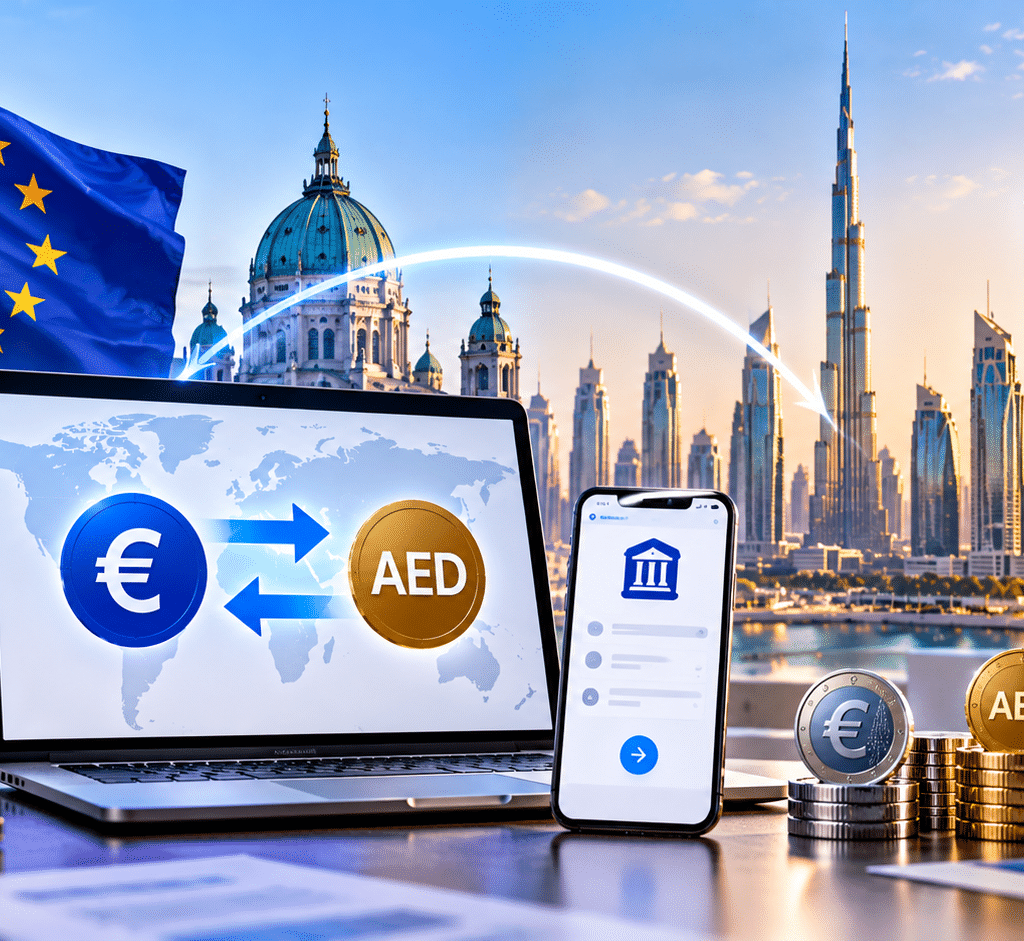
EUR & AED Transfers in the UAE: EU Business Account Guide Table of Contents Why EUR and AED Transfers Matter for UAE Businesses What Is an EU Business Account for a UAE Company? SEPA vs SWIFT: Which Transfer Route Is Used? How EUR-to-AED Transfers Work What Costs Should You Compare? Using 3S Money for EUR and AED Business Payments How to Get Started Practical Checklist Before Sending a Transfer Frequently Asked Questions Illustrative visual of EUR–AED business payments and multi-currency account management. This is not a screenshot of a live account. Quick Answer UAE businesses moving money between EUR and AED should compare the full cost and route of each transfer—not just the transfer fee. Check account eligibility, SEPA or SWIFT availability, the exchange rate, possible intermediary charges and settlement timing directly with the provider before sending funds. Key points at a glance SEPA is for eligible euro payments; SWIFT is commonly used for broader international transfers. FX spreads and intermediary bank charges can affect the total cost. An IBAN identifies an account; it does not guarantee instant or fee-free settlement. Account features and onboarding depend on provider eligibility and compliance checks. Businesses in the UAE that work with European customers, suppliers or partners often need to move money between euros (EUR) and UAE dirhams (AED). The right account setup can help make payments easier to manage, but transfer routes, exchange rates, fees and eligibility all matter. This guide explains key considerations for UAE businesses, including how an international business account provider such as 3S Money may fit into a payment workflow. Why EUR and AED Transfers Matter for UAE Businesses Companies importing products from Europe, exporting goods or services, managing overseas subsidiaries, or paying international contractors may receive money in EUR and need to pay expenses in AED—or the other way around. A multi-currency account can help centralise incoming payments, outgoing transfers and currency exchange. The best setup depends on where your business is registered, where counterparties bank, the currencies you need and how frequently you transact. What Is an EU Business Account for a UAE Company? An EU business account generally provides euro payment details—often an IBAN—so an eligible business can receive and send EUR payments through European payment networks. Some international providers also offer account details in multiple jurisdictions. Availability depends on the provider, company structure and onboarding checks. An IBAN identifies a bank account for electronic payments; it does not guarantee that a payment will be instant or free. Confirm beneficiary details and payment instructions with your provider before sending funds. SEPA vs SWIFT: Which Transfer Route Is Used? Payment route Common use What to check SEPA / SEPA Instant Eligible euro payments within participating countries and institutions Whether provider, recipient bank and transaction support the service SWIFT International transfers across a wider range of countries and currencies Intermediary and receiving fees, cut-off times and settlement estimates Local UAE payment networks Eligible domestic AED payments Correct beneficiary name and UAE IBAN, limits and processing cut-offs SEPA supports euro payments within the Single Euro Payments Area, while SWIFT is widely used for cross-border bank transfers. The actual route depends on currency, destination, account details and provider rules. Standard SEPA and SEPA Instant are different services; do not assume every EUR transfer is instant. How EUR-to-AED Transfers Work Receive EUR from a customer or partner into eligible EUR account details. Review the exchange rate, conversion fee or spread, and the AED amount you expect to receive. Convert the required amount if your provider supports the currency exchange you need. Send AED to the recipient’s UAE account using the available payment route. Save the payment confirmation and reconcile the transaction with your invoice or accounting records. For AED-to-EUR payments, confirm the recipient’s EUR account details, check the exchange rate and total costs, verify the payment purpose and supporting documents, then approve the transfer. What Costs Should You Compare? Account or monthly plan fee: some providers charge a recurring fee or service-tier cost. Transfer fee: a payment may have a fixed or percentage-based charge depending on route and plan. Foreign exchange cost: compare the quoted rate with a suitable reference rate and check whether an FX spread or separate conversion fee applies. Intermediary and recipient bank charges: these can apply to some SWIFT payments and affect the final amount received. Other charges: check the current tariff for additional users, special handling or related services. Do not compare providers on the transfer fee alone. Ask for the total cost for your typical amount and route, and verify current pricing directly with the provider. Conceptual infographic for reader orientation only. Interface details, balances, rates and fees shown are illustrative, not verified product screenshots or live quotes. Using 3S Money for EUR and AED Business Payments 3S Money advertises international business accounts, local account details in selected jurisdictions, EUR payment capabilities, AED-related payment options, foreign exchange across multiple currencies and international transfers. Its UAE-focused page describes AE, LU, NL and GB IBANs, SEPA payments and SWIFT transfers, subject to eligibility and service terms. Confirm that the exact account features and payment route are available for your business before applying. 3S Money states that it is an Electronic Money Institution rather than a bank. Businesses should understand the legal nature of the service, safeguarding arrangements, regulatory permissions and account terms before deciding whether it meets their needs. How to Get Started Review eligibility criteria and the countries and business types supported. Prepare company registration details, ownership and management information, identification documents, and a clear description of expected incoming and outgoing payments. Submit an enquiry or application through the official provider website. Complete any requested KYC, compliance checks or follow-up information requests. Before using the account, confirm supported currencies, payment routes, fees, FX terms, limits and processing times. Approval is not automatic. Additional documents may be requested, and processing times vary. Avoid promising a specific account-opening date until the provider confirms it. Practical Checklist Before Sending a Transfer Confirm the recipient’s legal name and
EUR and AED Transfers with an EU Business Account in the UAE: A 2026 Guide Read More »