

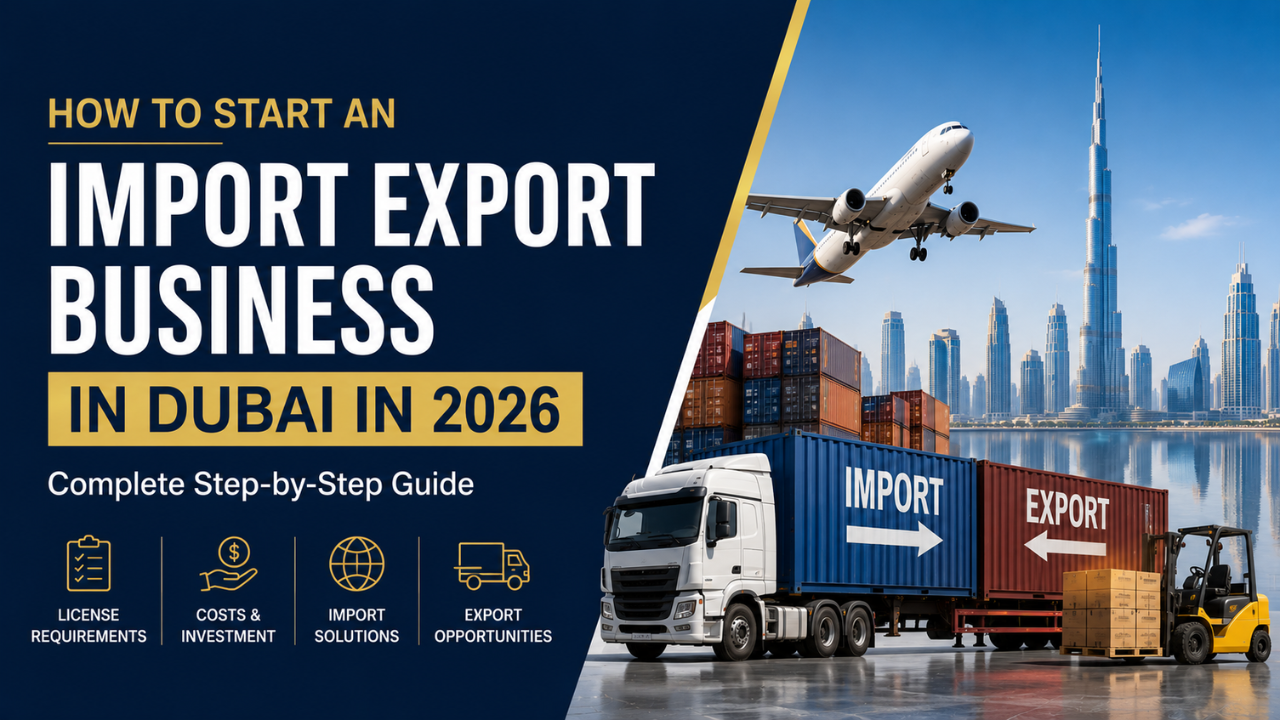
Dubai has established itself as one of the world’s leading trade and logistics hubs. Every day, thousands of containers, shipments, and products move through the UAE, connecting businesses across Asia, Europe, Africa, and the Middle East. This strategic position has made the city one of the most attractive destinations for entrepreneurs looking to start an Import Export Business in Dubai.
Whether you want to trade electronics, food products, construction materials, fashion items, machinery, or consumer goods, Dubai offers access to international markets, world-class ports, advanced logistics infrastructure, and a business-friendly environment.
The import and export sector continues to play a significant role in the UAE economy, and many entrepreneurs see it as one of the most scalable and profitable business opportunities available.
However, success requires more than simply obtaining a trade license. Understanding regulations, customs procedures, logistics planning, supplier relationships, and market demand is essential.
This guide explains everything you need to know about starting an import export business in Dubai in 2026.
Why Dubai is One of the Best Places for Import Export Businesses
Dubai’s success as a trading hub is not accidental.
The emirate has spent decades building infrastructure that supports international commerce.
Strategic Geographic Location
Dubai sits at the crossroads of Europe, Asia, and Africa, allowing businesses to serve multiple regions from a single location.
World-Class Ports
The UAE is home to some of the busiest and most efficient ports in the region, helping businesses move goods quickly and efficiently.
Modern Logistics Infrastructure
Road networks, airports, warehousing facilities, and shipping services support businesses of all sizes.
Business-Friendly Environment
The UAE government continues to encourage international trade and foreign investment through streamlined business regulations.
Access to Global Markets
Companies based in Dubai can trade with customers and suppliers around the world.
What is an Import Export Business?
An import export business involves purchasing products from one country and selling them in another.
Importing
Importing refers to bringing goods into the UAE from overseas markets.
Examples include:
- Electronics
- Food Products
- Machinery
- Fashion Items
- Medical Equipment
- Automotive Parts
Exporting
Exporting involves shipping products from the UAE to customers in international markets.
Examples include:
- Consumer Goods
- Industrial Products
- Building Materials
- Agricultural Products
- Technology Equipment
Many businesses operate as both importers and exporters.
Why Entrepreneurs Choose the Import Export Industry
There are several reasons why entrepreneurs continue entering this sector.
Global Market Opportunities
Unlike local businesses that depend on a single market, import export companies can serve customers across multiple countries.
Scalability
Trade businesses can often grow without requiring large retail networks or multiple physical locations.
High Demand
Every economy depends on international trade.
Businesses constantly require raw materials, finished goods, equipment, and consumer products.
Multiple Revenue Streams
Import export companies may generate income through:
- Product Sales
- Distribution Agreements
- Wholesale Trading
- International Partnerships
- Supply Chain Services
Step 1: Choose Your Product Category
Before obtaining a license, determine exactly what products you plan to trade.
This decision affects:
- Licensing Requirements
- Customs Procedures
- Storage Needs
- Shipping Costs
- Regulatory Approvals
Popular Import Export Products in Dubai
| Category | Demand Level |
| Electronics | High |
| Consumer Goods | High |
| Building Materials | High |
| Food Products | High |
| Automotive Parts | High |
| Fashion & Apparel | High |
| Medical Equipment | Growing |
| Industrial Machinery | Growing |
Selecting the right niche can significantly influence profitability.
Step 2: Conduct Market Research
Many new traders make the mistake of choosing products based solely on personal preference.
Successful businesses focus on market demand.
Research:
Customer Demand
Who will buy your products?
Competition
How many suppliers already exist?
Pricing
Can you remain competitive while maintaining profit margins?
Regulations
Are additional approvals required?
The stronger your market research, the lower your business risk.
Step 3: Choose Your Business Structure
Entrepreneurs must decide how they want to establish their company.
The two most common options are:
Mainland Company
Often preferred by businesses planning to trade extensively within the UAE market.
Benefits
- Wider market access
- Greater operational flexibility
- Ability to work directly with UAE customers
Free Zone Company
Popular among international traders and businesses focused on re-export activities.
Benefits
- Streamlined setup processes
- International trade focus
- Modern logistics facilities
The right choice depends on your target customers and operational goals.
Step 4: Obtain an Import Export License
To legally trade goods, you will need a commercial or trading license that covers your intended activities.
Typical documentation may include:
- Passport Copies
- Business Name Approval
- Company Formation Documents
- Shareholder Information
- Business Activity Selection
Once approved, your company can begin preparing for import and export operations.
Step 5: Register for Customs
A customs registration is generally required before importing or exporting products.
This allows authorities to track shipments and ensure compliance with applicable regulations.
Businesses should understand:
- Customs Procedures
- Import Documentation
- Export Documentation
- Product Classification
- Duty Requirements
Proper preparation helps avoid delays and unexpected costs.
Step 6: Open a Corporate Bank Account
A business bank account is essential for international trade operations.
Suppliers and customers often expect professional payment arrangements.
Banks may request:
- Business License
- Shareholder Information
- Business Plan
- Source of Funds Information
- Trade Activity Details
Businesses involved in international trade should prepare detailed documentation to support account opening.
Step 7: Find Reliable Suppliers
Your suppliers play a critical role in business success.
When evaluating suppliers, consider:
Product Quality
Consistent quality builds customer trust.
Pricing
Competitive pricing improves profitability.
Production Capacity
Can the supplier meet growing demand?
Shipping Reliability
Late deliveries can damage customer relationships.
Communication
Strong communication reduces misunderstandings and operational issues.
Building long-term supplier relationships often creates better results than constantly changing vendors.
Step 8: Establish Logistics and Shipping Processes
Efficient logistics can become a competitive advantage.
Key considerations include:
Shipping Method
- Air Freight
- Sea Freight
- Land Transport
Warehousing
Determine whether storage facilities are required.
Inventory Management
Maintaining the right inventory levels helps avoid stock shortages and excessive storage costs.
Delivery Times
Customers increasingly expect fast and predictable delivery schedules.
Step 9: Understand Import Duties and Regulations
Different products may have different regulatory requirements.
Examples include:
- Food Products
- Medical Equipment
- Cosmetics
- Electronics
- Chemicals
Before importing products, confirm that all approvals and documentation requirements are understood.
Ignoring regulations can result in shipment delays or penalties.
Estimated Cost of Starting an Import Export Business in Dubai
Startup costs vary depending on the scale of operations.
Typical Cost Breakdown
| Expense | Estimated Cost (AED) |
| Trade License | 10,000 – 25,000+ |
| Visa Costs | 3,000 – 5,000+ |
| Customs Registration | Varies |
| Office Requirements | Varies |
| Warehousing | Varies |
| Initial Inventory | Varies |
| Shipping & Logistics | Varies |
Recommended Startup Budget
Small trading operations often start with:
25,000 AED to 100,000 AED+
Larger businesses may require significantly higher investment depending on inventory levels and product categories.
Common Challenges in Import Export Businesses
Every industry has challenges.
Common obstacles include:
Supplier Issues
Quality problems or delays can affect customer satisfaction.
Shipping Delays
Global supply chains can occasionally experience disruptions.
Currency Fluctuations
Exchange rate changes may affect profitability.
Regulatory Changes
Trade regulations may evolve over time.
Inventory Management
Holding too much inventory can impact cash flow.
Successful businesses actively monitor and manage these risks.
Tips for Building a Successful Import Export Business
Start With One Product Category
Avoid trying to trade everything at once.
Focus on Relationships
Strong supplier and customer relationships create long-term value.
Understand Compliance
Compliance should be viewed as a business advantage rather than an obstacle.
Monitor Cash Flow
Cash flow management is often more important than revenue.
Invest in Technology
Inventory systems, accounting software, and logistics platforms improve efficiency.
Build a Brand
Many traders focus only on transactions. Building a trusted brand can create a significant competitive advantage.
High-Potential Import Export Opportunities in 2026
Several sectors continue showing strong potential.
Electronics
Demand remains consistently high across multiple markets.
Sustainable Products
Eco-friendly products continue gaining popularity.
Health & Wellness Products
Consumers increasingly prioritize health-related products.
Construction Materials
Regional infrastructure development continues driving demand.
Industrial Equipment
Growing industries require machinery and equipment.
Food and Beverage Products
Food imports and exports remain a major segment of global trade.
Why Dubai Continues to Lead Regional Trade
Dubai’s position as a global trading hub is supported by:
- Modern Ports
- International Airports
- Efficient Logistics Networks
- Business-Friendly Regulations
- Global Connectivity
- Growing Investor Confidence
These factors continue attracting entrepreneurs from around the world.
How AB Capital Services Supports Import Export Businesses
Starting an import export company involves more than obtaining a trade license. Entrepreneurs must understand company formation options, customs requirements, banking expectations, regulatory obligations, and operational planning.
AB Capital Services works with entrepreneurs, SMEs, and international investors looking to establish trading companies in the UAE. By helping business owners understand licensing requirements, company structures, banking considerations, and compliance obligations, the firm supports entrepreneurs in making informed decisions for long-term growth.
Frequently Asked Questions
Can foreigners start an import export business in Dubai?
Yes. Foreign investors can establish trading companies in Dubai subject to applicable licensing requirements.
Do I need a warehouse?
Not always. Warehousing needs depend on the products being traded and the business model.
Is an import export business profitable?
Profitability depends on product selection, supplier relationships, logistics efficiency, pricing strategy, and market demand.
What products are most commonly traded?
Electronics, consumer goods, food products, machinery, building materials, and fashion products are among the most popular categories.
How long does a business setup take?
Timelines vary depending on the chosen structure, documentation, and regulatory approvals.
Final Thoughts
Starting an Import Export Business in Dubai remains one of the most attractive opportunities for entrepreneurs looking to participate in international trade.
Dubai’s strategic location, world-class infrastructure, global connectivity, and business-friendly environment continue making it a preferred destination for trading companies.
The businesses that achieve long-term success are not necessarily those with the largest inventories or biggest budgets. They are the businesses that understand their markets, build strong supplier relationships, manage risk effectively, and consistently deliver value to customers.
With proper planning, the right products, and a clear growth strategy, an import export business can become a highly scalable and profitable venture in Dubai’s dynamic trading ecosystem.