
Low Cost Business Setup in Dubai, UAE by AB Capital Services

Accounting

India vs UAE Salary Business Income Tax Where Do You Keep More of What You Earn

India vs UAE: Salary, Business Income & Tax! Where Do You Keep More of What You Earn?

If you’ve ever wondered whether you’d earn more living and working in Dubai compared to India, you’re not alone. With rising entrepreneurial interest and job migration trends between the two regions, the debate around what you earn in India vs UAE and how much of it is taxed is heating up in 2025. In this guide, we break down the tax on salary in India vs UAE, compare business taxes, and show you where you actually keep more of your hard-earned money! Whether you’re an employee, entrepreneur, or investor. What You Earn in India vs UAE: A Practical Comparison When comparing income potential, it’s not just about how much you earn & it’s about how much you keep after taxes, lifestyle costs, and business expenses. In India: Salaries vary widely depending on the city, role, and industry. Mid-level professionals earn around ₹8–20 lakhs per annum in metros like Mumbai or Bengaluru. Income is subject to personal income tax starting at 5%, going up to 30% for high earners. In the UAE: Professionals in similar roles earn 20% to 40% more, depending on the industry. There is no personal income tax on salary or freelance earnings. Expats often receive benefits like housing allowance, medical insurance, and education support. 📌 Takeaway: Even if the salary is the same, UAE professionals keep more of their income due to tax-free earnings. Tax on Salary in India vs UAE India: Salaries are taxed progressively under the Income Tax Act. New tax regime (as of 2024–25): Up to ₹3 lakh: Nil ₹3–6 lakh: 5% ₹6–9 lakh: 10% ₹9–12 lakh: 15% ₹12–15 lakh: 20% Above ₹15 lakh: 30% Add to that cess, surcharges, and mandatory deductions like PF and professional tax, and the actual take-home significantly reduces. UAE: Zero tax on individual salaries or wages, regardless of how high your income is. No PF, no cess, no professional tax. Social security contributions apply only to UAE/GCC nationals, not to Indian expats. 📌 Takeaway: If you’re earning ₹25+ lakh in India, you’re likely losing up to ₹7–10 lakh in taxes. In the UAE, that’s tax-free income in your bank account. Tax on Business in India vs UAE Let’s say you’re not an employee & you’re running your own business. How do the two countries stack up? In India: Corporate tax is 22% for domestic companies, and 15% for new manufacturing units. GST (Goods & Services Tax) adds another 5–28% on products and services. Compliance is complex and time-consuming (GST filings, TDS, audits, etc.). State-level taxes, surcharges, and cess apply depending on location and business type. In the UAE: Corporate Tax (as of June 2023) is 9% on net profits above AED 375,000 (~₹84 lakh). Below that threshold? You pay 0% corporate tax. No VAT for businesses below the VAT registration threshold (AED 375,000 revenue). No capital gains tax, no dividend tax, and simpler annual filing requirements. 📌 Takeaway: If you’re running a lean startup or small business, the UAE gives you higher post-tax profits with fewer compliance burdens. Hidden Perks of Earning in the UAE Beyond salary and tax, here are a few underrated benefits of living and earning in the UAE: Stronger currency (AED): Earnings in AED convert into higher INR value when remitted. 100% foreign business ownership in free zones and the mainland. Residency by business setup: Start a business and get a long-term visa. Zero tax on capital gains or savings interest that means you keep what you earn and grow. Lifestyle Costs: Should You Factor Them? Yes, Dubai’s cost of living is higher than Tier 2 Indian cities — but compared to Mumbai or Delhi, it’s more expensive than you think. Plus, you’re saving significantly on taxes. For example, an Indian professional earning ₹40 lakh per annum may only see ₹30–32 lakh after taxes in India. In the UAE, a similar role could pay AED 250,000–300,000 tax-free & which converts to ₹55–65 lakh in hand annually. That’s a 30% to 50% jump in real income, even after accounting for rent or school fees. Why Are Indians Moving to the UAE in 2025? According to recent migration trends, India remains one of the largest sources of entrepreneurs and skilled professionals to the UAE, and the reasons are obvious: Higher take-home salary Favorable business tax structure Residency through business ownership Ease of global banking, investment, and trade Whether you’re a freelancer, consultant, small business owner, or startup founder, the UAE offers a fast-track to financial freedom and global reach. Final Word: Where Should You Build Your Future? If you’re tired of high tax slabs, complex compliance, and shrinking net income in India, Dubai presents a clear alternative. The difference between what you earn in India vs UAE is not just in the numbers but also it’s in the structure, stability, and long-term value of your income. AB Capital Services: Helping You Make the Move Smartly At AB Capital Services, we help professionals and business owners from India set up legally in the UAE with: Low-cost company formation packages starting from AED 12,500 Lifetime UAE residency visa with your business license Bank account setup in 3 business days Support with tax planning, compliance, and expansion If you’re ready to keep more of what you earn and build in a tax-efficient jurisdiction, we’ll help you every step of the way. 📞 Book a free consultation today and let’s get your UAE business or visa journey started. Read more about AED 12,500 Package: https://abcapital.ae/start-a-business-in-rakez-free-zone-in-just-aed-12500/

India vs UAE: Salary, Business Income & Tax! Where Do You Keep More of What You Earn? Read More »
Holding Companies with Offshore UBOs Why UAE Banks Reject Most Applications and How We Get Them Approved

Holding Companies with Offshore UBOs: Why UAE Banks Reject Most Applications and How We Get Them Approved

In recent years, the UAE has become a top destination for holding companies looking to centralize ownership, protect assets, and gain access to global banking. But for companies with offshore Ultimate Beneficial Owners (UBOs), there’s one frustrating reality: most bank account applications get silently rejected & even when the company is fully licensed. At AB Capital Services, we’ve handled hundreds of complex corporate banking cases involving offshore ownership, grey-list jurisdictions, and high-risk nationalities. In this blog, we explain why holding companies with offshore UBOs struggle to get approved, and how our proven strategies help you clear compliance and secure banking successfully. Why Holding Companies Are Red-Flagged by UAE Banks UAE banks are not against holding companies but they’re against unclear structures and compliance risk. Holding companies are often treated as high-risk because of the following reasons: No operational activity or revenue inside the UAE Offshore incorporation in high-risk or low-transparency jurisdictions (e.g., BVI, Seychelles, Panama) Multi-layered ownership that makes it hard to trace control Unclear or undocumented fund flows UBOs who are politically exposed or based in grey-listed or sanctioned countries From the bank’s perspective, if there is no local economic activity and no transparency around the money, it’s a red flag. Holding companies are not illegal in the UAE but the lack of clarity, control, and legal logic is what gets your file rejected. The Real Risk: Offshore UBOs When your UBO sits offshore, UAE banks activate Enhanced Due Diligence (EDD). This is especially true when the UBO is based in: Sanctioned or grey-listed countries (Russia, Iran, Syria, etc.) Tax havens with low financial oversight (BVI, Belize, Panama) Jurisdictions with no tax cooperation agreements with the UAE This triggers internal risk reviews that often lead to rejections without explanation. Even if your offshore UBO is fully legal, banks want to know: Who are they? Where did their money come from? Why do they want a bank account in the UAE? Whether they pose any legal or financial risk? Without this clarity, your file is either ghosted or quietly denied. Common Reasons UAE Banks Reject Offshore Holding Companies Based on our experience, here are the most common rejection triggers: No business plan or economic justification for having a UAE entity Weak documentation proving source of funds UBO is unwilling to travel or engage with UAE compliance officers UBO tax residency does not match business structure Legal documents are not notarized, attested, or translated properly Conflicting or vague ownership layers with no visible control Most banks won’t tell you why they rejected your file. But rest assured as these are the internal red flags that cost you your approval. What Most Consultants Get Wrong? The majority of company formation agencies focus on: Issuing a trade license Registering the company Submitting a basic set of KYC documents That’s not enough. UAE banks are not interested in paperwork. They care about the story behind the structure. To succeed, you need: A risk profile analysis before submission A fully justified economic presence A transparent, well-documented fund trail UBO credibility, residency, and tax compliance Alignment with the bank’s internal risk appetite AB Capital Services is not a generic setup firm. We engineer applications to pass real-world compliance scrutiny. Our Structuring Strategy: Step-by-Step Here’s how we secure bank approvals for holding companies with offshore UBOs: 1. Risk Pre-Mapping We assess your nationality, UBO residency, offshore jurisdiction, and FATF exposure before anything is submitted. 2. Source of Funds Dossier We compile a clean, traceable fund flow — supported by third-party declarations, historical tax records, or audited financials. 3. UAE Activity Plan Even if your entity is passive, we build a commercial logic for your UAE presence. This could be asset holding, regional expansion, or investor access. 4. UBO Presentation File We include tax documents, proof of wealth, past banking history, and residency ties — all in a language the bank understands. 5. Bank Matching Every bank has different internal guidelines. We align your case with a relationship manager and institution whose policy fits your risk level. This is why our clients get approvals while others are repeatedly rejected. Case Study: UAE Holding Company with Belize UBO Approved in 12 Working Days A client approached AB Capital Services after facing repeated setbacks trying to open a bank account for their newly established UAE holding company. The company was registered in RAKEZ, with its parent entity in Belize and the UBO holding Syrian nationality but residing in Spain. Despite being legally structured, the application had already been rejected twice by local banks due to unclear documentation and high-risk UBO nationality. Our Fix: Added a UAE-based resident director to increase local relevance Presented a third-party notarized fund source from a Spanish real estate portfolio Created a business activity declaration explaining the purpose of UAE presence (asset management and startup investments) Recompiled the UBO profile with tax declarations, proof of residency, and historical banking records Selected a bank with a known risk appetite for investment holding companies and engaged the right relationship manager Result: Account approved in just 12 working days from submission Bank Feedback: “A clear and compliant submission. The purpose and structure were well-defined from the start.” This wasn’t just about fixing a form. It was about aligning risk, documentation, and intent — the way banks need to see it. What UAE Banks Need to See to Say Yes? To get your application through internal compliance, your file must show: Clear, credible UBO background Legitimate source of wealth and tax compliance Strategic reason for UAE presence (asset protection, expansion, diversification) Realistic banking intentions (volume, type, transactional needs) Local economic substance (resident director, UAE link, tenancy if needed) Banks Don’t Hate Holding Companies. They Hate Ambiguity. The myth that banks hate holding structures or offshore UBOs is false. What they actually hate is: Vague business models Poor compliance preparation Risk with no documentation Ownership with no economic presence At AB Capital Business Bank Account Services, we bridge the gap between your holding company and the bank’s internal requirements. We

Holding Companies with Offshore UBOs: Why UAE Banks Reject Most Applications and How We Get Them Approved Read More »

russian iranian Syrian clients in the uae What causes rejections and how we make approvals happen

If You’re Russian, Iranian, or Syrian then Read This Before Applying for a UAE Bank Account

Opening a corporate UAE bank account is a top priority for most business owners and investors. But if you hold a passport from countries like Russia, Iran, or Syria, you’ve likely encountered rejections, delays, or unexplained silence from banks, even when your documents are in order. So, what’s really happening? At AB Capital Services, we specialize in helping high-risk nationality clients get UAE bank approvals to open a UAE bank account. We don’t rely on trial and error but we use tested compliance strategies, legal restructuring, and direct banking relationships to help you get results. In this blog, we’ll explain why banks flag certain nationalities, the mistakes applicants make, and how we get accounts approved & even when others fail. Why UAE Banks Flag Russian, Iranian, and Syrian Applicants? Banks in the UAE operate under strict regulatory frameworks, including Central Bank compliance, global AML laws, and international sanction rules. When a bank receives an application from a client holding a high-risk passport, they must apply Enhanced Due Diligence (EDD). Common EDD Triggers: Sanctions exposure (especially post-2022 sanctions on Russia) Geopolitical instability in countries of origin Difficulty verifying source of funds Passport and residency mismatches Fear of regulatory or reputational backlash It’s not just about where you’re from. It’s about how your profile is presented, structured, and positioned & this is where most applicants fall short. Common Banking Rejection Patterns (And What They Really Mean) If you’re experiencing any of these, you’re not alone but you’re also not being told the full story. 🔇 No response after document submission 📄 Endless requests for new documents ❌ “Committee rejected the file” without explanation ❄️ Account frozen after opening 🔁 Rejection after initial verbal approval These are not random events. They are compliance signals and they often mean your profile is not aligned with what the bank wants to see. What UAE Banks Are Actually Reviewing? Contrary to popular belief, when opening a UAE bank account you are not just reviewing your passport. They’re evaluating the entire profile, including: UBO structure (ownership chain) Passport and visa combination Business model and fund flow logic Connections to offshore or flagged jurisdictions Historical banking behavior Even a clean source of funds can be blocked if your application lacks clarity, context, or confidence. How AB Capital Services Gets Accounts Approved When Others Cannot? We don’t submit generic documents and wait for miracles. We engineer every case to pass through compliance checks with minimal resistance using a three-level strategy: 1. Pre-Compliance Audit Before submitting to any bank, we audit your profile for internal red flags: Passport risk ranking Fund flow clarity and origin Offshore linkages Previous account closures or denials This helps us identify issues before the bank does — and we fix them. 2. Profile Engineering We craft a strong narrative and documentation structure around: Business plan and transaction logic Wealth origin and timeline Corporate structure tailored for UAE regulations Third-party declarations where needed Dual-language documentation (Arabic-English) Our goal is to preemptively answer the bank’s questions so your file flows through with less friction. 3. Bank Relationship Mapping Every bank has different compliance thresholds and risk appetites. We map your case to banks known to work with your nationality, business model, or fund structure. This step avoids unnecessary rejections and significantly improves approval rates. Real Case Example: Iranian Tech Consultancy Blocked After Initial Approval An Iranian-owned tech consultancy registered in SHAMS Free Zone contacted us after their UAE bank account was frozen just two months after activation, despite receiving initial verbal approval and clearing KYC checks. Here’s how we resolved it: Re-drafted the business model and aligned it with UAE compliance language Switched to a DIFC license structure more suited for digital service firms Introduced a compliant UAE-based operations manager Presented a layered breakdown of income sourced from a European affiliate Submitted a third-party legal opinion verifying ownership and fund legitimacy Result: New account opened with a Tier 1 UAE bank in 17 days, with full online banking access restored. This is not luck. It’s compliance engineering. What We Submit to Reduce Rejections? Our submission package includes: Dual-language documentation (Arabic and English if needed) Source of funds with layered trail Prior banking records from third countries (Georgia, Armenia, Turkey, etc.) A business model adapted to UAE compliance expectations Third-party declarations, where applicable This isn’t about “ticking boxes” — it’s about telling a credible story the bank can trust. Why Most Applications from High-Risk Countries Fail? Most applicants don’t realize that UAE banks are not rejecting them because of nationality alone. It’s the way the profile is presented. Mistakes we often see: Complex ownership with no clear UBO explanation Conflicting personal and business residency Weak documentation of investment or income trail Passive profiles with no transactional logic Using license activities that contradict real operations Even strong applicants get blocked if their file looks like a compliance risk. How to Maximize Your Approval Chances? If you’re Russian, Iranian, Syrian, or hold a high-risk passport, here’s what to do before applying: Work with experienced consultants (like AB Capital) Choose the right jurisdiction and business activity Structure your ownership clearly Declare a traceable and verifiable fund source Avoid offshore setups unless they are clean and documented Be proactive — not reactive — with compliance Ready to Get Started? Yes, You Can Still Get Approved It’s tough, but not impossible. At AB Capital Services, we’ve helped dozens of clients from Russia, Iran, and Syria get corporate and personal bank accounts approved in the UAE but even after multiple rejections. What makes the difference is how you structure, document, and position your case. We know what banks are looking for, and we tailor your application to match. If you’ve been rejected or are unsure how to proceed, contact us for a confidential case assessment. You don’t need to settle for “no” but you need a smarter strategy.

If You’re Russian, Iranian, or Syrian then Read This Before Applying for a UAE Bank Account Read More »

DMCC Introduces SPV and Holding Licences

DMCC Introduces SPV and Holding Licences to Simplify Asset Management in the UAE

In a bold move that further cements Dubai’s position as a global business hub, the Dubai Multi Commodities Centre (DMCC) has introduced SPV (Special Purpose Vehicle) and Holding Company Licences with two powerful corporate structuring tools that offer investors, entrepreneurs, and international companies smarter, more strategic options to manage assets and risk. As the business world continues to evolve, so do the demands of entrepreneurs and corporations looking for tax-efficient, flexible, and legally sound business vehicles. These new licences are designed to fill that need and they are now available directly within the DMCC free zone. If you’re considering company formation in Dubai, especially for asset protection, investment holding, or corporate structuring, this blog by AB Capital Services is your ultimate guide to everything you need to know about the new DMCC SPV and Holding Company Licences. What is DMCC and Why Does It Matters? The Dubai Multi Commodities Centre (DMCC) is the world’s leading free zone for trade and enterprise. Located in the heart of Dubai, it has earned a reputation for innovation, regulatory transparency, and investor-centric policies. With more than 23,000 companies registered, DMCC is often the first choice for foreign investors seeking a flexible and internationally trusted jurisdiction. The introduction of SPV and Holding Company Licences is a game-changer for high-net-worth individuals, family offices, multinational corporations, and investment funds that need sophisticated business structures in a robust jurisdiction. What is a DMCC SPV (Special Purpose Vehicle) A Special Purpose Vehicle (SPV) is a legal entity created for a specific, limited business purpose. It is often used to isolate financial and legal risk or hold specific assets and investments separately from the parent company. Key Features of a DMCC SPV: No physical office space required (Flexi-desk or shared desk model) Can be 100% foreign-owned No need for a UAE residence visa Allows for holding shares in UAE and international companies Permitted to own property in designated zones like Dubai Hills, Business Bay, Downtown, and more Light compliance requirements (no audit mandatory unless required by authorities) Ideal for estate planning, corporate structuring, and IP ownership Use Cases for SPV in UAE: Holding intellectual property Real estate ownership and segregation Risk management through subsidiary creation Simplified corporate structuring for global businesses Facilitating mergers and acquisitions Fundraising or investment pooling What is a Holding Company in DMCC? A Holding Company is an entity created to own controlling interests in other companies. Unlike an SPV which is used for a specific transaction or purpose, a Holding Company operates as a long-term management entity for group structures and ownership consolidation. Key Features of a DMCC Holding Company: Allows you to hold stakes in multiple entities both in the UAE and internationally Provides centralized control of operations, assets, and investments 100% foreign ownership permitted No requirement for physical office space No trading of goods or services under this licence Can sponsor employees and directors if needed May apply for UAE tax residency and benefit from double taxation agreements Who Should Consider a Holding Company Licence: Business groups managing subsidiaries in multiple industries Investors with multiple real estate or startup investments Entrepreneurs consolidating international assets under a UAE structure Family offices seeking long-term asset protection and inheritance planning SPV vs Holding Company: What’s the Difference? While both the SPV and Holding Company licences provide structural advantages, they serve slightly different purposes: Feature SPV Holding Company Purpose Single or limited scope transaction Long-term ownership and group control Operations Passive ownership, no active trading Passive ownership, potential management role Visa Eligibility Not required Optional (can sponsor visas) Use Cases Real estate, IP, fundraising, M&A Owning shares in multiple companies Corporate Bank Account Possible with proper structure Easier to open depending on activity   Benefits of Setting Up a DMCC SPV or Holding Company Whether you opt for a DMCC SPV licence or a Holding Company licence, both offer serious advantages in 2024 and beyond: 1. 100% Foreign Ownership You maintain full control of your entity and assets without needing a local sponsor. 2. No Corporate Tax on Passive Income As long as your entity does not exceed the corporate tax thresholds or qualify under taxable activity, it may be exempt under UAE’s tax laws. 3. Asset Protection Keep your business and personal assets separate. An SPV or holding company isolates liabilities and reduces exposure. 4. Succession and Estate Planning Perfect for high-net-worth individuals and family offices looking to ensure smooth intergenerational asset transfer. 5. Banking Flexibility With the right documentation, both structures are eligible for corporate bank accounts. AB Capital Services works with leading banks in the UAE to streamline this process. 6. Cost-Effective Setup No need for physical office space and minimal operational overheads make this one of the most affordable corporate vehicles in Dubai. Cost of Setting Up an SPV or Holding Company in DMCC While prices can vary depending on specific requirements, here is a rough breakdown: DMCC Licence Fee: Starting from AED 10,000 per year Flexi-Desk Office Package: AED 5,000 to AED 7,000 annually Registration and Documentation: AED 5,000 to AED 8,000 Corporate Bank Account Assistance: Included with AB Capital Services Total setup cost ranges between AED 20,000 to AED 30,000, depending on the complexity of your structure. How AB Capital Services Helps You Set Up in DMCC? At AB Capital Services, we are more than business setup consultants. We are corporate structuring experts. Here is how we help: Tailored consultation to choose between SPV and Holding Company Company registration and full documentation Support with shareholder and ownership structuring Assistance with tax residency certificates if required Fastest business bank account opening in 3 business days Ongoing compliance and renewal management We work closely with DMCC and UAE banks to deliver a smooth, efficient, and fully compliant experience. Final Thoughts The introduction of DMCC SPV and Holding Company licences is a strategic evolution in the UAE’s business ecosystem. Whether you are a startup founder, real estate investor, or multinational group, these structures offer a secure and flexible foundation to grow, protect, and manage

DMCC Introduces SPV and Holding Licences to Simplify Asset Management in the UAE Read More »

Benefits of Using a Corporate Bank Account in the UAE

Benefits of Using a Corporate Bank Account in UAE and Fastest Business Bank Account Opening in UAE

Setting up a business in the United Arab Emirates has never been more attractive. With its investor-friendly regulations, tax advantages, and strategic global location, the UAE continues to draw entrepreneurs and businesses from around the world. But while company formation is an essential first step, opening a corporate bank account in the UAE is what really gets your business up and running. The UAE banking sector is known for its world-class security, modern infrastructure, and international accessibility. A corporate bank account is not just a formality. It is a foundation for operational success, regulatory compliance, and financial credibility. In this blog, we will explore the top benefits of using a corporate bank account in the UAE and explain how AB Capital Services provides the fastest business bank account opening in the UAE in just 3 business days. Why You Need a Corporate Bank Account in the UAE Whether you are a startup, SME, or multinational, a corporate bank account is a vital tool for day-to-day operations. It allows you to manage business finances separately from personal assets and gives your business the credibility it needs in a competitive market. 1. Builds Business Credibility and Professionalism Having a corporate account gives your business a professional image. Clients, vendors, and partners expect to transact with a registered entity, not an individual’s personal bank account. A UAE-based corporate account positions your business as trustworthy and reliable in the eyes of stakeholders. 2. Ease of International Transactions UAE corporate bank accounts offer seamless international banking services, including multi-currency accounts, SWIFT access, and low transaction fees for cross-border payments. This is essential for businesses engaged in import export, ecommerce, or global consulting services. 3. Secure and Regulated Banking Environment The UAE banking system is well regulated by the Central Bank and complies with international standards for anti money laundering and financial security. Your funds are safe, and your transactions are monitored through advanced banking technology and compliance frameworks. 4. Access to Financing and Business Credit Once your company has a corporate bank account, you can begin building a business credit profile. This makes it easier to access loans, trade finance, credit facilities, and even investment capital from local banks or international partners. 5. Separation of Personal and Business Finances This is a major compliance requirement, especially if your business is subject to UAE corporate tax or VAT. Keeping personal and business finances separate ensures accurate financial reporting and simplifies tax filings. Top Benefits of Opening a Corporate Bank Account in UAE Let us go a level deeper and look at why the UAE is one of the most preferred destinations for corporate banking. Tax Efficiency and International Trust The UAE remains one of the most tax efficient jurisdictions in the world. With a zero percent personal income tax and only nine percent corporate tax on net profits above AED 375,000, your business retains most of its income. Plus, international partners and clients are more willing to work with companies that bank in the UAE due to the country’s strong compliance and stable economy. Multiple Banking Options and Currency Flexibility The UAE offers a wide range of banking options including local and international banks. You can open accounts in dirhams, dollars, euros, and other major currencies. This is highly beneficial for businesses with global supply chains or cross-border revenue streams. Advanced Digital and Online Banking Services Leading UAE banks provide powerful online platforms where you can transfer funds, pay invoices, monitor cash flow, and integrate with accounting tools. This ensures operational efficiency and helps you run your business from anywhere in the world. Challenges Businesses Face When Opening a Bank Account in the UAE Despite the benefits, opening a corporate bank account can be time-consuming and complex without expert help. Banks often conduct strict due diligence, and without the right documentation or business structure, your application might get delayed or even rejected. Common challenges include: Choosing the right bank for your business activity Meeting Know Your Customer and compliance requirements Preparing the necessary legal documents Demonstrating business activity and source of funds Handling language or procedural barriers This is why many businesses partner with experienced consultants like AB Capital Services who specialize in fast business bank account opening in the UAE. Fastest Business Bank Account Opening in UAE with AB Capital Services At AB Capital Services, we understand that time is money. You do not want to spend weeks chasing banks and compiling paperwork. Our expert team offers the fastest business bank account opening in the UAE completed in just 3 business days. What We Do for You Recommend the right bank based on your company structure and business activity Help you choose between mainland, free zone, or offshore banking solutions Handle all documentation and compliance checks Prepare you for the bank interview or onboarding call Provide support in English, Arabic, or your preferred language We maintain strong relationships with leading banks in the UAE including Emirates NBD, Mashreq Bank, RAKBANK, ADCB, and more. This allows us to offer priority processing and smoother approvals. What Documents Do You Need to Open a Corporate Bank Account in UAE While requirements vary slightly depending on the bank, the standard documents include: Trade license and company incorporation documents Shareholder passport and visa copies Emirates ID of local partners or signatories Proof of address and tenancy contract Business plan or summary of business activity Source of funds and expected annual turnover AB Capital Services helps you organize and prepare all of these so you are ready from day one. Types of Corporate Bank Accounts You Can Open in the UAE Mainland Company Accounts Ideal for businesses targeting the UAE market with direct customer interaction. Offers full access to local and international banking services. Free Zone Company Accounts Designed for companies operating within UAE free zones. Offers currency flexibility and is suitable for international trade and remote operations. Offshore Company Accounts Perfect for holding companies or those managing global assets. While more restricted, they still offer secure banking and confidentiality.

Benefits of Using a Corporate Bank Account in UAE and Fastest Business Bank Account Opening in UAE Read More »

UAE tax free system UAE’s New Corporate Tax Breakthrough: What It Means for Foreign Investors in 2025

Corporate Tax UAE New Breakthrough: What It Means for Foreign Investors in 2025

The UAE isn’t just making headlines but also it’s rewriting the investment playbook. With the latest corporate tax reforms in 2025, the Emirates is turning heads across the global financial landscape. Through Cabinet Decisions No. 34 and 35 of 2025, the UAE has taken another confident leap toward becoming the world’s most attractive destination for foreign investment. From Qualifying Investment Funds (QIFs) to Real Estate Investment Trusts (REITs), the game is officially changing and if you’re a foreign investor or fund manager, you’ll want to pay close attention. UAE’s Tax Reform 2025: A Strategic Power Move Let’s be honest that corporate tax has always been a grey area for non-resident investors in the UAE. The lack of clarity around what constitutes a taxable “nexus” left many foreign players confused and hesitant. That stops now. The UAE Ministry of Finance, via Cabinet Decisions No. 34 and 35, has introduced a cleaner, smarter, and globally aligned approach to corporate tax. The goal? Attract more foreign capital, simplify compliance, and reinforce the UAE’s position as a global investment magnet. Key Tax Changes for Foreign Investors in the UAE These new rules don’t just fine-tune the tax code but they recalibrate it entirely for the benefit of international investors. 1. Nexus Clarity for QIFs and REITs Previously, tax obligations kicked in at the time of investment, which raised questions about when exactly a fund became taxable. Now, there’s a clear answer: If a QIF or REIT distributes at least 80% of its income within 9 months of the financial year-end, the tax “nexus” is established only at the dividend distribution date, not when you invest. If the 80% threshold isn’t met, the taxable presence begins from the investment date. This change offers greater certainty and reduced risk for foreign investors, especially in REITs managing large-scale real estate portfolios. 2. 10% Real Estate Threshold Simplified When a QIF exceeds 10% of its asset base in real estate, only 80% of real estate income will now be considered for UAE Corporate Tax purposes. This ensures that funds with partial exposure to property don’t get punished with full taxation on real estate earnings but a smart move to keep the investment ecosystem vibrant and balanced. 3. Ownership Diversity – Precision Over Penalty Breaching ownership diversity rules? Here’s the big win: Only the non-compliant investor will be affected, not the entire fund. This laser-focused enforcement gives fund managers room to breathe and correct investor imbalances without derailing the whole vehicle. Additionally, funds get a 90-day cumulative grace period per year to resolve any diversity breaches. Benefits of These Changes: Why It Matters for You These updates are more than just regulatory housekeeping. They’re a strategic blueprint to pull global capital into the UAE, and here’s why you should care: 👉🏻 Zero Tax on QIF Income (if conditions are met) Thanks to Cabinet Decision No. 34 of 2025, investors in Qualifying Investment Funds can enjoy full exemption from UAE Corporate Tax—provided the real estate and ownership rules are respected. This transforms the UAE into a haven for fund investors seeking returns without the tax bite. 👉🏻 Simplified Compliance Gone are the days of vague interpretations and red tape. The UAE has delivered straightforward, investor-friendly rules, which minimize compliance headaches for global fund managers and investors. 👉🏻 Global Alignment With these changes, the UAE aligns its tax regime with international standards. The inclusion of provisions for Qualifying Limited Partnerships and tax transparency ensures that international investors won’t be spooked by unfamiliar or outdated tax mechanics. The Impact on Real Estate and Fund Management The Dubai and Abu Dhabi real estate markets have always been magnets for cross-border capital. These changes amplify that. Now, REITs and property-focused funds structured as QIFs have a clear incentive to maintain diversity and distribute earnings, which increases their appeal to foreign investors and improves market liquidity. For fund managers, the ability to structure partnerships that qualify as tax-transparent entities gives more flexibility in structuring high-net-worth and institutional deals. What You Want to Know – And We’re Answering It Let’s hit some real-world questions your are typing right now: Can foreign investors avoid tax in UAE in 2025? Yes—if they invest in QIFs or REITs that meet the criteria outlined in Cabinet Decision No. 34. Is UAE corporate tax applicable to foreign funds? Only under specific conditions. The 2025 reforms reduce exposure and provide exemptions, especially for those investing via compliant structures. Best tax-saving investment options in UAE for foreigners? QIFs, REITs, and Limited Partnerships that follow the 2025 guidelines are now top picks. How to structure a tax-exempt investment fund in the UAE? With help from experts (like AB Capital Services), you can set up funds or entities that qualify under the new tax code. How AB Capital Services Can Help You Capitalize on These Changes Let’s be clear that understanding tax law is one thing, structuring your investments around it is another. That’s where we step in. AB Capital Services helps foreign investors and fund managers: Set up Qualifying Investment Funds and REITs in the UAE Navigate the compliance requirements for tax exemption Structure international partnerships and tax-transparent entities Handle all licensing, documentation, and legal formalities We don’t just set up your entity but also we help you future-proof it against changing regulations, so your capital works harder, smarter, and tax-free where possible. Conclusion: The UAE Just Raised the Bar for Global Investors With the latest reforms, the UAE isn’t asking for foreign capital but it’s earning it. The 2025 tax code updates give clarity, control, and confidence to anyone looking to invest in this thriving region. Whether you’re a fund manager, property investor, or high-net-worth individual, there has never been a better time to invest in the UAE. Don’t just read about it but make your move. Contact AB Capital Services today by visiting www.abcapital.ae to structure your next investment under the UAE’s most investor-friendly tax regime yet. Don’t miss this free webinar to learn how to set up your business in

Corporate Tax UAE New Breakthrough: What It Means for Foreign Investors in 2025 Read More »

Dubai Free Zone Businesses Can Now Expand to Mainland

Dubai Free Zone Businesses Can Now Expand to Mainland – Key Benefits & Regulations

Dubai has once again reinforced its reputation as a global business hub with a progressive new resolution allowing free zone businesses to expand into the mainland. The recently issued Executive Council Resolution No. (11) of 2025 aims to encourage investments and foster greater economic integration. This policy shift opens up a wealth of opportunities for companies operating in Dubai’s free zones, granting them the ability to establish branches in the mainland while complying with specific regulations set by the Department of Economy and Tourism (DET). Key Provisions of the Resolution The resolution outlines a structured approach for free zone businesses looking to extend their operations into the mainland. Some of the notable provisions include: Mainland Expansion: Free zone entities can now establish branches in mainland Dubai by acquiring a license from the DET. This marks a significant change, as businesses previously faced restrictions when attempting to operate beyond their designated free zones. Annual License Renewal: Establishments expanding to the mainland must renew their branch licenses annually, ensuring continued compliance with regulatory requirements. Permits for Specific Activities: Companies can apply for permits to conduct specific activities outside their free zone jurisdiction while remaining compliant with Dubai’s economic framework. Exemptions: The resolution does not apply to financial institutions licensed under the Dubai International Financial Centre (DIFC), maintaining DIFC’s distinct regulatory framework. Financial Transparency: Companies operating in both free zones and the mainland must maintain separate financial records for their respective operations to ensure financial clarity and regulatory compliance. Regulatory Compliance: All free zone entities expanding into Dubai’s mainland must adhere to the resolution’s provisions within one year of its implementation. The DET’s Director General (His Excellency Helal Saeed Almarri) holds the authority to extend this compliance period by an additional year if necessary. Implications for Businesses and Investors This resolution marks a pivotal moment for businesses operating in Dubai’s free zones. The ability to expand into the mainland offers several advantages, including: 1. Increased Market Access Previously, free zone businesses were largely restricted to international markets or specific business-to-business (B2B) transactions. By allowing these companies to establish a mainland presence, Dubai is facilitating broader market access, enabling businesses to serve local customers directly. 2. Enhanced Business Flexibility The introduction of activity permits provides companies with the flexibility to operate across different economic sectors without necessarily establishing a full-fledged branch. This is particularly beneficial for businesses that require a physical presence only for select operations. 3. Strengthened Regulatory Framework With clear guidelines on licensing, financial transparency, and compliance, businesses can operate with greater confidence. The structured approach to expansion ensures that companies align with Dubai’s overall economic vision while maintaining transparency and accountability. 4. Competitive Edge for Free Zone Companies This resolution creates a level playing field for free zone companies, allowing them to compete directly with mainland businesses. It enhances Dubai’s attractiveness as a destination for entrepreneurs looking for a business-friendly environment with minimal restrictions. 5. Attracting Foreign Investment Dubai’s continued efforts to facilitate business operations will likely attract increased foreign direct investment (FDI). Investors and multinational corporations seeking a strategic entry point into the Middle East will find this new policy particularly advantageous. Compliance and Regulatory Considerations Businesses looking to expand into the mainland under this resolution must adhere to certain regulatory conditions, including: Separate Financial Records: Establishments must maintain distinct financial accounts for their mainland and free zone operations, ensuring compliance with local tax and financial regulations. Adherence to Inspection Standards: Any business licensed under this resolution will be subject to inspection as per Dubai’s federal and local laws. Listing of Economic Activities: Within six months, DET and the relevant licensing authorities will issue a list of permissible economic activities for free zone businesses operating in the mainland. Strategic Considerations for Businesses For businesses looking to capitalize on this resolution, the following strategic considerations should be taken into account: Evaluate Expansion Readiness: Companies should assess their operational capacity and financial feasibility before committing to a mainland expansion. Understand Licensing and Permits: Businesses must carefully review the DET’s list of permitted activities and ensure compliance with licensing requirements. Engage with Regulatory Authorities: Establishing a clear line of communication with DET and free zone authorities will facilitate a smooth transition into the mainland market. Leverage Advisory Services: Consulting with experts such as AB Capital Services can provide businesses with valuable insights on compliance, taxation, and strategic expansion planning. Conclusion Dubai’s Executive Council Resolution No. (11) of 2025 is a game-changer for free zone businesses, offering them the unprecedented opportunity to tap into the mainland market. This move aligns with Dubai’s broader vision of fostering economic diversification and investment growth. Businesses looking to seize this opportunity must navigate the regulatory landscape with careful planning and strategic decision-making. At AB Capital Services, we are committed to helping businesses transition seamlessly under the new framework. Whether you require guidance on licensing, compliance, or strategic planning, our expert team is here to support your growth ambitions in Dubai’s dynamic economic landscape. For more information on how AB Capital Services can assist you in expanding your business, reach out to our expert advisors today.

Dubai Free Zone Businesses Can Now Expand to Mainland – Key Benefits & Regulations Read More »

Is VAT and Corporate Tax the Same explained by AB Capital Services Dubai

Is VAT and Corporate Tax the Same? Let’s Set the Record Straight in 2025

If you’ve ever wondered, “Is VAT and Corporate Tax the same?”, let’s get one thing straight—NO, they are NOT the same. If you’re a business owner in Dubai, you need to understand these two taxes inside and out. Why? Because getting them mixed up can cost you BIG TIME in fines, penalties, and a lot of financial headaches. So, buckle up because we’re about to break it down in a way that actually makes sense. Understanding VAT and Corporate Tax Before we dive into the differences between VAT and Corporate Tax, let’s first get clear on what each of them actually means. What is VAT? VAT (Value Added Tax) is a consumption tax applied to goods and services at every stage of production and distribution. Simply put, it’s a tax that businesses collect from their customers and then pass on to the government. How Does VAT Work? Businesses charge VAT on the goods or services they sell. They also pay VAT on the goods and services they buy. The difference between the VAT collected and paid is what businesses remit to the government. Who Pays VAT? The final consumer ultimately pays VAT. Businesses act as the middlemen, collecting the tax on behalf of the government. If your business generates revenue above the VAT threshold, you must register for VAT and charge it to your customers. What is Corporate Tax? Corporate Tax is a direct tax imposed on a company’s profits. Unlike VAT, which is based on sales transactions, Corporate Tax is based on net income (profit after deducting expenses). How Does Corporate Tax Work? Your company earns revenue. You subtract all business-related expenses. You pay corporate tax on the remaining profit. Who Pays Corporate Tax? Only businesses that make a profit pay Corporate Tax. If your company doesn’t generate taxable income, you don’t owe Corporate Tax—but you’re still required to file tax returns. What Are the Differences Between VAT and Corporate Tax? Now that we’ve cleared up what VAT and Corporate Tax actually are, let’s lay down the key differences between them. 1. Taxable Entities VAT: Applied to businesses at all stages of selling goods and services. Corporate Tax: Applied only to businesses making a profit. 2. Tax Rates VAT in the UAE: A flat 5% rate on most goods and services. Corporate Tax in the UAE: 9% on profits above AED 375,000 (effective from 2023). 3. Taxable Transactions VAT: Applies to each transaction of a good/service. Corporate Tax: Applies once a year based on net profits. 4. Tax Collection and Payment VAT: Businesses collect VAT from customers and pay it to the government. Corporate Tax: Businesses pay tax directly based on their profits. What Are the Similarities Between VAT and Corporate Tax? Alright, so we’ve nailed the differences, but what about the similarities? 1. Both Are Taxes on Businesses If you’re running a business in Dubai, you can’t avoid VAT or Corporate Tax. They are both part of the tax ecosystem that businesses must comply with. 2. Both Are Collected by Revenue Authorities The Federal Tax Authority (FTA) is responsible for collecting both VAT and Corporate Tax in the UAE. If you think you can skip out on paying, think again—they’re watching. 3. Both Can Be Claimed as Tax Deductions Businesses can claim deductions for VAT paid for business expenses, just like Corporate Tax allows deductions for expenses before calculating taxable profits. Which Tax Should My Business Pay? This isn’t a matter of “choosing”—your business may need to pay both VAT and Corporate Tax, depending on your revenue and profits. Factors to Consider: Is your business registered for VAT? If yes, you must collect VAT on sales. Are you making a profit above AED 375,000? If yes, you need to pay Corporate Tax. Are you in a Free Zone? Some Free Zone businesses are eligible for tax exemptions. If you’re still confused, don’t worry—we’ll tell you exactly where to get expert help in the conclusion. How to Ensure Compliance with VAT and Corporate Tax Tax compliance isn’t a game. Mess up, and you’re looking at heavy fines, audits, and even business shutdowns. Here’s how to stay on top of your tax obligations: ✅ Register for VAT & Corporate Tax (if required). ✅ Maintain accurate financial records (because tax authorities WILL check). ✅ File tax returns on time (avoid penalties). ✅ Seek expert guidance (because DIY-ing taxes is a rookie mistake). Conclusion: Get Tax Compliance Right with AB Capital Services Dubai At this point, you know the answer to “Is VAT and Corporate Tax the same?”—a big fat NO. But knowing the difference isn’t enough. You need to make sure your business is fully compliant with Dubai’s tax laws. That’s where AB Capital Services Dubai comes in. From VAT registration, Corporate Tax filing, business setup, business visas, and everything in between, AB Capital Services makes sure you’re running your business the RIGHT way—without tax troubles. 🚀 Ready to get your tax game on point? Visit www.abcapital.ae and let the experts handle your tax compliance, so you can focus on making more money. Because the last thing you want is the FTA knocking on your door. Trust us.

Is VAT and Corporate Tax the Same? Let’s Set the Record Straight in 2025 Read More »

How to Start a Business in Dubai from India A Guide

How to Start a Business in Dubai from India: A Guide

Dubai has become one of the most attractive destinations for Indian entrepreneurs looking to expand internationally. With its business-friendly policies, tax benefits, and strategic location, setting up a company in Dubai offers immense growth opportunities. If you are wondering how to start a business in Dubai from India, this guide will take you through the legal requirements, benefits, challenges, costs, and step-by-step process to establish your business successfully. The First Question That Comes to Mind is – Can You Start a Business in Dubai from India?   Yes, Indian entrepreneurs can easily start a business in Dubai from India. The UAE government has simplified business registration processes, allowing foreign investors to set up companies in Dubai without being physically present during the initial stages. Dubai offers various business structures, including Free Zone, Mainland, and Offshore companies, making it easy for Indians to choose the best option based on their business needs. What Are the Legal Requirements for Starting a Business in Dubai?   To legally start a business in Dubai from India, you must meet the following requirements: Choose a business activity that aligns with Dubai’s permitted business sectors. Select a legal structure (Mainland, Free Zone, or Offshore). Obtain the necessary licenses (commercial, industrial, or professional). Comply with local regulations, including UAE labor laws and tax laws. If setting up a Mainland business, find a local sponsor (UAE national) to hold 51% ownership, unless opting for 100% foreign ownership in permitted sectors. What Are the Types of Business Entities in Dubai?   When setting up a business in Dubai, you can choose from different types of business entities: Mainland Company – Allows you to trade anywhere in the UAE and internationally, but may require a local sponsor. Free Zone Company – Offers 100% foreign ownership and tax benefits but limits business operations within the Free Zone. Offshore Company – Ideal for businesses looking for asset protection and tax benefits without requiring a physical office in Dubai. What Are the Benefits of Starting a Business in Dubai?   1. Tax Benefits Dubai has zero corporate and personal income tax, making it a highly attractive destination for businesses. Additionally, Free Zone businesses enjoy complete tax exemptions on import and export duties. 2. Strategic Location Dubai’s location provides easy access to markets in the Middle East, Africa, Europe, and Asia, making it an ideal hub for international trade. 3. Growing Economy Dubai’s diversified economy, strong infrastructure, and business-friendly policies ensure a stable and profitable environment for startups and established businesses alike. What Are the Challenges of Starting a Business in Dubai?   1. High Competition Dubai attracts businesses from all over the world, leading to intense competition in various industries. Proper market research is essential before launching a business. 2. Cultural Differences Understanding Dubai’s business culture and etiquette is important for smooth operations and building strong relationships with local partners. 3. Language Barriers While English is widely spoken, Arabic is the official language, and some business transactions may require translation services. What Is the Cost of Starting a Business in Dubai?   The cost to start a business in Dubai from India varies depending on the business type, location, and required services. Here are some key expenses to consider: 1. Trade License Fees The cost of a trade license depends on the business activity and jurisdiction (Mainland or Free Zone). Prices range from AED 10,000 to AED 50,000 depending on the business type. 2. Office Space Rental Free Zones offer flexible office solutions, including virtual offices, starting from AED 15,000 per year. Mainland businesses may require physical office space, increasing costs. 3. Employee Salaries Business owners must comply with UAE’s labor laws regarding salaries, visa costs, and benefits for employees. 4. Visa Fees Business owners and employees require residency visas. Costs vary but typically range between AED 3,000 to AED 7,000 per visa. 5. Other Expenses Additional costs may include business consultancy fees, marketing, banking, and administrative charges. What Are the Steps to Start a Business in Dubai from India?   1. Research and Planning Identify a profitable business opportunity and understand the market demand. Choose the right business structure (Mainland, Free Zone, or Offshore). 2. Obtain Necessary Permits and Licenses Apply for a business license from the Department of Economic Development (DED) or the respective Free Zone authority. Secure additional approvals if required for specific industries. 3. Register Your Business Submit company registration documents, including a business plan, passport copies, and necessary legal forms. 4. Find a Local Sponsor If setting up a Mainland business, you may need a UAE national as a local sponsor unless 100% ownership is permitted in your sector. 5. Set Up a Bank Account Open a corporate bank account in Dubai to facilitate business transactions. 6. Start Operations Once all approvals are in place, you can officially start your business operations. Conclusion Dubai offers incredible opportunities for Indian entrepreneurs looking to expand their business internationally. With tax benefits, a strategic location, and a booming economy, it’s no surprise that many Indians are choosing to start a business in Dubai from India. However, navigating the legal and financial requirements can be challenging. For a smoother business setup process, expert guidance, and assistance with business visas, company registration, and financial services, AB Capital Services Dubai is your trusted partner. Visit www.abcapital.ae for end-to-end business solutions tailored to your needs. If you’re ready to start a business in Dubai from India, let AB Capital Services handle the complexities so you can focus on growing your business in one of the world’s most dynamic markets!  

How to Start a Business in Dubai from India: A Guide Read More »

Why you need Accounting for Small Business in Dubai

Why you need Accounting for Small Business in Dubai? A Guide

Dubai is a thriving business hub that attracts entrepreneurs from around the world. Whether you’re starting a new venture or expanding an existing one, accounting for small business plays a crucial role in ensuring financial stability and regulatory compliance. Proper accounting practices help businesses manage their finances, optimize tax planning, and attract potential investors. In this guide, we will explore the importance of accounting for small business in Dubai, its key components, and the best practices to implement it effectively. What is Accounting for Small Business? Accounting for small businesses refers to the process of recording, analyzing, and managing financial transactions to ensure accuracy and compliance with local regulations. It involves bookkeeping, financial reporting, budgeting, tax planning, and auditing. Proper accounting helps businesses maintain a clear financial picture, enabling better decision-making and long-term sustainability. Why is Accounting for Small Business Important in Dubai? Dubai has a business-friendly environment, but it also requires companies to maintain proper financial records. Here’s why accounting for small business in Dubai is essential: 1. Helps with Legal Compliance Dubai’s business laws require companies to maintain accurate financial records. Proper accounting ensures compliance with UAE tax regulations, VAT laws, and financial reporting requirements. 2. Facilitates Financial Management A well-maintained accounting system helps business owners track income, expenses, and profitability. It enables effective budgeting and cost management, ensuring smooth business operations. 3. Provides Insights for Decision-Making Accurate financial reports allow business owners to assess their company’s performance, identify areas for improvement, and make strategic business decisions. 4. Helps with Tax Planning and Preparation With the introduction of VAT in the UAE, businesses must ensure they comply with tax regulations. Proper accounting helps in tax planning, ensuring timely filings and avoiding penalties. 5. Attracts Investors and Lenders Investors and banks require clear financial statements before investing in or lending to a business. Proper accounting increases credibility and improves access to funding. 6. Ensures Business Sustainability Good financial management ensures that businesses remain profitable and sustainable in the long run. It helps in cash flow management and future growth planning. 7. Prevents Fraud and Mismanagement Accurate record-keeping and financial audits help detect fraud, mismanagement, or financial discrepancies, protecting the business from financial losses. What are the Key Components of Accounting for Small Business in Dubai? To maintain a strong financial foundation, small businesses in Dubai must focus on these key accounting components: 1. Bookkeeping Bookkeeping involves recording daily financial transactions, including sales, expenses, and payroll. It helps businesses maintain accurate financial records for reporting and compliance. 2. Financial Statements Businesses must prepare essential financial statements such as the balance sheet, income statement, and cash flow statement. These reports provide insights into financial performance. 3. Budgeting and Forecasting Budgeting helps businesses plan their expenses, while financial forecasting predicts future revenues and costs. This ensures efficient resource allocation and business growth. 4. Tax Planning and Preparation Proper tax planning ensures compliance with UAE tax laws, including VAT registration, filing returns, and avoiding unnecessary tax liabilities. 5. Auditing and Compliance Auditing ensures transparency and accuracy in financial reporting. It helps businesses comply with UAE’s financial regulations and build trust among stakeholders. How to Implement Accounting for Small Business in Dubai? Implementing a robust accounting system is crucial for business success. Here are some effective ways to do so: 1. Hire an Accountant or Bookkeeper A professional accountant or bookkeeper ensures accuracy in financial records, compliance with regulations, and efficient tax planning. Hiring an expert can save time and reduce financial risks. 2. Invest in Accounting Software Using accounting software like QuickBooks, Zoho Books, or Xero can automate financial transactions, making bookkeeping and reporting easier and more accurate. 3. Educate Yourself on Basic Accounting Principles Business owners should have a basic understanding of accounting principles to make informed financial decisions. Online courses, workshops, or consulting with experts can help. Conclusion: The Benefits of Accounting for Small Business in Dubai Proper accounting for small business in Dubai is essential for financial stability, regulatory compliance, and business growth. By implementing effective bookkeeping, financial management, and tax planning, businesses can ensure smooth operations and long-term success. If you’re planning to establish a business in Dubai or need expert guidance on financial management, AB Capital Services Dubai can help. From business setup to business visa for Dubai from India, accounting, and tax services, www.abcapital.ae provides end-to-end business solutions. Whether you’re looking for a business visa for Dubai from India or need assistance with small business accounting, AB Capital Services ensures a seamless experience. Contact them today to simplify your business operations and achieve financial success in Dubai!

Why you need Accounting for Small Business in Dubai? A Guide Read More »

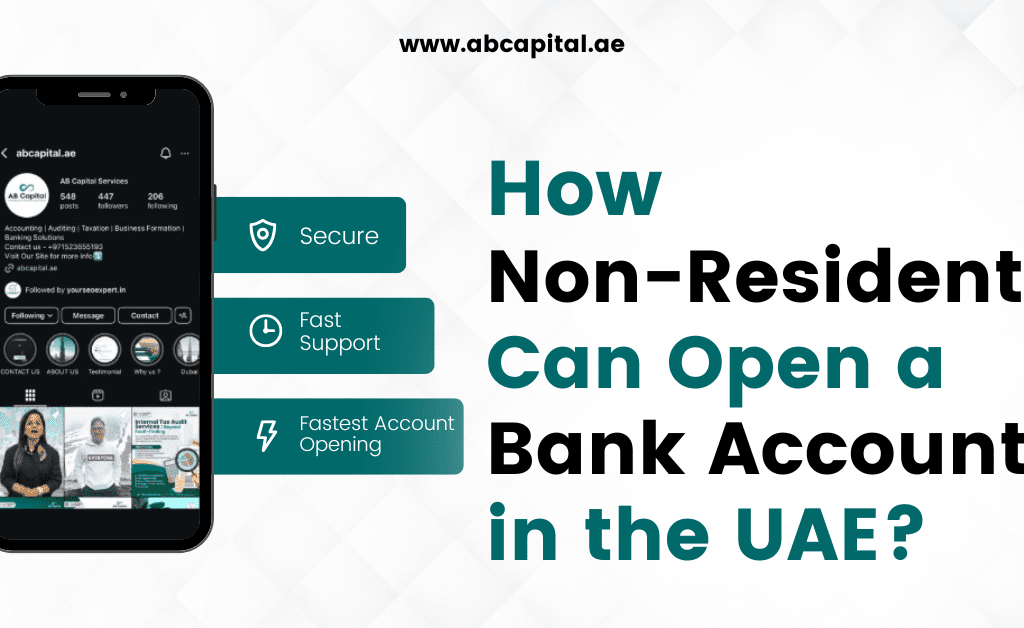
How Non-Residents Can Open a Bank Account in the UAE

How Non-Residents Can Open a Bank Account in the UAE: A Guide

So, you want to open a bank account in the UAE but think it’s some impossible mission because you’re not a resident? Think again. The UAE isn’t just a land of skyscrapers and luxury; it’s also one of the most welcoming places for non-residents to park their money. The banking system here is world-class—zero restrictions on foreign currency, tax advantages, and a financial infrastructure that makes your local bank look like it’s still stuck in the 90s. And the best part? You don’t need to be a resident to get in on the action. Let’s cut through the noise and show you exactly how you can open a bank account in the UAE without jumping through unnecessary hoops. Why open a Bank Account in the UAE? If you’re wondering why you should even bother opening a UAE bank account as a non-resident, let’s break it down: Access to a High-Powered Banking System: The UAE banks don’t play around. You’re looking at multi-currency accounts, offshore banking benefits, and world-class digital banking services. Financial Security: Banks in the UAE are rock-solid. With strict regulations from the Central Bank and zero tolerance for financial instability, your money is safer here than in most places. Tax Perks & Wealth Management: Want to keep your capital growing without Uncle Sam or any other tax authority breathing down your neck? The UAE has no personal income tax, making it a perfect place for international banking. Bottom line? If you have international transactions, wealth to manage, or just want access to top-tier financial services, you need to open a bank account in the UAE—it’s a power move. Can Non-Residents Really Open a Bank Account in the UAE? Let’s get one thing straight: Yes, you can open a bank account in the UAE as a non-resident. But (and there’s always a but), it’s not as easy as walking into a bank with your passport and walking out with an account. UAE banks love high-net-worth individuals, investors, and business owners. If you fall into one of these categories, you’re golden. But if you’re just looking to stash a few bucks, you’ll need to meet certain criteria. What Do Banks Want? A valid passport (obviously) Proof of income or financial stability A UAE visit visa or proof of address (some banks require this, some don’t) A solid reason for wanting to open a bank account in the UAE (yes, they’ll ask) They’re not just handing out accounts to anyone. But if you play your cards right, you can have your UAE bank account up and running in no time. The Process: Step-by-Step Alright, let’s cut to the chase. You want to open a bank account in the UAE without wasting time? Follow these steps like a boss. Step 1: Pick the Right Bank Not all UAE banks are created equal. Some cater to high-net-worth individuals, while others are more relaxed with non-residents. Your best bet? Go for banks with a strong international presence—think Emirates NBD, Mashreq, or HSBC. Want to make your life even easier? Work with a financial advisory firm (like AB Capital) to help fast-track the process. Banks love dealing with professionals who know the game. Step 2: Gather Your Documents Here’s where most people screw up. Banks need clean and clear documentation—no half-baked, poorly scanned papers. Most banks will ask for: ✔️ Your passport (obviously) ✔️ A recent utility bill or proof of address ✔️ A bank reference letter from your home country ✔️ Proof of income or wealth (salary slips, investment portfolio, etc.) If you’re setting up a business account, things get a little more complicated—you’ll need company registration docs, shareholder details, and a business plan. Step 3: Submit & Wait Once you’ve handed in your documents, banks will run their checks. Expect to wait 1–3 weeks for approval. Some banks move faster, but don’t expect miracles—unless you’ve got serious capital to deposit. And just like that, you’re in. You now have a UAE bank account, and trust me, it feels good. What Banks Don’t Tell You Here’s the thing—banks love to make things look simple, but there are always hidden details they “forget” to mention. So, let’s clear the air. 1️⃣ Minimum Balance Requirements Most non-resident accounts require a minimum balance—this can range from AED10,000 to AED500,000, depending on the bank. If you drop below this amount, say hello to annoying fees. 2️⃣ Hidden Charges Foreign currency conversions, international transfers, dormant account fees—banks make money in sneaky ways. Always read the fine print before signing anything. 3️⃣ Not All Banks Like Non-Residents Some banks are more welcoming to non-residents than others. If one rejects you, don’t sweat it—move on to the next one. Better yet, let AB Capital Services handle it for you (trust me, they know their stuff). Pro Tips to Get Approved Faster Now, if you want to open a bank account in the UAE without any drama, follow these power moves: 🔥 Show Capital – Banks love seeing money. A big opening deposit or a strong financial background makes approvals smoother. 🔥 Keep It Clean – If your financial history has red flags (like previous bank rejections or inconsistent transactions), fix it before applying. 🔥 Use a Financial Advisor – Trust me, this isn’t the time to “figure it out yourself.” A solid financial consultant (like AB Capital) can speed up approvals, get you better banking terms, and save you from unnecessary headaches. Conclusion: Make Your Move Now So, here’s the deal, you now know how to open a bank account in the UAE as a non-resident. You know the steps, the tricks, and the inside secrets that banks don’t tell you. The only thing left? Take action. The longer you wait, the more complicated things get. Banks change policies, requirements shift, and opportunities disappear. Want to make sure you get it right the first time? Let the experts at AB Capital handle the process. They’ll cut through the nonsense, get you approved fast, and ensure your capital is exactly where

How Non-Residents Can Open a Bank Account in the UAE: A Guide Read More »

Dubai Free Zone Business Setup

Top 10 Benefits of Dubai Free Zone Business Setup for Entrepreneurs

Dubai isn’t just a city of luxury and skyscraper, but it’s an entrepreneur’s dream playground. If you’ve been thinking about setting up your business here, you’re already on the right track. And if you’re looking for the best way to make it happen? Dubai free zone business setup is your golden ticket. Whether you’re a startup genius, a seasoned business mogul, or just tired of playing small in your home country, free zones give you the power, control, and financial freedom you need to scale up fast in 10 easy points. So, why should you go for a Dubai free zone business setup? Buckle up, because I’m about to break it down for you. 1. 100% Foreign Ownership—Because You Call the Shots Let’s cut to the chase. You want 100% control of your business. No silent partners, no local sponsors dipping into your profits. That’s exactly what a Dubai free zone business setup gives you. Unlike mainland businesses that require a local Emirate partner owning 51%, free zones let you own your business outright. No strings attached. Your business, your rules. Know more about 100% Foreign Ownership by checking out this article by AB Capital Services, Dubai. 2. Tax-Free—Keep More of Your Money What’s better than making money? Keeping it. One of the biggest perks of a Dubai free zone business setup is the insane tax benefits. Zero corporate tax. Zero personal income tax. Zero import and export duties. And in case you’re wondering, yes, it’s 100% legal. This isn’t some offshore gimmick, it’s how Dubai attracts top global entrepreneurs. More money in your pocket means more capital to grow your business. 3. Easy Setup—Launch in Record Time If you’re the type who doesn’t like waiting around for bureaucratic red tape, you’ll love this. Dubai free zone business setup is ridiculously fast and efficient. In most cases, you can get your business up and running in just a few days. No long waiting periods. No unnecessary paperwork. Plus, free zones are designed to be entrepreneur-friendly, with government-backed support to help you set up with minimal hassle. 4. Complete Repatriation of Profits—No Hidden Fees In some countries, your hard-earned money gets stuck thanks to repatriation restrictions. Not here. With a Dubai free zone business setup, every dirham of your profit is yours to keep. You can transfer funds in and out of Dubai without restrictions. No crazy fees, no hoops to jump through. Just clean, unrestricted cash flow to scale your empire globally. Know more about costs, process & steps for company formation in Dubai Free Zone by AB Capital Services. 5. Business-Friendly Environment—Work Smarter, Not Harder The UAE is all about business growth. Whether you need access to world-class infrastructure, cutting-edge technology, or investor-friendly regulations, Dubai free zone business setup has got you covered. Free zones are tailored to specific industries, meaning you get dedicated support, industry networking, and access to facilities that match your business needs. 6. Visa Perks—Bring Your Dream Team to Dubai You didn’t think you’d be running this show alone, did you? A Dubai free zone business setup lets you easily secure visas for yourself, your family, and your employees. No stress, no complications. Your business thrives when you have the right team, and Dubai makes it easy to bring in top talent from around the world.   7. Prime Location—Connect to Global Markets Dubai is a global hub, perfectly positioned between Europe, Asia, and Africa. This isn’t just a city; it’s a launchpad for international business success. With a Dubai free zone business setup, you get strategic access to some of the world’s biggest markets. Whether you’re into trading, e-commerce, or services, Dubai gives you the connections you need to expand globally. 8. Multiple Business Activities—Do More, Earn More Most countries put you in a box. You register for one type of business and that’s it. Dubai? It lets you be as ambitious as you want. A Dubai free zone business setup allows you to operate multiple business activities under one license. Want to sell products, offer consultancy, and run an online store? No problem. More revenue streams, more profit. Simple. 9. Hassle-Free Banking—No More Banking Headaches You know what’s a nightmare? Dealing with restrictive banking rules in some countries. Luckily, Dubai free zone business setup comes with a streamlined banking process. Free zones work closely with top banks to give you fast, hassle-free corporate account setups. No endless paperwork, no unnecessary delays—just smooth banking that works for your business. 10. Future-Proof Your Business—Stay Ahead of the Curve Dubai isn’t just keeping up with the times—it’s ahead of them. From blockchain to AI, sustainability to fintech, the UAE government is investing billions into emerging industries. A Dubai free zone business setup ensures you’re plugged into an ecosystem that supports innovation. You’ll be where the future is being built, not playing catch-up like the rest of the world. Let’s Talk Capital—Why You Need AB Capital Now that you know why Dubai free zone business setup is the ultimate power move, let’s get serious. Setting up a business—especially in a new country—needs expertise, connections, and capital. That’s where AB Capital Services, Dubai comes in. We don’t just help you register your company; we guide you through every step, from choosing the right free zone to securing funding and structuring your business for maximum success. If you’re ready to go big, Dubai is waiting. And so are we. Let’s make it happen. AB Capital Services-Leading Business Setup Consultants in Dubai, UAE

Top 10 Benefits of Dubai Free Zone Business Setup for Entrepreneurs Read More »

Business setup in sharjah 2026

Business Setup in Sharjah: Everything You Need to Know in 2026

Are you thinking of setting up a business in Sharjah? Well done! Despite the tremendous buzz surrounding Dubai, astute business people realize that Sharjah presents superior chances. Reduced expenses, top-notch facilities, and rules that are conducive to business? Yes, that should go without saying. By attracting foreign investors and start-up businesses looking for trouble-free, profitable operations, Sharjah will make great strides in its business sector by 2026. And you know what? The group will help you start a new business and see it through to successful operation. Let’s get started. Why Sharjah? The Business Underdog That’s Winning The location of Sharjah holds a pivotal position between Dubai and the Northern Emirates, which transforms it into an essential trading center. When you set up a business in Sharjah, it provides entrepreneurs with reduced expenses and simplified procedures and substantial tax advantages. The UAE government dedicates its full resources to transform Sharjah into an economic powerhouse. New startups find business setup in Sharjah is a prime opportunity.  Choosing the Right Business Structure Before you jump in, you gotta pick the right setup: Mainland Company – Full access to the UAE market, but you might need a local sponsor. Free Zone Company – 100% foreign ownership, zero taxes, and crazy good incentives. Offshore Company – Best for international operations without local physical presence. Pro tip: Free zones are a game-changer for foreign investors. No taxes, no customs duties, just straight-up profit.  Top Free Zones in Sharjah If you’re serious about business, free zones are where you want to be. The best ones?  Sharjah Media City (Shams) – Perfect for media, digital marketing, and creative businesses. Sharjah Airport International Free Zone (SAIF Zone) – Ideal for logistics and trade. Hamriyah Free Zone – The go-to for industrial and manufacturing giants. Each one comes with tax exemptions, world-class facilities, and fast-track business setup. Easy money.  How to Set Up Your Business in Sharjah The process of starting a business proves easier than most people expect. Here’s the game plan: Choose your business structure. Register a unique trade name. Get initial approvals. Companies should select physical workspace, but also have an option to operate through virtual platforms. Apply for your business license. Open a corporate bank account. Handling visa and residency matters will be your next task. That’s it! The business setup experts at AB Capital Dubai along with other professionals provide full assistance when dealing with paperwork if you prefer not to handle it yourself. Business Licenses You’ll Need Sharjah offers different types of licenses based on your industry: Commercial License – For trading and retail businesses. Professional License – Perfect for consultants, freelancers, and service providers. Industrial License – For manufacturing and production businesses. Pick the right one, and you’re golden.  How Much Does It Cost? Let’s discuss money. Sharjah continues to have substantially lower startup expenses for enterprises than Dubai. This is the reason: Sharjah business setup cost of Free zone licenses start at AED 5,750. Compared to other locations, office space here is more reasonably priced. Increased revenue is the result of business activities with lower expenses. There is no significant capital outlay needed to launch a firm. Documents You Need to Get Started Don’t arrive without anything. All shareholders’ passport copies are required. a strong business strategy. Memorandum of Association (MOA) for businesses based on the mainland. If you need an office space, you must have a tenancy arrangement. Processing delays will occur if any necessary documents are missing. Organize your documents. Tax Perks & Financial Benefits People who dislike paying taxes should consider moving to Sharjah because it offers the most favorable tax environment. Here’s why: 0% corporate and personal tax in free zones.  No import/export duties in free zones. The local VAT rate stands at 5% which remains lower than most international market rates. Your money stays where it belongs, in your pocket because of the tax-free environment in Sharjah. Challenges? We Got Solutions! Although launching a business isn’t always easy, we can help:  Uncertain about the best free zone? Consult a professional. Are you anxious about the restrictions on visas? To avoid difficulties, plan ahead. Do you require a local sponsor? Collaborate with reputable company setup companies (hi, AB Capital here for you!). There is always a solution to any problem. Why Work with a Business Setup Expert? Don’t want to deal with paperwork nightmares? Leave it to the experts. They handle all legal matters. They receive approvals more quickly. They locate the best arrangement offers for you. In essence, they help you save money, time, and stress. Obviously. The Future of Business in Sharjah Sharjah is on fire right now. The year 2026 presents an ideal opportunity to invest because of government support and economic growth.  The city stands as a rising star which offers an ideal opportunity for those who want to join a major initiative. Let’s Talk Capital – The Key to Business Success Money speaks for itself according to popular belief. Having suitable capital is the key factor that transforms how your financial operations perform. AB Capital Services provides the necessary financial support. Our services extend beyond business setup in Sharjah to help your company achieve growth and dominance in the market. Ready to make your mark? Let’s make it happen!

Business Setup in Sharjah: Everything You Need to Know in 2026 Read More »

Red Flags to Watch Out for When Opening a Business Bank Account in the UAE

Red Flags to Watch Out for When Opening a Business Bank Account in the UAE, 2025

This is not a normal type of blog you’re going to read today. Many entrepreneurs walk straight into banking nightmares, getting stuck with hidden fees, ridiculous paperwork, and banks that treat them like an afterthought. Several business owners immediately face banking challenges that include sudden fees and extensive paperwork, along with unchanged banker attitudes toward entrepreneurs. The stakes are high. Choosing an incorrect business bank account presents intense risks which deteriorate your financial operations and create payment delays as well as transaction complications. This article will explain the major warning signs you should monitor when establishing a business bank account in the UAE. The following information will help you avoid potential problems when opening a business account in the UAE. 1. Slow or Confusing Account Opening Process You should leave your current bank if they need an eternity to establish new accounts. A reliable business bank needs to provide a straightforward and efficient account opening process. But some banks? The application process will become a maze of paperwork which requires numerous documents and extends into months of waiting time. 🚨 Red Flags: ❌ Vague answers about how long the process takes ❌ Repeatedly asking for more and more documents ❌ Zero communication on your application status ✅ Pro Tip: Ask upfront how long the process takes and what documents you need. If they can’t give a straight answer, move on. AB Capital Services opens business bank account in just 3 business days*. 2. Unclear Fee Structures (AKA Hidden Charges Everywhere) Banks exist as fee-hungry monsters who charge various fees, including monthly maintenance fees together with transaction fees that apply even to withdrawals and mysterious “service charges. 🚨 Red Flags: ❌ No transparency about fees ❌ Small print that changes over time ❌ Extra fees for basic transactions ✅ How to Avoid This Trap: Get a detailed list of fees upfront Ask about monthly maintenance costs Compare different banks before committing 3. Limited Online Banking & Poor Tech Infrastructure Your bank faces serious problems when its online system appears outdated, like it did in 1999. To succeed in modern banking, you must have instant transactions combined with mobile accessibility and effortless digital processing. Your business will experience delays when you use banking applications that have technical issues or operate with outdated websites. 🚨 Red Flags: ❌ No mobile banking or slow online transactions ❌ Limited features (can’t even do bulk payments? Seriously?) ❌ Poor security measures ✅ What You Want Instead: ✔ A fast, secure online platform ✔ Mobile banking that actually works ✔ 24/7 access to account details ✔ AB Capital offers best business bank account opening services in Dubai, UAE 4. Excessive Minimum Balance Requirements UAE banks usually require substantial minimum account balances, which become the basis for assessing penalties when the required threshold drops below. The requirement for high minimum balances from UAE banks can create excessive financial strain on new businesses. 🚨 Red Flags: ❌ Minimum balance requirements that make no sense ❌ Hefty fines for going below the threshold ❌ Banks that won’t tell you the penalty amount upfront ✅ The Smart Move: Go for banks with realistic minimum balance requirements that won’t punish you for running a lean operation. 5. Bad Customer Support = Your Worst Nightmare Picture this: You urgently need help, but your bank’s customer support ghosts you. You email—no reply. You call—”Please hold.” Forever. You visit in person—”Come back next week.” 🚨 Red Flags: ❌ Slow or unhelpful customer service ❌ No dedicated business support ❌ Can’t get a human on the phone when you need one ✅ Pro Tip: Call their support before you sign up. If they don’t care now, they won’t care later. 6. Restrictions on International Transactions Doing business globally? Some UAE banks will make international transfers a nightmare. 🚨 Red Flags: ❌ Expensive FX fees and transaction charges ❌ Daily limits on how much you can transfer ❌ Long delays in processing international payments ✅ The Smart Choice: Find a bank that understands global business and offers competitive FX rates. AB Capital Dubai, Helps you choose the best bank for you business bank account in Dubai, UAE. 7. High Compliance Barriers for Foreign-Owned Businesses Certain banks create difficulties for both expats and foreign investors. They might ask for: 📝 Extra documentation that locals don’t need ⏳ Longer processing times 💰 Higher minimum balances If it feels like they’re making it harder for you, they probably are. 🚨 Red Flags: ❌ No clear policies for expat-owned businesses ❌ Different rules for local vs. foreign investors ❌ No English-speaking support ✅ What You Should Do: Partner with banks that specialize in international business and understand all banking regulations. 8. The “Too Good to Be True” Trap Business customers can access free accounts from certain banks that allow unlimited transactions. Sounds amazing, right? The realistic details emerge when you study the written terms and conditions. After several months of service they begin to introduce hidden fees and feature restrictions and term modifications. 🚨 Red Flags: ❌ Offers that seem way too generous ❌ No clear written agreement on fees ❌ Changing terms after a few months ✅ Smart Business Owners Do This: Always read the fine print. If an offer sounds too good to be true, it probably is. The Easy Way to Open a Business Account in the UAE Want to avoid all this nonsense? Skip the confusion and let experts handle it for you. Why Work With AB Capital? ✅ We help businesses find the right banking partner ✅ We cut through the red tape and handle the paperwork ✅ We make sure you get an account fast and hassle-free Opening a business account in the UAE doesn’t have to be a nightmare. Work with AB Capital, and we’ll get you set up with a bank that actually works for your business. Also Read about the Top Business Bank Accounts to Open in Dubai, UAE in 2025 Final Thoughts: Don’t Fall for These Traps The UAE is

Red Flags to Watch Out for When Opening a Business Bank Account in the UAE, 2025 Read More »

Is starting a Business in Dubai a Good Idea in 2025

Is starting a Business in Dubai a Good Idea in 2025? A guide

The city beyond ordinary provides Middle Eastern entrepreneurs with business domination, as it simultaneously serves as an ambitious entrepreneurship hub and profitable tax refuge for wealth accumulation. Starting a business in Dubai represents a massive opportunity because Dubai stands as the Middle East’s business capital. Your hesitation about starting a business in Dubai could result in missed opportunities as others successfully capitalize on them. Starting a business in Dubai during 2025 represents the most advantageous business decision you will ever make. Dubai: Where Business Dreams Turn Into Reality   Business operations in Dubai operate without any form of gamesmanship. Business startups in Dubai enter a city structure that promotes business achievement. The city has been purposefully structured to support business achievement. Tax-free income? Check. A strategic location between Europe, Asia, and Africa? Absolutely. World-class infrastructure? You bet. You can fully own your business in Dubai without requiring a local sponsor to operate independently. Your business empire will operate under your complete authority. Dubai will elevate its operations to new heights during 2025. The UAE government implements aggressive business-friendly policies which simplify startup and expansion processes. The business landscape in Dubai offers boundless opportunities for anyone who wants to lead in tech, retail or real estate sectors. Your readiness to seize these opportunities stands as the sole genuine question. The UAE’s e-commerce market is growing at 23% annually, hitting $10 billion by 2025. The Business Climate in 2025: Bigger, Better, Bolder   Dubai is like a startup incubator on steroids. The city’s commitment to innovation is through the roof. With initiatives like Dubai 2040 Urban Master Plan and Vision 2031, the government is setting the stage for businesses to thrive. To join the growing fintech industry, you should start a business in Dubai during 2025. The year 2025 positions Dubai as a central location for digital banking and blockchain and AI-driven financial operations, which makes it an ideal time to start a business there. The city of Dubai operates as a worldwide center for both digital banking solutions and blockchain-based operations and artificial intelligence in financial applications. Eyeing the e-commerce market? The online retail sector in the UAE will reach $10 billion by 2025. Maybe hospitality is your thing? Tourism has recovered significantly by expecting 25 million visitors per year in the future. And let’s talk about investment. Through its Golden Visa program, the UAE provides permanent residency opportunities to serious entrepreneurs who want to establish roots in the country. Dubai offers free zones and business-friendly tax structures that make starting a business more affordable than Western economies. The tax-friendly environment produces higher profits as a golden deal for business operations which makes it best for starting a business in Dubai. The Million-Dollar Question: Mainland or Free Zone?   You have made the decision to launch your business operations in Dubai. The upcoming major decision involves choosing between Mainland or Free Zone status. Free Zones serve businesses that need 100% ownership together with zero customs duties and an easy setup process. Dubai Internet City and DMCC and JAFZA among other zones focus specifically on industry-based development. Mainland businesses enable direct market access to local customers without requiring intermediary services. The local market access through mainland businesses provides the best option for government contracts and retail stores. Your chosen path will place you within a market that represents one of the most profitable opportunities worldwide. Challenges? Sure, But Nothing You Can’t Handle   Every business setup requires some level of hassle to complete. The setup process requires you to deal with official procedures and obtain required permits and manage visa documentation. Dubai has optimized its business setup procedures to such an extent that proper guidance will help you start your operations quickly. Oh, and about competition? Don’t sweat it. The term competition in Dubai refers to market demand being high. The city depends on innovative thinking and new concepts to prosper. When you introduce original ideas to the market, people will definitely take notice. The Capital Question: How Much Do You Need When Starting a Business in Dubai?   Let’s talk money. The establishment expenses for a business in Dubai depend on your sector and your choice between Mainland or Free Zone operations. The cost of starting a business in Dubai provides better value than what you would find in major cities such as London or New York. The initial establishment expenses for Free Zone companies begin at AED 12,500. Want a full-fledged Mainland company? The initial investment for starting a business ranges between AED 30,000 and AED 50,000. The combination of a business bank account with residency visa and office space requires a reasonable investment to establish operations in this highly supportive business environment. When you require assistance with your financial needs & starting a business in Dubai, then you should contact AB Capital for their services. The company guides clients through capital acquisition and bank account setup procedures with the same ease as a luxurious Dubai brunch experience. It makes sense to allow experts take charge because struggling is unnecessary when expert handling of the work suits your needs. Final Word: Dubai is the Place to Be   This marks the perfect moment for you if you have been seeking an indication. The year 2025 presents Dubai as a perfect time to launch a business, which represents a golden opportunity. Dubai welcomes investors through its open doors while offering abundant business opportunities that reward ambitious entrepreneurs. So, what’s it going to be? Observers or creators? The choice is yours regarding building legendary work or watching others do so. Contact AB Capital Services to start building your business success in 2025 because we want to help your company achieve flight status. Dubai is calling—time to answer. Also Read: How to Start a Small Business in Dubai? A Complete Guide? How to Start a Scrap Business in Dubai: 12 Easy Steps? 99 Most Profitable Business Ideas in Dubai 2025 5 Things To Know Before Starting a Business in Dubai How to

Is starting a Business in Dubai a Good Idea in 2025? A guide Read More »

High-Demand Business to Start in 2025

Profitable High-Demand Business to Start in 2025 Dubai, UAE

The entrepreneurial environment of 2025 advances through technological progress and shifting consumer demands and developing market patterns. Starting a business for 2025 launch represents a smart move to benefit from upcoming innovative opportunities. This article examines the most promising business to start in 2025 alongside AB Capital Services‘ capabilities to transform your business ideas into successful ventures. Why it is Great for a Business To Start in 2025? The global economy now shows stability following years of economic uncertainty, which creates ideal conditions for new business ventures. The combination of automation technology with artificial intelligence and digital connectivity provides aspiring entrepreneurs with exceptional tools to start and expand their businesses. Sustainable trends and remote work have unveiled promising market possibilities which forward-thinking business people should explore, which makes Dubai a hub for best business to start in 2025. The following list presents the most sought-after business opportunities for 2025.   1. E-Commerce Micro-Niche Stores 2. AI-Powered Services 3. Remote Work Solutions 4. Health and Wellness Technology 5. Green Energy Solutions 6. Subscription Box Services 7. Digital Education Platforms 8. Sustainable Fashion Brands 9. NFT and Blockchain Services 10. Personalized Marketing Services   1. E-Commerce Micro-Niche Stores The retail industry remains dominated by e-commerce, yet micro-niche stores will start to become more prevalent by 2025. Your business should prioritize small specialized market segments that include environmentally friendly pet supplies together with personalized skincare solutions made for distinct age ranges. Growing online shopping makes it best business to start in 2025 Why it works: Customers value personalized solutions which micro-niche stores deliver precisely to their needs. More Resources: How to Get E-Commerce License in Dubai, UAE? 2. AI-Powered Services Artificial intelligence is now a necessity and no longer a luxury. Companies providing AI solutions, like predictive analytics for marketing or AI-fueled customer service tools, are set to thrive.  Market potential: The growing market potential indicates a significant trend where businesses are turning to artificial intelligence to enhance operational efficiency and reduce expenses. Your edge: Your competitive advantage lies in the creation of AI solutions designed specifically for sectors that have been overlooked, such as healthcare and education. 3. Remote Work Solutions With hybrid work models settling in as a norm, businesses helping boost remote work productivity will be in huge demand; think artificial reality equipment for collaborative work, ergonomic office setups at home, or many cybersecurity solutions for remote teams which makes it best business to start in 2025.  Key trends: Major possibilities lie ahead; the global remote work market is projected to expand in valuation, hitting billions by 2025. 4. Health and Wellness Technology The market for wellness technology will experience continuous growth because consumers place health at the top of their priorities. Your path to success might lie in developing wearable health devices or mental health applications or at-home fitness solutions. Innovation is key: Introduce personalization to cater to individual health goals. 5. Green Energy Solutions As sustainability takes center stage, businesses focused on renewable energy, eco-friendly products, or waste management will see significant growth. Why go green: Governments worldwide are providing incentives for sustainable businesses. 6. Subscription Box Services Businesses across multiple niche categories find success through subscription models, which include meal kits alongside self-care products and hobby-specific supplies such as art kits which makes it best business to start in 2025. Appeal: Subscription boxes offer convenience and a personalized experience. 7. Digital Education Platforms Online education continues to attract increasing numbers of learners. 2025 reality calls for substantial demand from platforms that deliver specialized courses with skill development programming and career guidance services. Target audience: Focus on underserved markets, such as senior citizens or non-native speakers. 8. Sustainable Fashion Brands The fashion industry experiences a green transformation because consumers now choose sustainable and ethical fashion choices. Unique selling point: Use recycled materials, fair trade practices, and innovative designs. 9. NFT and Blockchain Services The disruptive power of blockchain technology continues to transform multiple business sectors. The provision of blockchain consultation with combined services including NFT marketplaces and smart contract development structures opens beneficial opportunities for businesses. Growing market: Businesses and individuals are eager to explore blockchain opportunities. 10. Personalized Marketing Services The competitive landscape for business attention has created a rapid increase in the need for personalized marketing solutions. Your business will stand out by providing AI-powered marketing solutions and data analytics services and social media targeting strategies. Opportunity: Focus on small businesses that lack in-house marketing expertise. Why Choose AB Capital Services for your Business to Start in 2025? Starting a business for 2025 operations demands more than innovative concepts, according to AB Capital Services. Success in business requires resource acquisition and printed planning combined with solid financial backing. Our team stands ready to assist you through your business development, regardless of whether you launch an e-commerce store or a green energy solution or an AI-powered platform. AB Capital Services offer the below services with a Free Consultation Call:   Company Formation, Company Set up, Mainland, Freezone and Offshore company Setup. Visa, Freelance VISA, Golden VISA. Business Bank Account Opening, Zero Balance Business Bank Account Opening Accounting and Tax Compliance VAT and CT Compliance Tax residency Certificate Banking Consultancy DIFC Company set up Crypto Licensing and VARA Approvals Schedule a Free Consultation with AB Capital Services now! Final Thoughts The year 2025 promises endless opportunities for ambitious entrepreneurs. The year 2025 offers multiple high-demand business opportunities which match your entrepreneurial vision, whether you focus on technology or sustainability or innovative customer experiences. AB Capital Services will help you transform your concepts into successful business ventures. Your journey to create your dream business has just begun. Contact AB Capital Services now to achieve your 2025 business success. FAQs   What are the most profitable business to start in 2025? E-commerce, AI services, and health-tech are among the top profitable ideas for 2025. How can I secure funding for my startup? Partner with AB Capital Services for tailored funding and expert guidance. What industries will grow the most in

Profitable High-Demand Business to Start in 2025 Dubai, UAE Read More »

Top 8 Best Business Ideas in UAE with Low Investment by Ab Capital Services

Top 8 Best Business Ideas in UAE with Low Investment

UAE functions as an entrepreneurial center where business pioneers can find both vibrant market access and reduced tax obligations. This guide presents best business ideas in UAE with low investment for those who want to start a business. These business ideas will assist both UAE residents and expats to launch successful ventures at affordable costs. Why Start a Business in the UAE? The UAE stands out for its welcoming policies toward investors and its modern infrastructure, and its position between Eastern and Western regions. The UAE facilitates small and medium enterprise (SME) development through government-sponsored efficient business formation systems along with cost reductions for founders. Below we have listed the Top 8 Best Business Ideas in UAE with Low Investment 1. Freelance Services The UAE offers freelancing as a top business concept that demands minimal setup expenses and low investment. The market demands services including content writing alongside graphic design and social media management and consultancy. Why it works: The UAE has a high demand for specialized skills. Initial investment: Freelance license and basic marketing. 2. Event Planning Event planning in the UAE offers profitable opportunities because the country attracts numerous corporate events and weddings and cultural celebrations. Key clients: Corporations, expats, and local residents. What you need: Networking skills, partnerships with vendors, and a small marketing budget. You can check the detailed blog on How to Start an Event Management Business in Dubai? 3. Tourism-Related Services Millions of tourists visit the UAE each year. The establishment of travel guide services combined with unique experiences and desert safari organization represents outstanding low-investment business opportunities. Opportunities: Cater to niche tourism like ecotourism or cultural experiences. Startup costs: Business license and marketing materials. You can also check our detailed blog on How To Start A Tourism Business In Dubai 2025 With Investment & Benefits? 4. Online Tutoring and E-Learning The United Arab Emirates demonstrates strong value for education, so online tutoring platforms together with targeted courses can fulfill these requirements. Target audience: Students, working professionals, and expatriates. Required investment: Online tools, platform subscriptions, and certifications. 5. Digital Marketing Agency The UAE market’s active search for online visibility makes starting a digital marketing agency one of the most promising business opportunities with minimal capital requirements. Services offered: SEO, content creation, social media management, and PPC campaigns. Why it’s profitable: The digital landscape continues to grow across all sectors. 6. Home-Based Catering Business People who love cooking should consider starting a home-based catering business. This business concept works well for food lovers because it requires minimal overhead expenses. Target customers: Small events, family gatherings, and expats missing home-cooked meals. Licensing: Ensure you comply with local food safety regulations. 7. Fitness and Wellness Coaching The fitness and wellness industries show rapid growth throughout the United Arab Emirates. Specific investment levels become unnecessary for the operation of this business model, which provides yoga classes and personal fitness coaching and nutritional advice. Required setup: Certification, basic equipment, and social media promotion. Demand factors: High-income residents willing to invest in their health. 8. Cleaning Services Residential and commercial cleaning businesses continue to be extremely popular because they deliver reliable earnings and affordable startup expenses. Investment requirements: Cleaning supplies and basic equipment. Why it’s viable: Expats and busy professionals often outsource cleaning tasks. Steps to Start a Low-Investment Business in the UAE Choose a Business Idea Identify a niche that aligns with your skills and market demand. Obtain a Trade License Secure a trade license from the Department of Economic Development (DED) or relevant free zone authorities. Set a Budget Keep initial costs low by starting small and scaling gradually. Leverage Technology Use social media and online platforms to promote your business. Why the UAE is Ideal for Low-Investment Businesses? Businesses thrive readily throughout the UAE because rules support entrepreneurs, while freedom from taxation exists and market connections affirm the territory as their optimal location. You can utilize the available regional opportunities through these affordable business approaches that need minimal initial capital. The time to begin planning your exploration of low-investment business ideas in UAE has arrived. Your success lies ahead if you combine strict focus on customers with strong planning and an unwavering determination. Why Choose AB Capital Services? Business startup demands both financial planning and appropriate resources, regardless of investment level. Entrepreneurs in the UAE find AB Capital Services to be an essential partner for their business needs. The financial solutions provider AB Capital Services stand dedicated to providing its trusted services which empower businesses throughout their path to success with the necessary tools for growth. Through its partnership with AB Capital Services, you can transform your business ideas into reality by accessing financial support and business development assistance for digital marketing, freelancing and event planning ventures. Your business journey through the dynamic UAE market becomes seamless when you partner with AB Capital Services because they provide dedicated support throughout your entire journey. Also Read: How to Start a Small Business in Dubai? A Complete Guide? How to Start a Scrap Business in Dubai: 12 Easy Steps? 99 Most Profitable Business Ideas in Dubai 2025 5 Things To Know Before Starting a Business in Dubai How to Start a Hotel Business in Dubai? FAQs   1. What is the easiest business to start in the UAE with low investment? Freelancing and online services like content writing, graphic design, and digital marketing are some of the easiest businesses to start with minimal investment. 2. Do I need a trade license to start a low-investment business in the UAE? Yes, most businesses in the UAE require a trade license. Freelancers can obtain a freelance license from free zones or the Department of Economic Development (DED). 3. How much investment is required to start a business in the UAE? The investment depends on the type of business. For low-investment ideas like freelancing or digital services, you may need as little as AED 5,000 to AED 15,000 for licensing and initial setup. 4. What are some high-demand industries for low-investment

Top 8 Best Business Ideas in UAE with Low Investment Read More »

Top Business Bank Accounts to Open in Dubai , UAE

Top Business Bank Accounts to Open in Dubai, UAE in 2025

When you are establishing a business in Dubai, it requires opening a business bank account as your first step. Your time is valuable, so you are not here to waste it & at first choose from the top business bank accounts. You need the fastest business bank account opening process that avoids complex procedures. Let’s explore the best business bank accounts available in Dubai while learning the expert steps to open one. Why Dubai Is a Hotspot for Business Banking Dubai exists beyond its famous skyscrapers and luxury cars to operate as a global business center featuring advanced financial systems. To operate a business in Dubai you need a banking partner that understands your entrepreneurial speed. The selection of your business bank account determines whether your company will succeed or fail. Visitors need to understand everything about managing business bank accounts in Dubai. The Top Business Bank Accounts in Dubai You must be curious about which banks would be suitable for your needs. Here’s the inside scoop: some of the best names in the game include Emirates NBD, Mashreq Bank, RAKBANK & ADIB. The banking options present distinct advantages for businesses to choose from based on their fee structure or service speed or premium feature requirements. Let’s break it down: Emirates NBD: The network infrastructure of this option suits businesses that need dependable, extensive connectivity. The bank provides competitive fees together with outstanding online banking tools. Mashreq Bank: Businesses seeking rapid bank account opening should choose Mashreq because it provides the fastest service. ADIB (Abu Dhabi Islamic Bank): Business owners who want ethical banking solutions backed by Sharia law can choose options at this institution. RAKBank: It is the best choice for banking in the UAE. From personal accounts, business solutions, wholesale banking and Islamic banking. AB Capital Dubai provides a three-day process to establish business bank accounts with the best bank. That’s right—three days flat. What Makes AB Capital Services Dubai Unique? AB Capital Dubai provides more than fast services. The company provides extensive financial solutions which accommodate businesses at every scale. Companies seeking account management solutions alongside superior customer support and expert professional advice can expect complete coverage from AB Capital. AB Capital Dubai stands as a preferred financial solution provider for entrepreneurs throughout Dubai because of their excellent reliability combined with high efficiency levels. Explore additional information at AB Capital Dubai. How to Open a Business Bank Account in Dubai? Let’s get straight to the point: opening a business bank account in Dubai doesn’t have to be complicated if you know what you’re doing. Here’s the game plan: Choose the Right Bank: This isn’t a one-size-fits-all deal. Research the top business bank accounts and pick one that fits your needs—whether it’s low fees, fast service, or specialized features. Get Your Documents Ready: Banks in Dubai love their paperwork. Don’t show up half-prepared—that’s a rookie move. Submit Your Application: Whether you’re walking into a branch or doing it online, make sure your application is flawless. Any errors? That’ll cost you time. Pass the Compliance Checks: Banks in Dubai are thorough, so expect some background checks. Keep your financial records clean and have a clear explanation of your business activities. Get Approved and Start Banking: Once you’re in, you’re golden. Start managing your funds, making transfers, and growing your business. 4 Simple Steps to Open a Business Bank Account in Dubai Step 1: Conduct a primary review based on business activity and ownership. Step 2: Submit an application to the most suitable bank. Step 3: Undergo a compliance review by the bank. Step 4: Complete the process with account activation, cheque-book issuance, and debit card issuance. Documents Required to Open a Business Bank Account in Dubai Most people struggle with their documents, so let’s review them once more. The required documents are few yet essential for approval. Fast approval becomes impossible when you fail to submit even a single required document. So, here’s what you need, one more time for the people in the back: Your trade license Shareholder passport copies Proof of address MOA A business plan (if requested) Got everything? Good. Now, go crush it. Why It’s Worth the Effort Establishing a business bank account in Dubai may seem difficulty-filled at first, but it delivers immense value through the effort you invest. Dubai’s banking infrastructure exists to serve businesses at every scale, from individual entrepreneurs to international corporations. Getting the right business account streamlines your financial management process. Final Thoughts Dubai offers an extensive selection of business bank accounts which stand at the top of their category. To successfully open business bank accounts in Dubai, you need to know the right steps for avoiding delays and document-related issues. The fastest business bank account opening options from AB Capital Services Dubai’s 3-day service combined with clear documentation requirements for opening a business bank account in Dubai will set you up for success. The world’s most dynamic city demands a smooth banking experience which signals your success, so go out there and achieve it. FAQs About Opening a Business Bank Account in Dubai   Can I open a business bank account in Dubai as a non-resident?Yes, many banks in Dubai allow non-residents to open business bank accounts. However, the process may involve additional documentation and stricter compliance checks. How long does it take to open a business bank account in Dubai?The timeline varies by bank. While some banks take weeks, AB Capital Dubai stands out by offering account opening in just 3 days.  Are there any hidden fees associated with business bank accounts in Dubai?Some banks might have maintenance fees, minimum balance requirements, or transaction charges. Always check the fee structure before committing to an account.  What currencies can I use for my business bank account in Dubai?Most business bank accounts in Dubai support multiple currencies, including AED, USD, EUR, and GBP, making international transactions convenient.  Can I open a business bank account online in Dubai?While some banks offer online account opening, others may require you to visit

Top Business Bank Accounts to Open in Dubai, UAE in 2025 Read More »