


- All Posts
- Accounting
- Blog
- Book Keeping
- Business Banking Solutions
- Business Loan
- Business Setup From India
- Business Setup Guides
- Case studies
- Company Formation
- Corporate Services
- Dubai Business Setup
- Finance
- Free Zones
- Golden Visa
- Mainland
- Offshore
- Tax
- Tax and Compliance
- UAE Business News
- UAE Compliance
- Vat Formation
- Back
- Low Cost Business Setup in Dubai

UAE vs India for Business in 2027: Costs, Tax and Opportunities Quick Answer: UAE vs India for Business in 2027...

Top 10 Business Setup Consultancies in Dubai, UAE (2026) for Low Cost Company Formation Quick Answer: Which Consultancies Offer Low...

Forex Trading License in Dubai 2026: Costs, Rules & Setup Quick Answer: How Do You Get a Forex Trading License...

I Missed UAE Corporate Tax Deadline! What Should I Do Now? Quick Answer If you missed your UAE Corporate Tax...
UAE E-Invoicing 2026: E-Invoice Made Simple for Businesses Quick Answer UAE e-invoicing started in 2026 with a pilot phase from...
UAE vs Saudi Arabia for Business Setup in 2026: Which Market Should You Choose? Quick AnswerNeither the UAE nor Saudi...
Dubai as a Regional Headquarters: Why Global Companies Are Choosing the UAE Quick Answer: Dubai can work as a regional...

Lab-Grown Diamond Business in Dubai: Opportunities After DMCC’s 2026 Initiative Quick Answer: Dubai’s lab-grown diamond sector is gaining a more...

E-Commerce Logistics Business in Dubai: Setup Guide, Costs & Requirements Table of Contents Quick Answer Why E-Commerce Logistics Is Growing...

Cybersecurity Business Setup in Dubai: Licence, Costs & Requirements Table of Contents Quick Answer Why Cybersecurity Is Becoming a Business...

How to Start a SaaS Business in Dubai in 2026 Table of Contents Why Dubai Is Attractive for SaaS Founders...

How to Start an AI Company in the UAE in 2026 Table of Contents Why AI Business Setup Is Different...
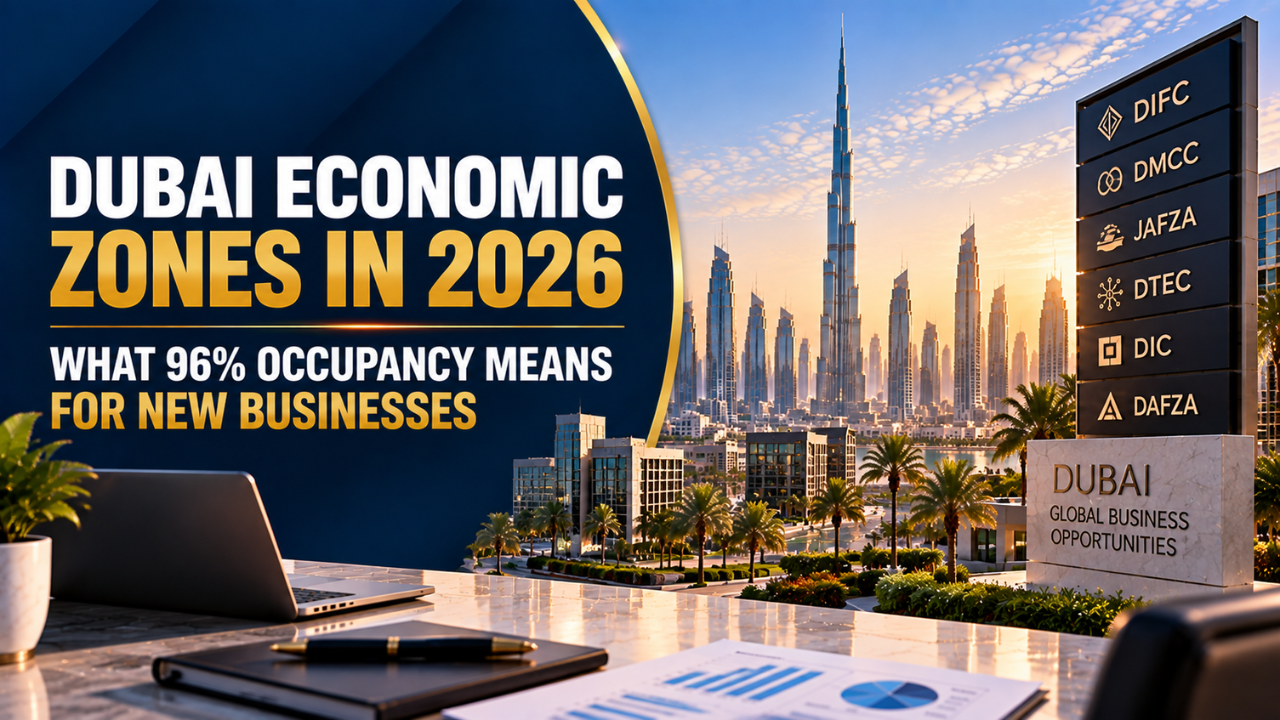
DIEZ Growth in 2026: Which Dubai Economic Zones Are Attracting Businesses? Table of Contents What 96% Occupancy Actually Tells Us...

Table of Contents Quick Answer Why DIEZ’s 2026 Growth Matters The H1 2026 Numbers DAFZ: Airport-Connected Business DSO: Technology and...

Table of Contents Quick Answer Dubai's Growth Story Is Broader Than Company Registrations Economic Growth in 2026 Trade and International...