


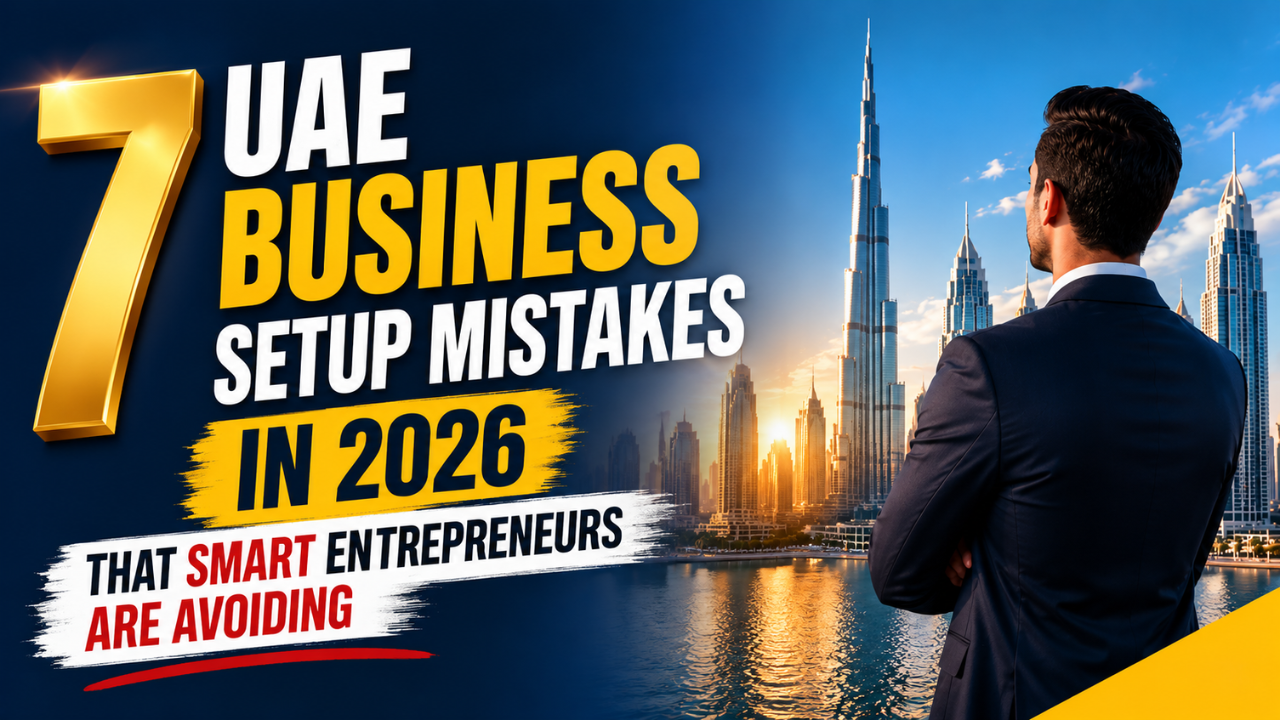
The UAE continues to attract entrepreneurs, startups, consultants, ecommerce brands, and international investors at record speed. Dubai especially has positioned itself as one of the world’s strongest business hubs because of its tax-friendly environment, global connectivity, advanced infrastructure, and investor-focused regulations.
But in 2026, there is one growing problem many business owners still do not realize.
A large number of UAE companies are being structured using outdated business setup strategies.
What worked a few years ago is no longer enough today.
The UAE business landscape has evolved rapidly with:
- Corporate Tax Implementation
- Stronger Banking Compliance
- Digital Reporting Systems
- Increasing Regulatory Transparency
- Evolving Free Zone Structures
- Advanced Cross-Border Business Frameworks
Yet many founders are still relying on:
- Old Youtube Videos
- Outdated Social Media Advice
- Recycled Setup Packages
- Cheap License-Focused Strategies
This creates serious long-term risks for businesses that believe obtaining a trade license alone is enough to operate successfully in the UAE.
The reality in 2026 is very different.
Why Traditional UAE Business Setup Advice Is Becoming Risky
A few years ago, many entrepreneurs entered Dubai with a simple approach:
- Get The Cheapest License
- Obtain a Residency Visa
- Open a Business Bank Account
- Start Operating
That model worked during the earlier free zone expansion phase.
But the UAE is no longer operating like a startup economy.
Today, the country is positioning itself as:
- A Global Financial Hub
- A Technology And AI Economy
- An International Investment Destination
- A Highly Regulated Business Environment
This shift is positive for serious businesses because it improves:
- Investor Confidence
- Banking Quality
- Global Credibility
- Economic Stability
However, it also means that shortcuts and poorly structured setups are becoming increasingly dangerous.
1. The Free Zone vs Mainland Strategy Has Completely Changed
For years, business owners entering Dubai had to choose between two clear options:
Free Zone or Mainland
Traditionally:
- Free Zone Companies were used for International Operations
- Mainland Companies were used for UAE Market Access
But in 2026, the conversation has become far more advanced.
Several free zone structures now allow businesses to access mainland opportunities through:
- Branch Structures
- Dual Licensing Models
- Project-Based Permissions
- Strategic Partnerships
- Activity-Specific Approvals
This means some businesses can now expand more efficiently without immediately establishing separate mainland entities.
Companies paying attention to these changes are:
- Reducing Unnecessary Costs
- Avoiding Duplicate Structures
- Scaling More Efficiently
- Improving Operational Flexibility
However, many entrepreneurs still follow outdated advice that no longer reflects current UAE regulations.
2. The “Free Zone Means Tax Free” Myth Is Still Hurting Businesses
One of the biggest misconceptions still circulating in the market is:
“Free Zone Companies Do Not Pay Corporate Tax”
This assumption is no longer automatically correct.
The introduction of UAE Corporate Tax changed the landscape significantly.
Many business owners still believe:
- Tax Registration alone is Enough
- Accounting is Optional
- Bookkeeping is not Important
- Free Zone Income is Automatically Exempt
But UAE authorities now review businesses far more carefully.
A company’s eligibility for favorable Corporate Tax treatment can depend on:
- Operational Structure
- Income Classification
- Bookkeeping Quality
- Business Activity
- Economic Substance
- Mainland Exposure
Businesses making mistakes in these areas may create tax exposure without realizing it.
3. Weak Accounting Systems Are Becoming A Major Liability
Many SMEs in the UAE still operate with:
- Manual Invoices
- Inconsistent Records
- Weak Bookkeeping
- Excel-Based Accounting
That approach may create major problems moving forward.
The UAE is steadily building a more advanced digital compliance ecosystem.
As e invoicing and digital reporting systems continue expanding, businesses with poor financial controls may face:
- Compliance Pressure
- Banking Complications
- Audit Difficulties
- Reporting Issues
- Operational Inefficiencies
The companies preparing early will gain a significant long-term advantage.
4. Banking Has Become More Important Than The License Itself
Many entrepreneurs still focus almost entirely on:
“Which Free Zone is Cheapest?”
But experienced founders now understand something important:
Banking compatibility matters more than cheap setup pricing.
Corporate banks in the UAE now evaluate businesses based on:
- Source Of Funds
- Business Activity
- Transaction Expectations
- Website Quality
- LinkedIn Presence
- Shareholder Background
- Operational Substance
- Geographic Risk Exposure
Businesses with weak structures or mismatched activities often face:
- Delayed Approvals
- Compliance Reviews
- Transaction Monitoring
- Account Restrictions
- Banking Rejection Risks
This is one reason many businesses established cheaply years ago are now restructuring entirely.
5. Cheap Setup Packages Often Create Expensive Long-Term Problems
Many setup advertisements focus only on:
- Lowest License Cost
- Visa Pricing
- Fast Approvals
But very few explain:
- Banking Impact
- Tax Consequences
- Compliance Obligations
- Scalability Limitations
- Future Restructuring Risks
A company that looks affordable initially can become expensive later through:
- Restructuring Costs
- Banking Issues
- Compliance Penalties
- Tax Inefficiencies
- Operational Restrictions
In 2026, smart entrepreneurs are focusing on sustainable business structures instead of simply chasing the cheapest package available.
6. UAE Technology And AI Businesses Have Massive Untapped Opportunities
One of the most overlooked developments in the UAE today is the country’s increasing focus on:
- Artificial Intelligence
- Automation
- SaaS Platforms
- Software Development
- Digital Infrastructure
- Innovation Ecosystems
The UAE is actively positioning itself as a global innovation economy.
This creates long-term opportunities for:
- AI Startups
- SaaS Businesses
- Fintech Companies
- Automation Firms
- Web3 Businesses
- Intellectual Property Structures
Many entrepreneurs still do not realize how aggressively the UAE is supporting technology-driven business ecosystems.
Businesses that position themselves correctly today may benefit significantly over the next decade.
7. Business Setup in Dubai is No Longer Just Administrative Work
In the past, UAE company formation was often treated as simple paperwork.
Today, structuring a company properly requires businesses to think about:
- Tax Efficiency
- Compliance Readiness
- Banking Credibility
- Cross-Border Scalability
- Operational Sustainability
- Long-Term Expansion Planning
The businesses that dominate the next decade in the UAE will not necessarily be the biggest businesses.
They will be the businesses that were structured correctly from the beginning.
That difference is becoming more important every year.
What Smart UAE Businesses are doing Differently in 2026
The companies growing fastest in Dubai today are usually focusing on:
- Strong Compliance Systems
- Strategic Banking Setup
- Scalable Corporate Structures
- Accurate Accounting Frameworks
- Long-Term Tax Planning
- International Expansion Readiness
Instead of asking:
“What is the Cheapest Business Setup?”
they are asking:
“What Structure Supports Long-Term Growth?”
That mindset shift is separating serious businesses from short-term setups.
Why More Entrepreneurs Are Seeking Strategic Setup Guidance
Experienced business owners entering the UAE now spend more time understanding:
- Tax Implications
- Banking Compatibility
- Business Activity Alignment
- Future Scalability
- Operational Flexibility
before incorporating a company.
This is because:
- No Single Free Zone Fits Every Business
- Not Every Activity Suits Every Structure
- Cheap Setups Can Create Future Restrictions
At AB Capital Services, this shift has become increasingly visible over the last two years. Entrepreneurs are asking deeper questions about Corporate Tax, compliance, banking, and international structuring instead of focusing only on obtaining the fastest license.
That reflects how much the UAE business environment has matured.
Final Thoughts
The UAE remains one of the best business destinations in the world.
But the rules of successful company formation are evolving rapidly.
In 2026, business setup is no longer just about:
- Getting A Trade License
- Obtaining A Visa
- Opening A Bank Account
The businesses succeeding today are building structures that support:
- Long-Term Growth
- Tax Efficiency
- Operational Credibility
- Compliance Readiness
- International Scalability
Because in modern Dubai, the biggest competitive advantage is no longer simply having a company.
It is having the right structure behind that company.


Great breakdown of the compliance side of setting up in Dubai documentation and regulatory requirements really do trip up a lot of new business owners, especially in the early setup phase. We see the same pattern with healthcare facilities we work with (clinics, labs, small medical practices) Dubai Municipality compliance for things like medical waste handling often gets overlooked until it becomes a licensing issue. Appreciate you laying this out so clearly for founders.